Filter By

The sustainability of rural economies requires a healthy population structure and local availability of necessary skills. This 
can be achieved by retaining the current population and attracting new dwellers. Accordingly, the Scottish Government’s 
National Population Strategy aims to promote “a population [that] is more balanced and distributed across Scotland.”
While often desirable from the naturalistic point of view, rural, island and remote locations are generally characterised 

The Scotland’s Land Reform Futures project (JHI-E3-1), as well as additional policy responsive projects, have involved dataset review, integration, and novel analyses seeking to inform the development of the Land Reform (Scotland) Bill (currently passing through Parliament). This has included work identifying and characterising large landholdings that may fall in scope of provisions set out in the Bill and explores the impact of spatial contiguity of large landholdings (at the request of the Land Reform Bill team).

Nutritional interventions to reduce enteric methane or ammonia emissions from cattle are applied with no consideration for trade-offs with other gaseous emissions. Lack of facilities measuring multiple gases simultaneously means there is little data to investigate trade-offs. We conducted a meta-analysis of published studies investigating enteric methane or ammonia mitigation from dairy cows where both gases were measured or one could be estimated by proxy. We found potential for win-win scenarios, particularly with ammonia mitigation strategies.

Work in the current, and previous, Strategic Research Programmes has developed a new vaccine to control louping ill, a tick-borne disease primarily affecting sheep and red grouse. Louping ill causes significant economic losses for farmers and grouse estates in Scotland and is increasing in prevalence. Working together with key industry partners, and with funding from farming and moorland stakeholders, a novel approach is now being taken to commercialise the vaccine.

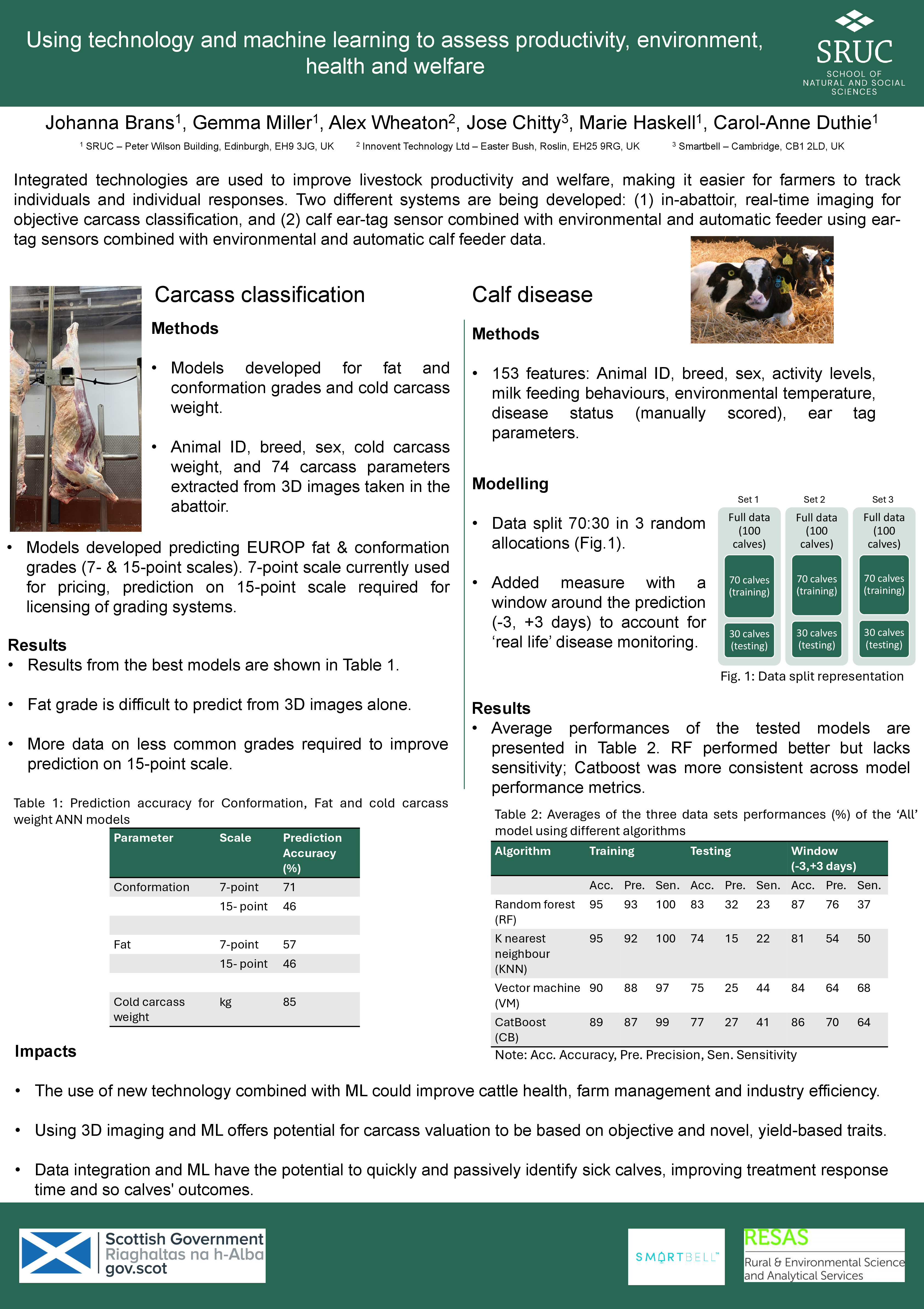
Gold-standard welfare assessments of dairy cattle, e.g., Qualitative Behaviour Assessment (QBA), require training and are time consuming in a sector with labour constraints. Utilising existing sensors on farm for management purposes (e.g. oestrus detection) for welfare evaluation could benefit farmers and the wider industry. As with QBA, sensors enable early detection of health/welfare issues, supporting management decisions and productivity, without substantial labour demands.

Using capacity developed since 2008 (Brian Pack inquiry, Agricultural Support), SRP research shaped the 2015 reform of payment regions.  The 2022-27 SRP has supporting policy options from the Vision for Agriculture.  In particular, the analysis, of the impact and uptake of Enhanced Conditionality (EC) measures (with SRP experts from biodiversity, soils and waters).  EC will fundamentally reshape what public subsidies deliver for climate and biodiversity crises.  The analysis, with SRUC colleagues, also reconsidered payment regions and related mechanism to make them more fit for purpose.

Disease-related crop losses threaten UK potato production, with ÂŁ50 million spent annually controlling late blight alone. Potato cyst nematodes further endanger the seed industry. Genomic tools, particularly diagnostic Resistance gene enrichment Sequencing (dRenSeq), have transformed resistance breeding. Our research generated high-resolution disease resistance gene profiles for 657 commercial cultivars and 200 wild accessions worldwide. This resource informs parental selection, enables strategic stacking of resistance genes against major pests and diseases, and accelerates marker development.

Mycotoxins are toxic fungal food contaminants which pose an emerging health risk and major cost to cereal production. Regulatory mycotoxin limits in food are developed by the EU and UK, and significant data gaps exist in mycotoxin occurrence and risk factors impacting prevalence. This project has demonstrated frequent mycotoxin occurrence in Scottish cereals and cereal foods. Data on occurrence of regulated mycotoxins and mycotoxin metabolites have been submitted to the Food Standards Agency and Food Standards Scotland as well as the European Food Safety Authority.

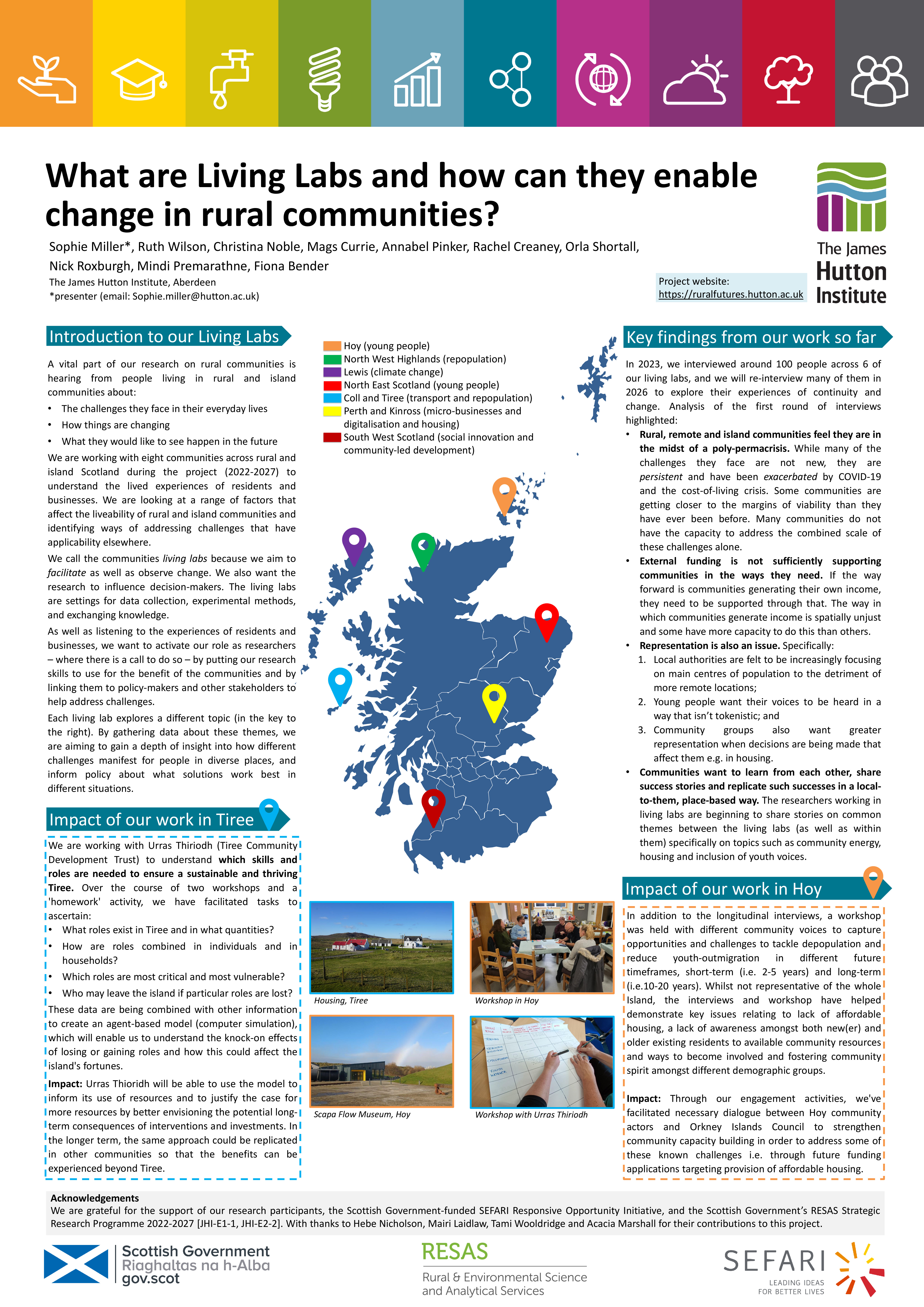
Work undertaken in SRUC-E2-2 (Reimagined policy futures: Shaping sustainable, inclusive and just rural and island communities in Scotland) has reviewed the evolution of rural policies and policy approaches in Scotland. This work has informed policy design in Scotland - particularly the forthcoming Rural Delivery Plan and recently launched Rural Assessment Toolkit - and beyond, including the guidance that has been issued by the European Commission to shape the rural proofing activities of Member States, and by the WHO and OECD on rural proofing in global contexts.

Estimating future behaviours is a key uncertainty in policy planning. Farming practice adoption work has mainly focused on farmers, often ignoring how the practice would fit in the farm operations and the role of policy and industry. We are investigating how the ADOPT tool (https://adopt.csiro.au/), which considers these aspects, can be useful in policy planning and how, and whether, it can aid comparative discussions on policy interventions. We selected two practices of high interest for Scottish Government: cover crops and 3-NOP.

Scottish hill and upland sheep are adapted to produce high-quality protein from poor-quality marginal land. With increased focus on climate change, efficiency and environmental impact of livestock production, “Breeding and managing Scottish hill sheep to meet future economic, environmental and climatic challenges” assesses genetic selection and/or crossbreeding, alongside management strategies, to achieve these goals.
 

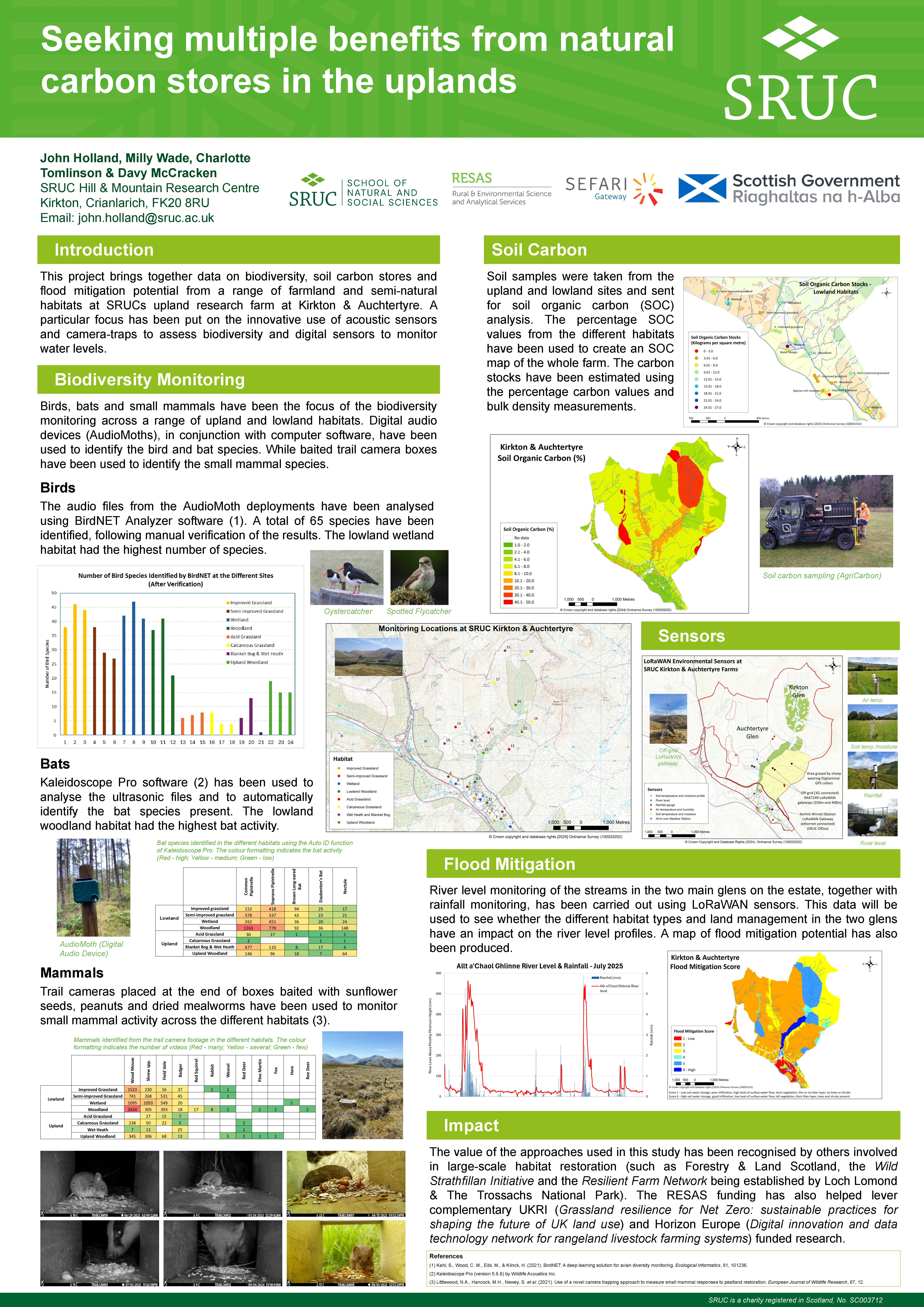
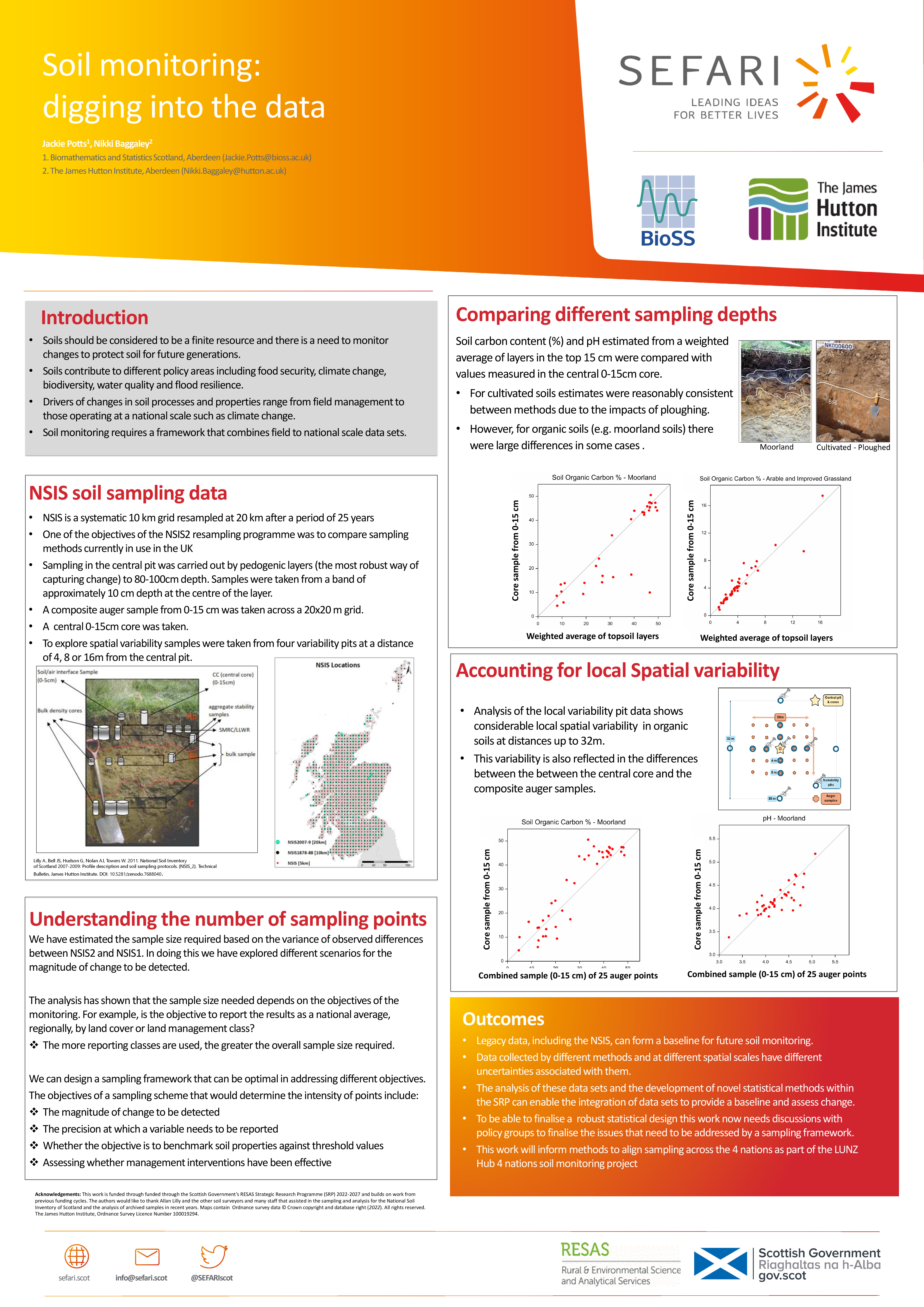
Through Diageo funding from 2023-2025 we undertook soil health testing across Scotland (20 farms and 80 fields) utilising biological, chemical and physical indicators of soil health. Ongoing and historic research within the strategic research programme supported the development of these agricultural soil health indicators and guided sampling. Developed indicators have been validated on our research platforms (for example the Centre for Sustainable Cropping and organic amendment platform) and at plot scales, supporting the deployment of robust indicators at farm and field scales.

Reform of Scottish Agricultural policies imply environmental objectives are incorporated within traditional goals of food security and farm income viability. However, setting realistic but ambitious targets across economic, environmental, and biophysical dimensions remains a major challenge for policymakers. We present work using four years of the Farm Business Survey data showing the use of estimation approaches to identify best practices across income, environmental and food security domains. This covers a range of methods, from estimation-based approaches to novel applications of machine learning.

C4 WP4 research provides robust evidence to accelerate Scotland’s transition from single-use to reusable packaging. A national study on returnable packaging identified adoption-ready consumer segments, key behavioural barriers, and the packaging attributes that shape decisions. Complementary experiments on single-use cups demonstrated that a 25–30p charge can halve disposable use. Together, these findings specify charge thresholds, deposit structures, and targeting strategies.

This research project focusses on understanding the social and behavioural aspects of transition to a circular economy in Scotland. The project aims to better understand the dynamics of behaviour change over time from the perspective of individuals, households and organisations. A lack of data on uptake of household circular economy behaviours and an absence of available validated instruments to measure uptake across relevant behaviours led to the development of the Circular Behaviours Scale, drawing on knowledge of best practice in psychometric methods.

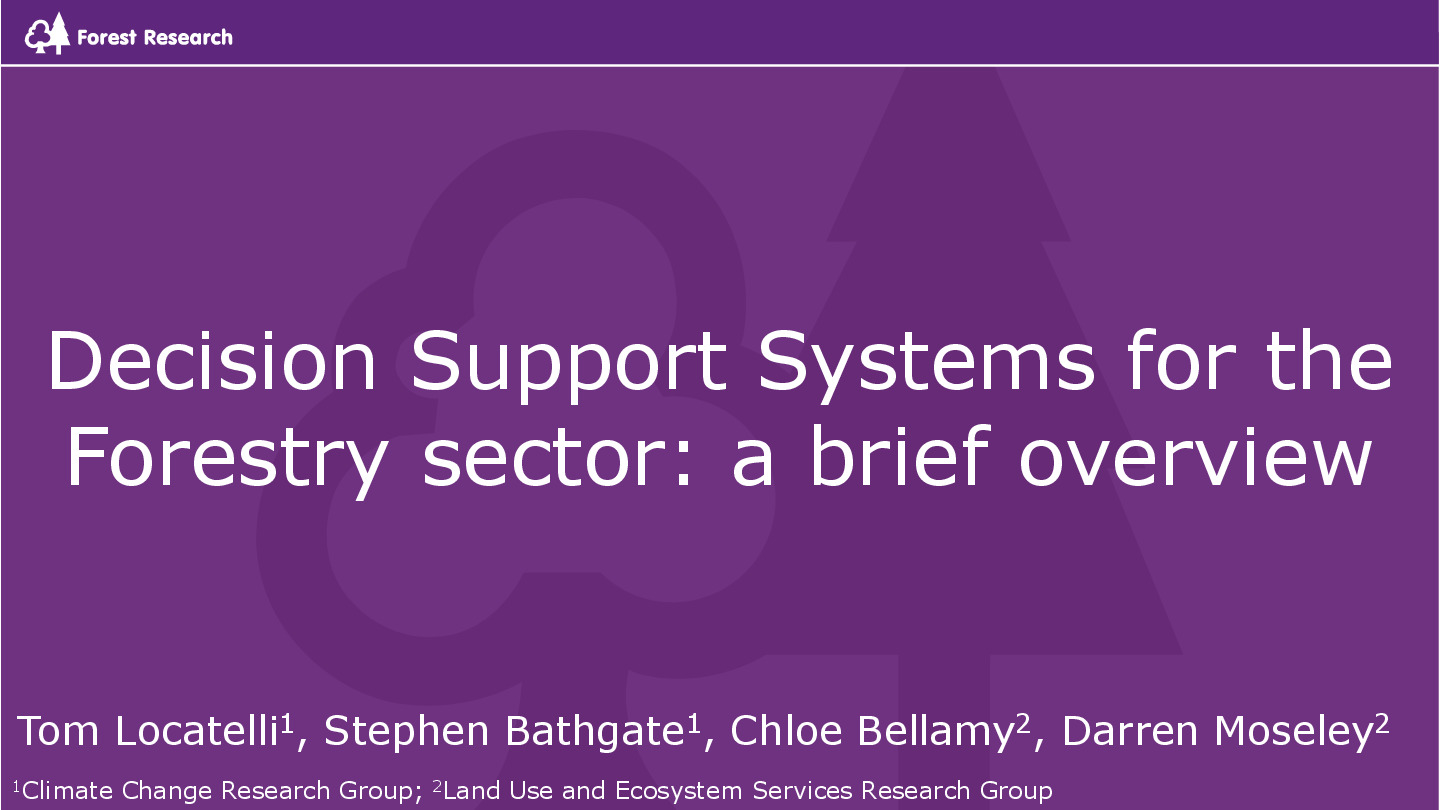
An advanced toolkit of statistical methods enables quantification of hidden spread of pests and diseases in Scotland making best use of limited data. It estimates costly-to-measure characteristics and produces risk assessments to target control efforts. Insights support non-academic partners, including advice to Scottish Forestry on great spruce bark beetle spread related to changes to the West of Scotland Pest Free Area. Through EPIC, findings are informing Scottish Government policy colleagues on threats from African swine fever to livestock and the highly pathogenic avian influenza outbreak in UK poultry.

  • Pest Control and Management
  • Virus infection in seed potato crops has surged across Europe over the last five years, threatening Scotland’s global reputation for producing high-quality seed. A multi-pronged approach was developed: mapping changing aphid and virus populations and their traits, using AI to create national early warning systems for forecasting risk, and field-testing integrated pest management (IPM) strategies—combining monitoring with companion crops and pesticide alternatives. This real-world approach guides best practice, helping growers time interventions and improve crop protection.

  • Pest Control and Management
  • Growing crop mixtures can increase yields, reduce input costs and support biodiversity. We have identified species/variety combinations, management conditions, and machinery adaptations that optimise these benefits from crop mixtures. This work has direct impact on farming practice and uptake by Scottish farmers through >50 collaborative trials to grow mixtures on farms across Scotland. By working with farmers to design and monitor trials, we are quantifying mixture performance relative to monocrops and demonstrating the technical feasibility of mixture cropping.

  • Agriculture
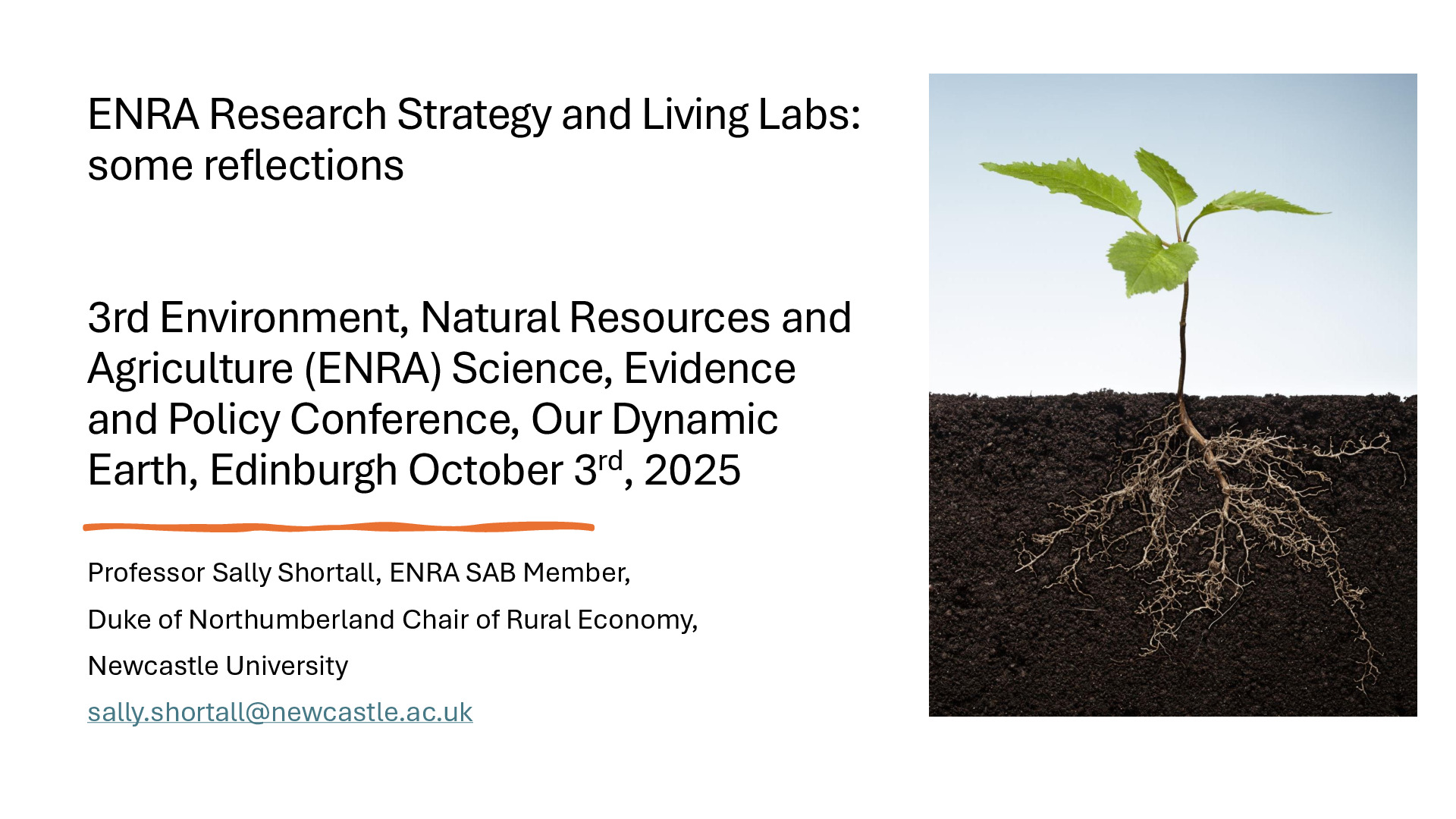
  • Edinburgh: 5 - 7th November, 2025.

    Attendance by invite only.

    The Scottish Government is committed to tackling climate change with an ambitious target of 2045 for Scotland to reach net zero emissions for all greenhouse gases.  As part of this transition new uses need to be found for sites such as the Grangemouth refinery to secure a just transition for the local and wider Scottish population.   Project Willow: Grangemouth investment opportunities has identified a set of preferred projects including a proposed biorefinery project for aviation fuel.  The aviation sector is currently a significant greenhouse gas emitter through its use

  • Climate and the Environment