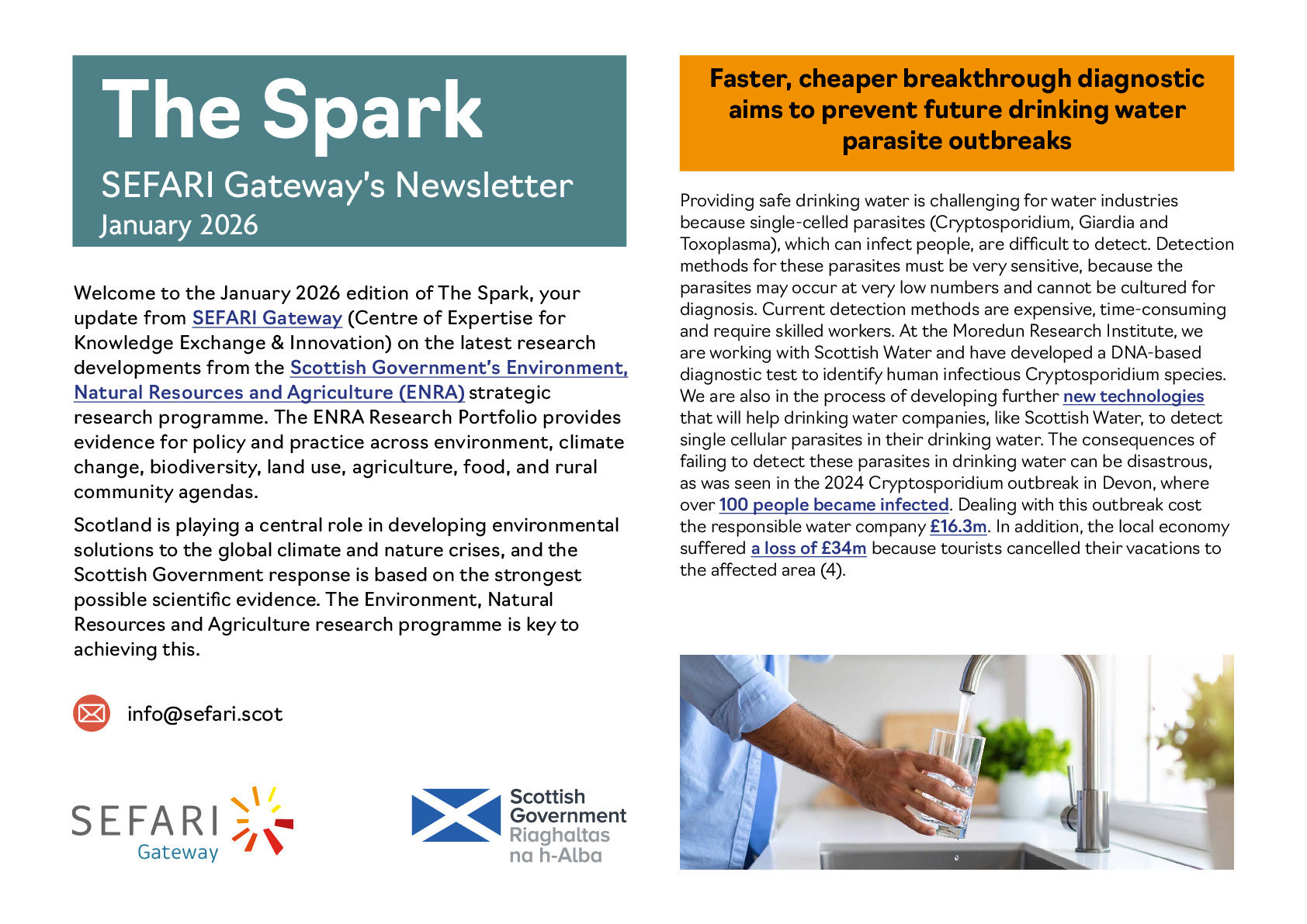
Welcome to the January 2026 edition of The Spark, your update from SEFARI Gateway (Centre of Expertise for Knowledge Exchange & Innovation) on the latest research developments from the Scottish Government’s Environment, Natural Resources and Agriculture (ENRA) strategic research programme. The ENRA Research Portfolio provides evidence for policy and practice across environment, climate change, biodiversity, land use, agriculture, food, and rural community agendas.
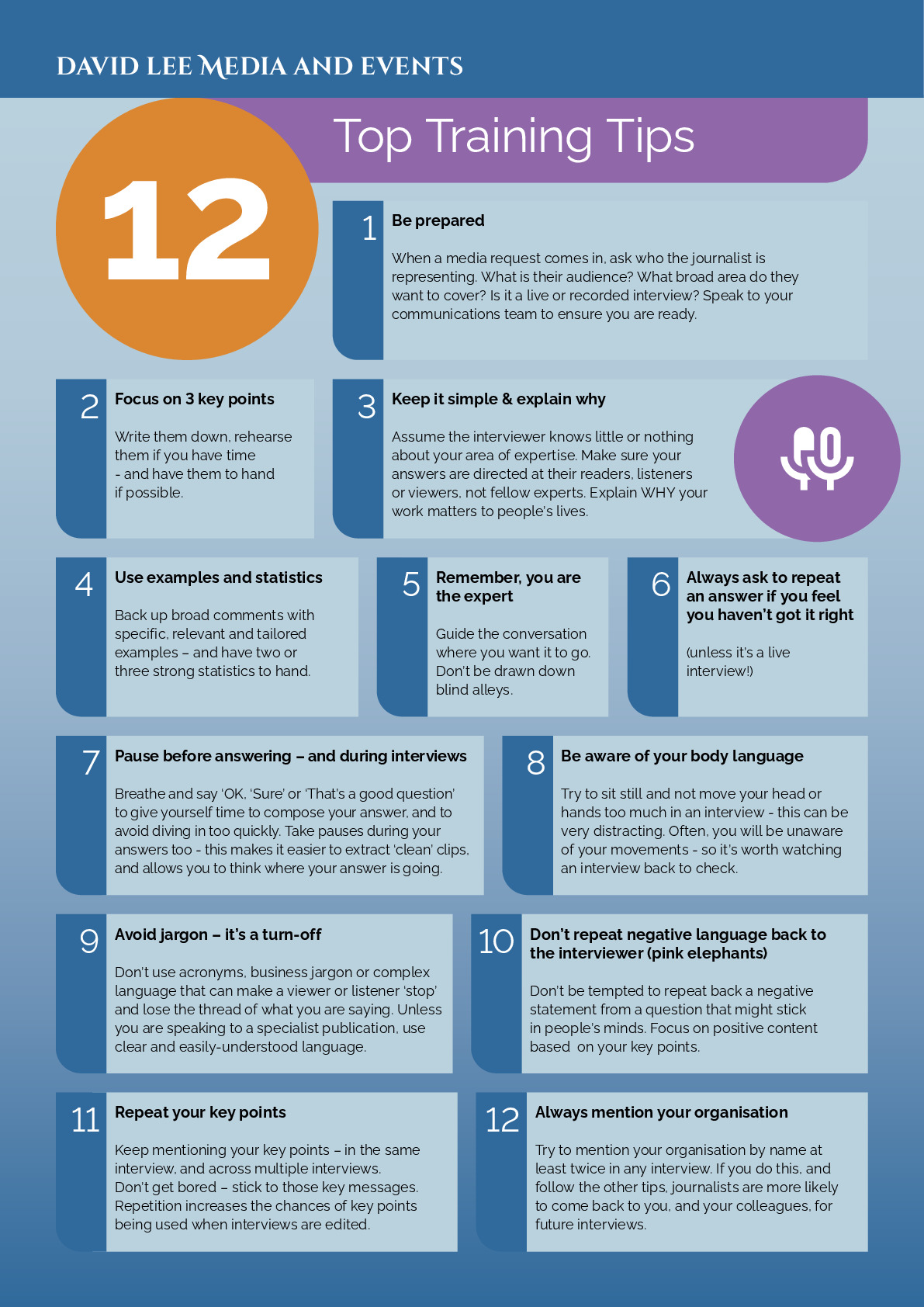
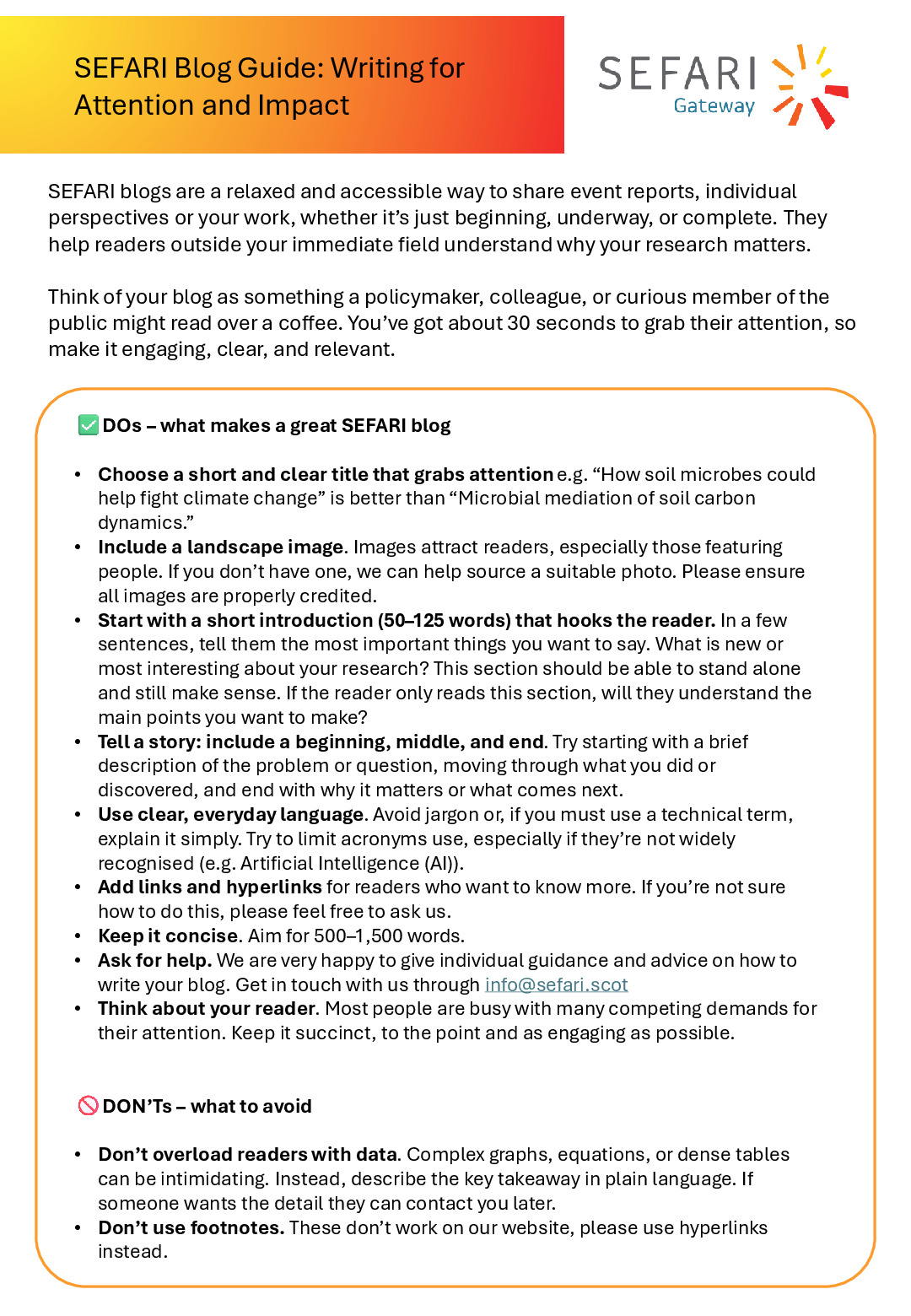
SEFARI blogs are a relaxed and accessible way to share event reports, individual perspectives or your work, whether it’s just beginning, underway, or complete. They help readers outside your immediate field understand why your research matters.
Think of your blog as something a policymaker, colleague, or curious member of the public might read over a coffee. You’ve got about 30 seconds to grab their attention, so make it engaging, clear, and relevant.
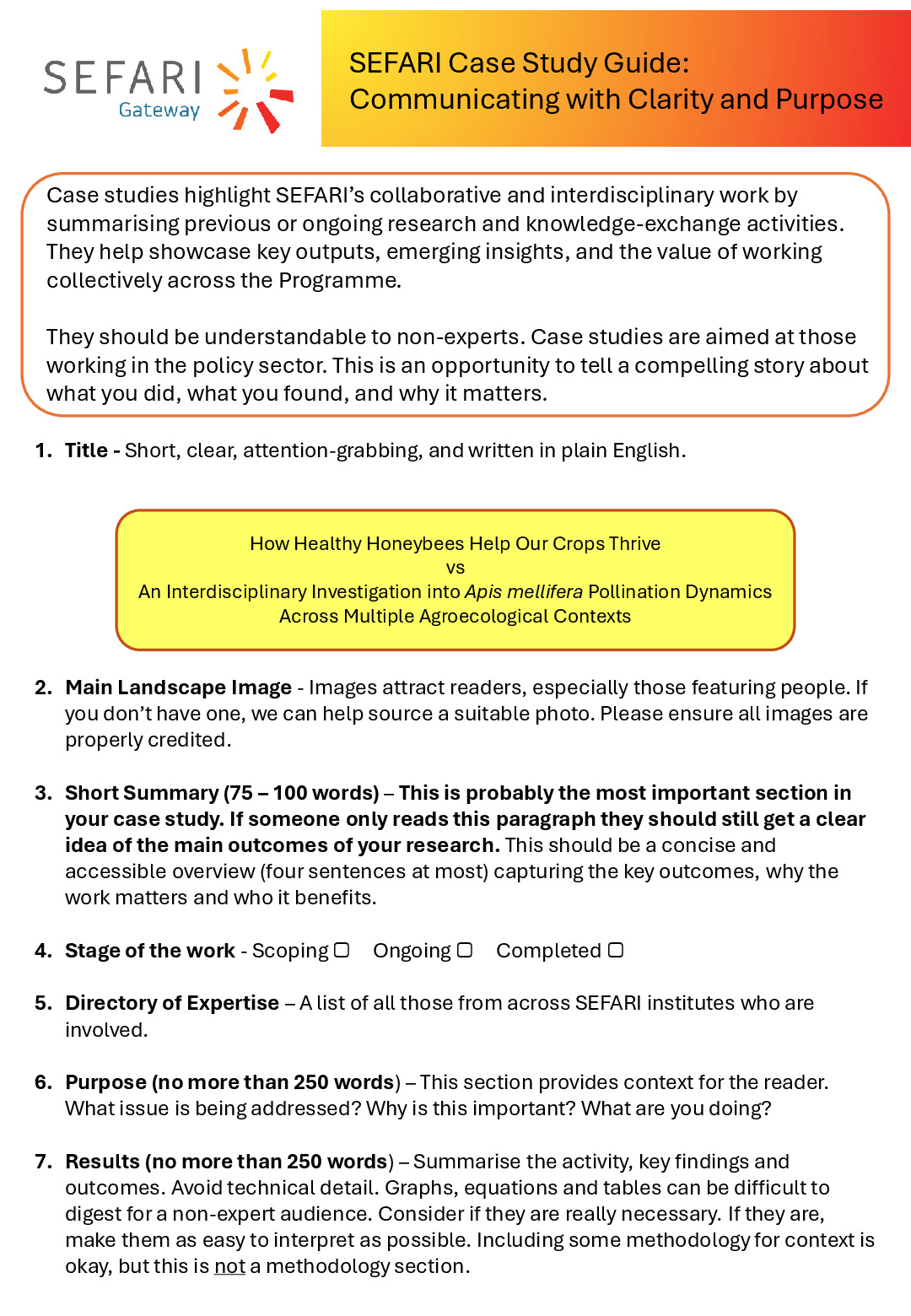

This case study template accompanies our case study guidance document.
If you would like to write a case study on your work for SEFARI Gateway please get in touch with our communications and engagement officer and/or our centre manager: About Us

Peat has long been a major ingredient in UK horticulture, but with its use declining and public interest in sustainable alternatives rising, there is increasing demand for clear, trustworthy information about growing media. A Responsible Sourcing Scheme (RSS) has been developed to help consumers understand the environmental impact of compost products through an A–E rating system. To support Scottish Government decision-making on future peat policy, a short review assessed the strengths and limitations of the RSS calculator.
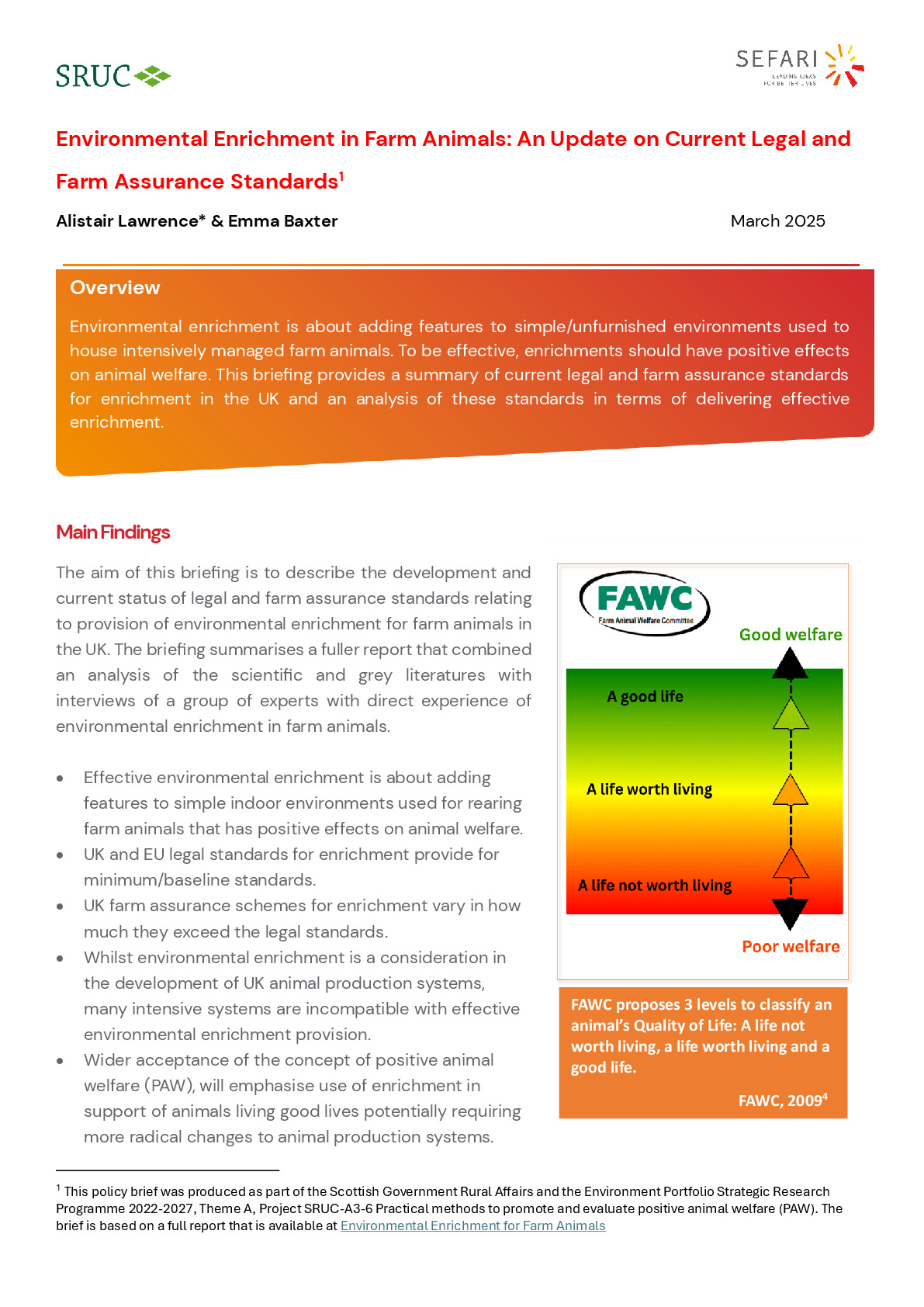
Environmental enrichment is about adding features to simple/unfurnished environments used to
house intensively managed farm animals. To be effective, enrichments should have positive effects
on animal welfare. This briefing provides a summary of current legal and farm assurance standards
for enrichment in the UK and an analysis of these standards in terms of delivering effective
enrichment.
Animal welfare relies on both the prevention of suffering and the facilitation of positive experiences. A growing body of academic literature considers the concept of ‘animal agency’ to be a key organising principle of positive welfare - over and above having good things, positive welfare is about doing them.

We are delighted to share with you the latest copy of the ELPEG Bulletin. The bulletins are produced every six months and summarise the biodiversity research that is happening within the Strategic Research Programme. The bulletins aim to provide a policy relevant summary of the research.
The October 2025 bulletin can be accessed here.

Pictures and biographies of food security conference speakers.
This booklet highlights key research outputs from Scottish Government funded strategic research programme 2022-27 on sustainable food systems and supply. This includes research on sustainable food production from domestic agriculture through to sustainable and secure supplies of food, as well as supporting a safe and healthy diet. It provides elements of research relevant right through from farm to fork to contribute to the economy, people’s livelihoods and the health of the nation.
This booklet highlights key research outputs from Scottish Government funded strategic research programme 2022-27 on sustainable food systems and supply. This includes research on sustainable food production from domestic agriculture through to sustainable and secure supplies of food, as well as supporting a safe and healthy diet. It provides elements of research relevant right through from farm to fork to contribute to the economy, people’s livelihoods and the health of the nation.
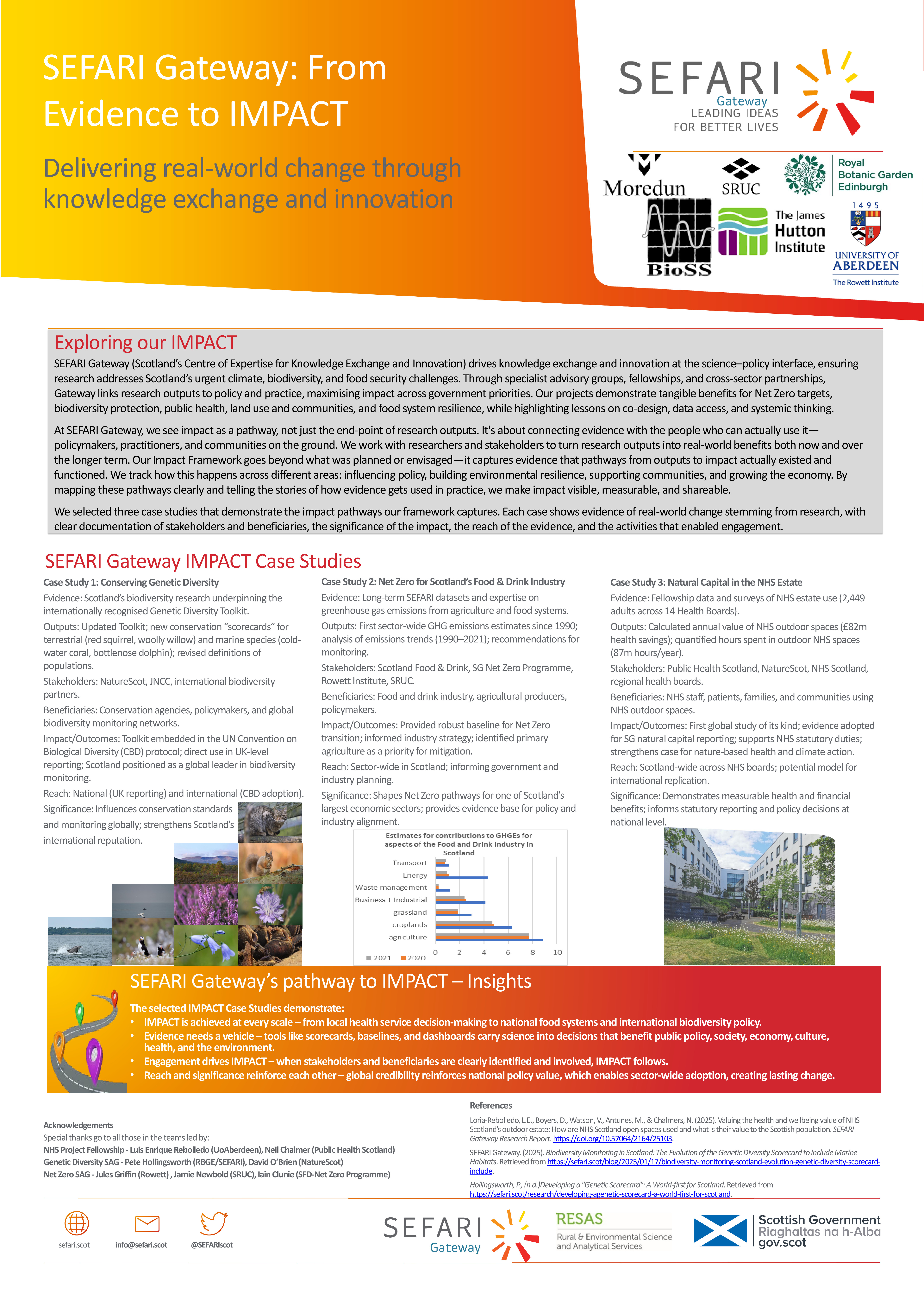
SEFARI Gateway (Scotland’s Centre of Expertise for Knowledge Exchange and Innovation) drives knowledge exchange and innovation at the science–policy interface, ensuring research addresses Scotland’s urgent climate, biodiversity, and food security challenges. Through specialist advisory groups, fellowships, and cross-sector partnerships, Gateway links research outputs to policy and practice, maximising impact across government priorities.
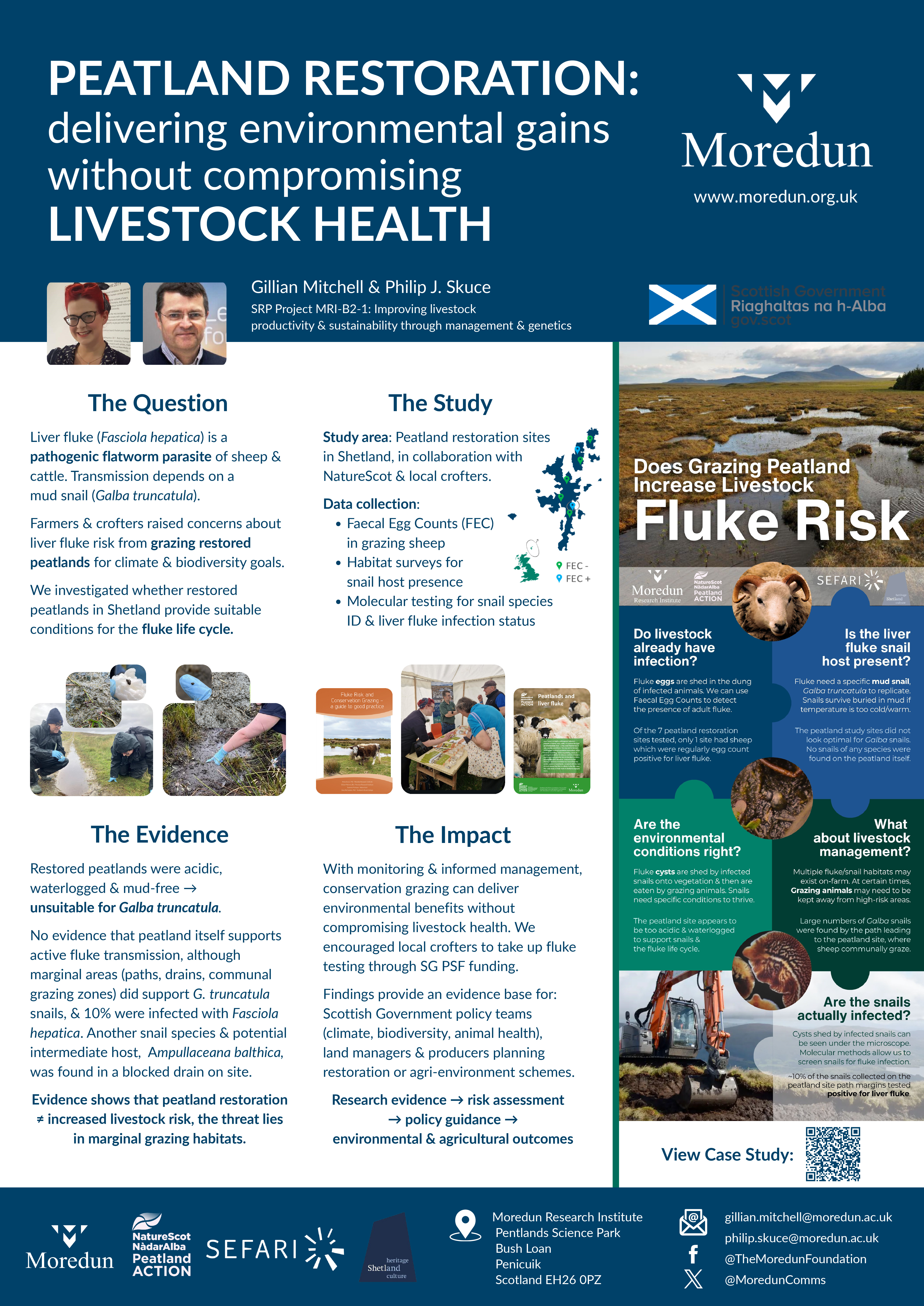
This study investigated whether peatland restoration increases liver fluke (Fasciola hepatica) risk to livestock. Conducted in Shetland with NatureScot and local crofters, the research combined diagnostic testing (faecal egg counts), habitat surveys, and molecular testing of mud snails (Galba truncatula). Restored peatlands were found to be acidic, waterlogged, and largely mud-free, making them unsuitable for the snail host. Consequently, infection risk on restored sites was low, with fluke presence confined to marginal grazing areas such as paths and drains.
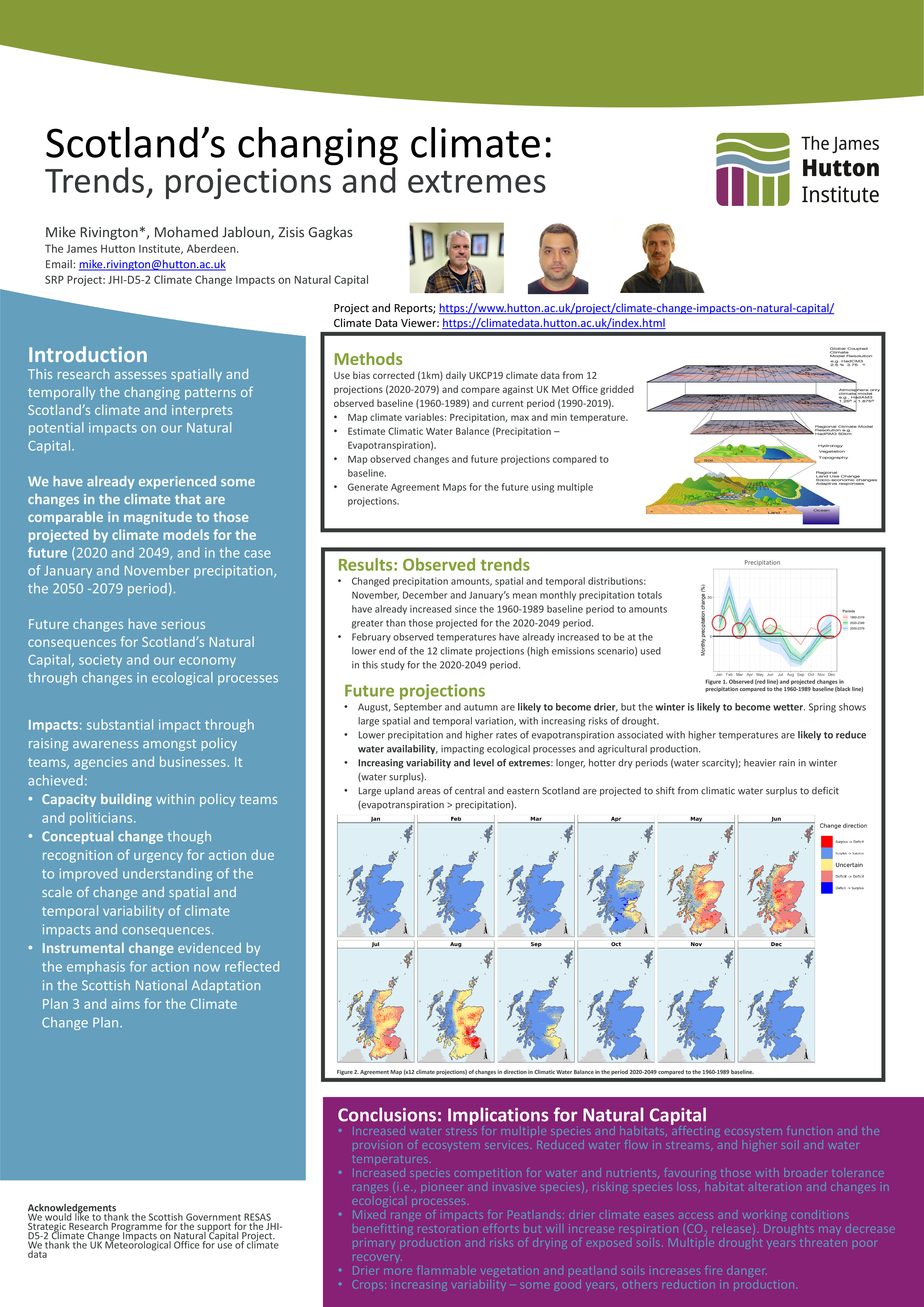
We show how much Scotland’s climate has already changed and how it may potentially change in the future, including extremes what this means for Scotland’s Natural Capital. Outputs achieved substantial impact through raising awareness amongst policy teams, agencies and businesses. It achieved capacity building within policy teams and politicians and associated conceptual change though recognition of urgency for action due to improved understanding of the scale of change and spatial and temporal variability of climate impacts and consequences.