
Filter By

People will have different understandings about the range of benefits a woodland can offer, and some people might prefer one type of benefit over another. To understand how these factors are interconnected, researchers from The James Hutton Institute are researching woodlands in different parts of Scotland: in the Central Belt (North Lanarkshire), on the west coast (Argyll), and in the Highlands. 

This report presents the results of a research workshop that was undertaken in relation to the Cumbernauld Forest Wood.

  • Land and Communities
  • People will have different understandings about the range of benefits a woodland can offer, and some people might prefer one type of benefit over another. To understand how these factors are interconnected, researchers from The James Hutton Institute are researching woodlands in different parts of Scotland: in the Central Belt (North Lanarkshire), on the west coast (Argyll), and in the Highlands. 

    This report presents the results of a research workshop that was undertaken in relation to the Tom an Eirannaich woodland near the community of Clunes.


  • Land and Communities
  • Interest in carbon markets has increased rapidly in recent months, leading to new market opportunities and interest in acquiring land to invest in natural capital, typically through tree planting and restoration of degraded peatland habitats. However, the extent to which natural capital investment is driving transactions is unclear, with owners and purchasers potentially influenced by many factors. There is also uncertainty around how large-scale land acquisitions might interact with post-Brexit policies under development across the UK and the interests of rural communities.

    Summary report, March 2022

    Highlights

  • Land and Communities
  • The Scottish Government Programme for Government (2021/22) commits to the creation of Regional Land Use Partnerships (RLUPs) and Regional Land Use Framework (RLUFs), as set out in the Land Use Strategy. In spring 2021 it announced five pilot Partnerships for testing approaches and practicalities, with particular reference to governance and local engagement. 

    Appendices to the SEFARI report on ‘The adoption of agroecological principles in Scottish farming and their contribution towards agricultural sustainability and resilience.’ This Agroecology in Scotland is understood differently by different people and at times contrary to what constitutes agroecology.

    Agroecology in Scotland is understood differently by different people and at times contrary to what constitutes agroecology.

    In the face of COVID-19 and the immediate (and anticipated) impact on the food and drink sector across rural Scotland, the Scottish Environment Food Agriculture Research Institutes (SEFARI) and Highlands and Islands Enterprise (HIE) established the SEFARI supported knowledge exchange ‘COVID-19 Food and Drink Sector Think Tank for Scotland’s Rural Economy’. The Specialist Advisory Group (SAG) was set up with a core membership and also with the intention of accessing ‘expert advisors’ and wider stakeholders.

    This report has been developed with the aim of:

    Environmental Standards Scotland (ESS) is being established as a new non-ministerial office to monitor Scottish public authorities’ compliance with, and the effectiveness of, environmental law following the UK’s departure from the EU. It will be independent of the Scottish Government and will be responsible for ensuring that public authorities in Scotland comply with environmental law.

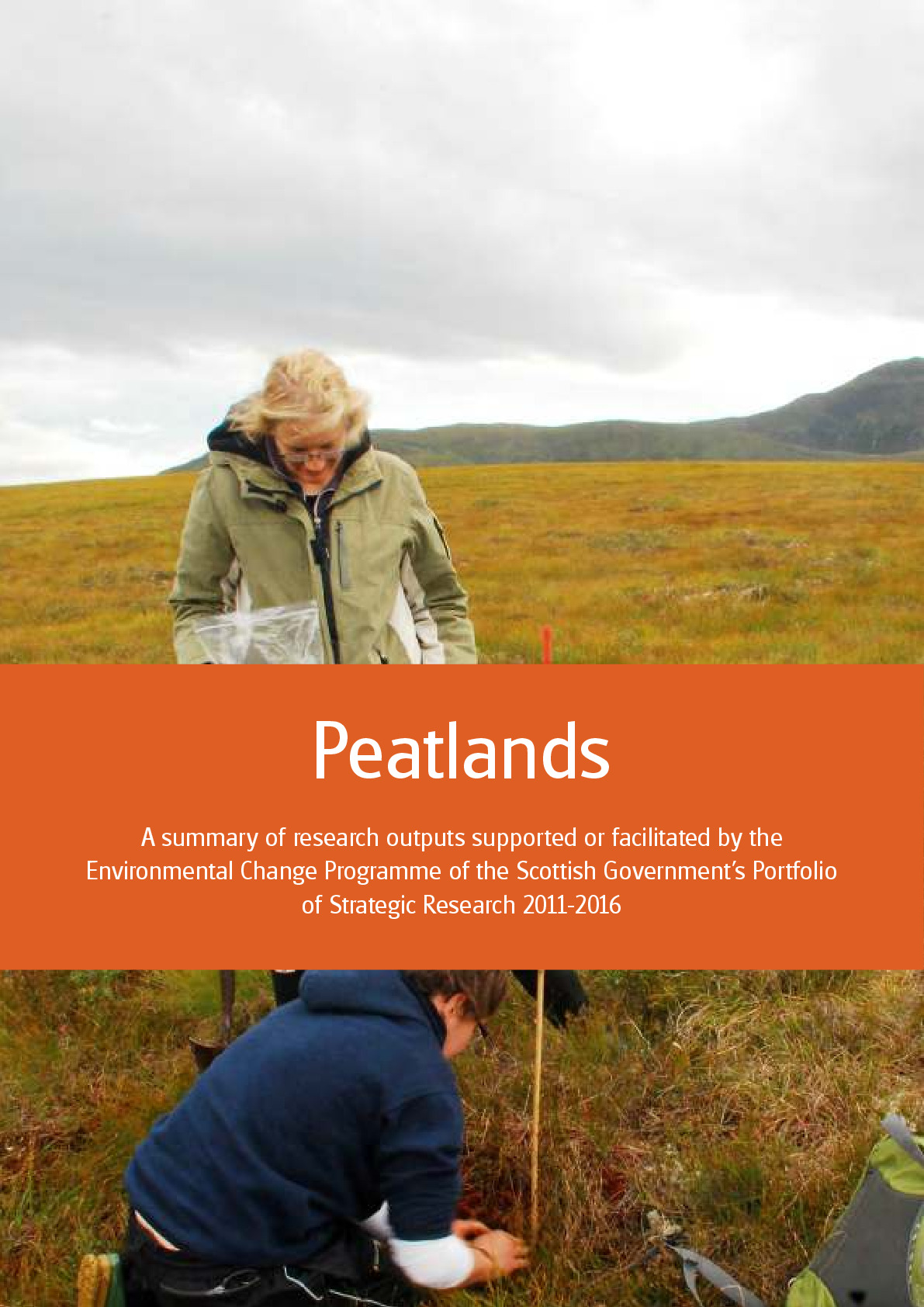
    March 2022 update on database based on the Peatland Action Programme in Scotland.

  • Climate and the Environment