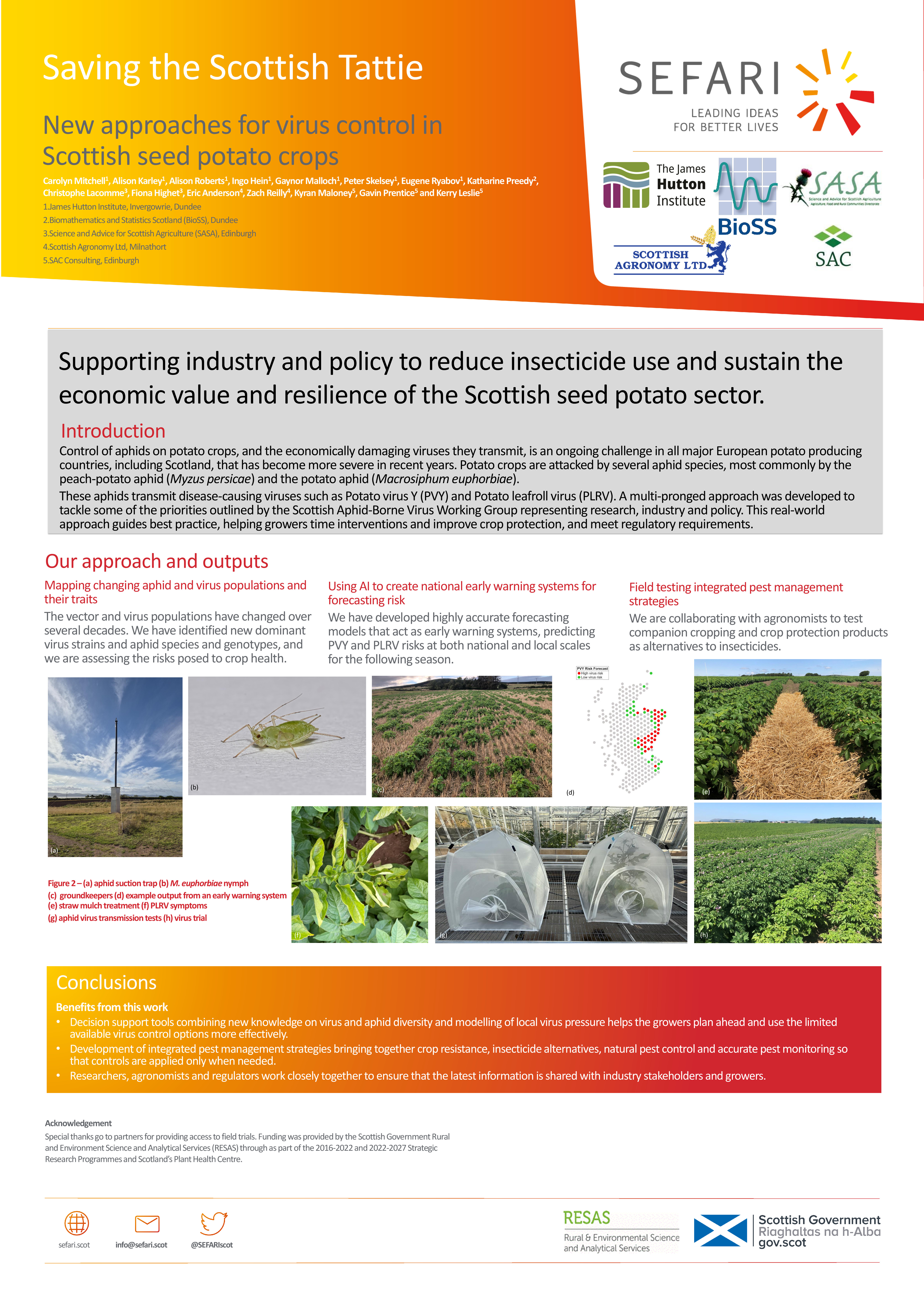
Virus infection in seed potato crops has surged across Europe over the last five years, threatening Scotland’s global reputation for producing high-quality seed. A multi-pronged approach was developed: mapping changing aphid and virus populations and their traits, using AI to create national early warning systems for forecasting risk, and field-testing integrated pest management (IPM) strategies—combining monitoring with companion crops and pesticide alternatives. This real-world approach guides best practice, helping growers time interventions and improve crop protection.
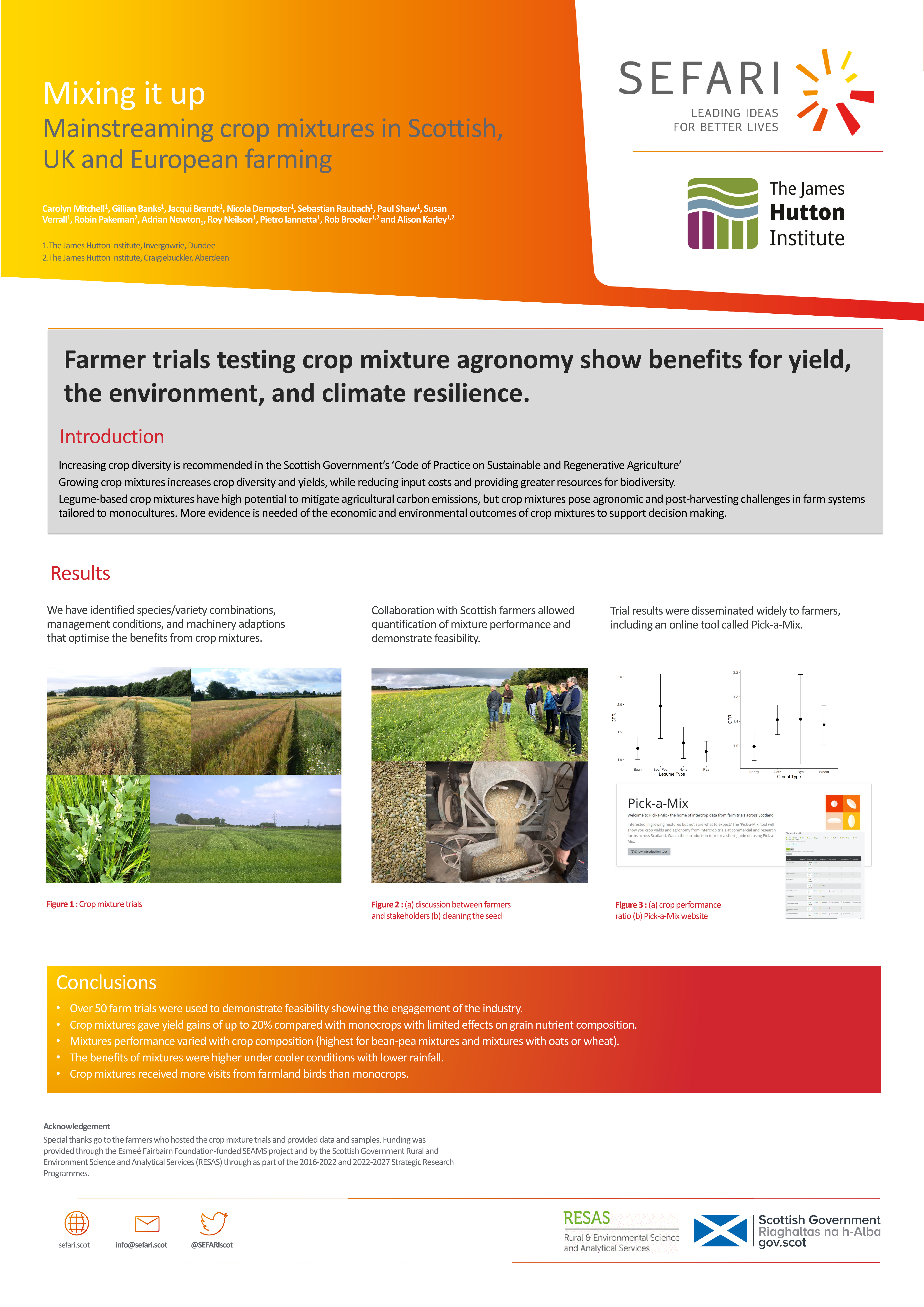
Growing crop mixtures can increase yields, reduce input costs and support biodiversity. We have identified species/variety combinations, management conditions, and machinery adaptations that optimise these benefits from crop mixtures. This work has direct impact on farming practice and uptake by Scottish farmers through >50 collaborative trials to grow mixtures on farms across Scotland. By working with farmers to design and monitor trials, we are quantifying mixture performance relative to monocrops and demonstrating the technical feasibility of mixture cropping.

Edinburgh: 5 - 7th November, 2025.
Attendance by invite only.
The Scottish Government is committed to tackling climate change with an ambitious target of 2045 for Scotland to reach net zero emissions for all greenhouse gases. As part of this transition new uses need to be found for sites such as the Grangemouth refinery to secure a just transition for the local and wider Scottish population. Project Willow: Grangemouth investment opportunities has identified a set of preferred projects including a proposed biorefinery project for aviation fuel. The aviation sector is currently a significant greenhouse gas emitter through its use
Ticks are external blood-sucking parasites that feed on a variety of hosts including livestock, wildlife and humans. The most common tick in the UK is the sheep tick (Ixodes [I.] ricinus) which is indiscriminate, feeding on a wide range of hosts, from birds to small and large mammals, including humans, whereas many other species of ticks feed more selectively on specific animal species. The sheep tick can carry pathogens responsible for several diseases including louping ill (LI), tickborne fever (TBF), babesiosis (red water), Lyme disease, tick pyaemia and tickborne encephalitis (TBE).
Document
An online tool is being developed using artificial intelligence to provide convenient access to biosecurity advice for farmers. Initial development and testing of the proof of concept has produced a shiny app
Available at: https://epidemiology.sruc.ac.uk/shiny/apps/bitesize-biosecurity/
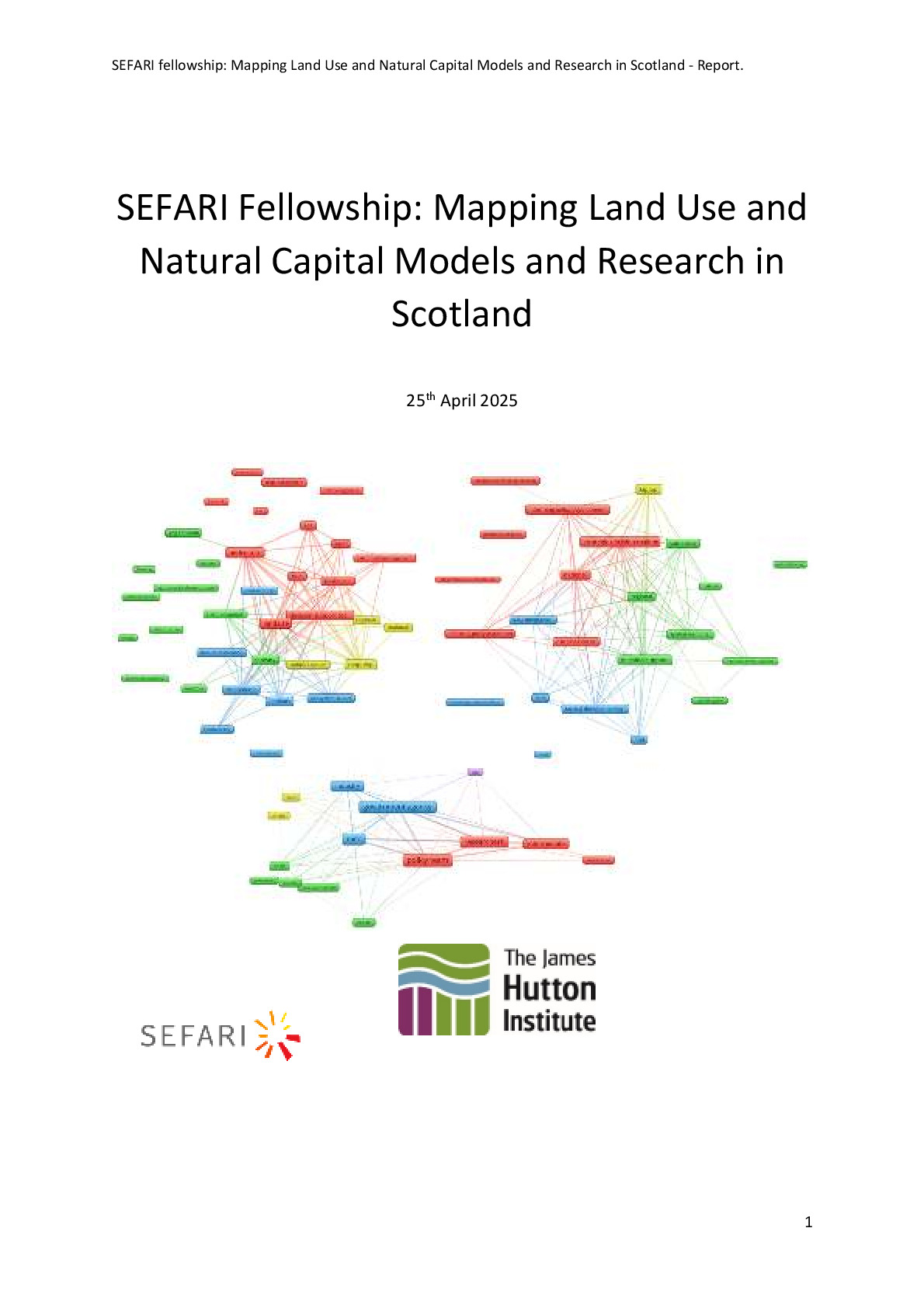
This report presents the results from an online survey commissioned by SEFARI on behalf of the Scottish Government to assess the current coverage and capabilities of the Land Use and Natural Capital modelling and tools used and in development by the research community in Scotland. The purpose is to map and categorise the modelling capabilities available and understand how this capability can be better used and enhanced.
The report is a product of the SEFARI Fellowship Mapping Land Use and Natural Capital Models and Research in Scotland.
Human-induced climate change is driving increasingly severe weather in the UK, threatening the long-term viability of Scotland’s land-based industries. To remain resilient and competitive, these sectors must urgently adopt climate adaptation and mitigation strategies, including Nature-based Solutions (NbS), which are central to emerging policy and funding frameworks.

This is a redacted version of survey outputs where personal details have been removed. The response have been provided by individual researchers. For GDPR reasons their details are not provided here.
Should you wish to learn more about the models, please contact the named organisations directly.
Document
An online tool is being developed using artificial intelligence to provide convenient access to biosecurity advice for farmers. Initial development and testing of the proof of concept has produced a shiny app.
Available at: https://epidemiology.sruc.ac.uk/shiny/apps/bitesize-biosecurity/
Document
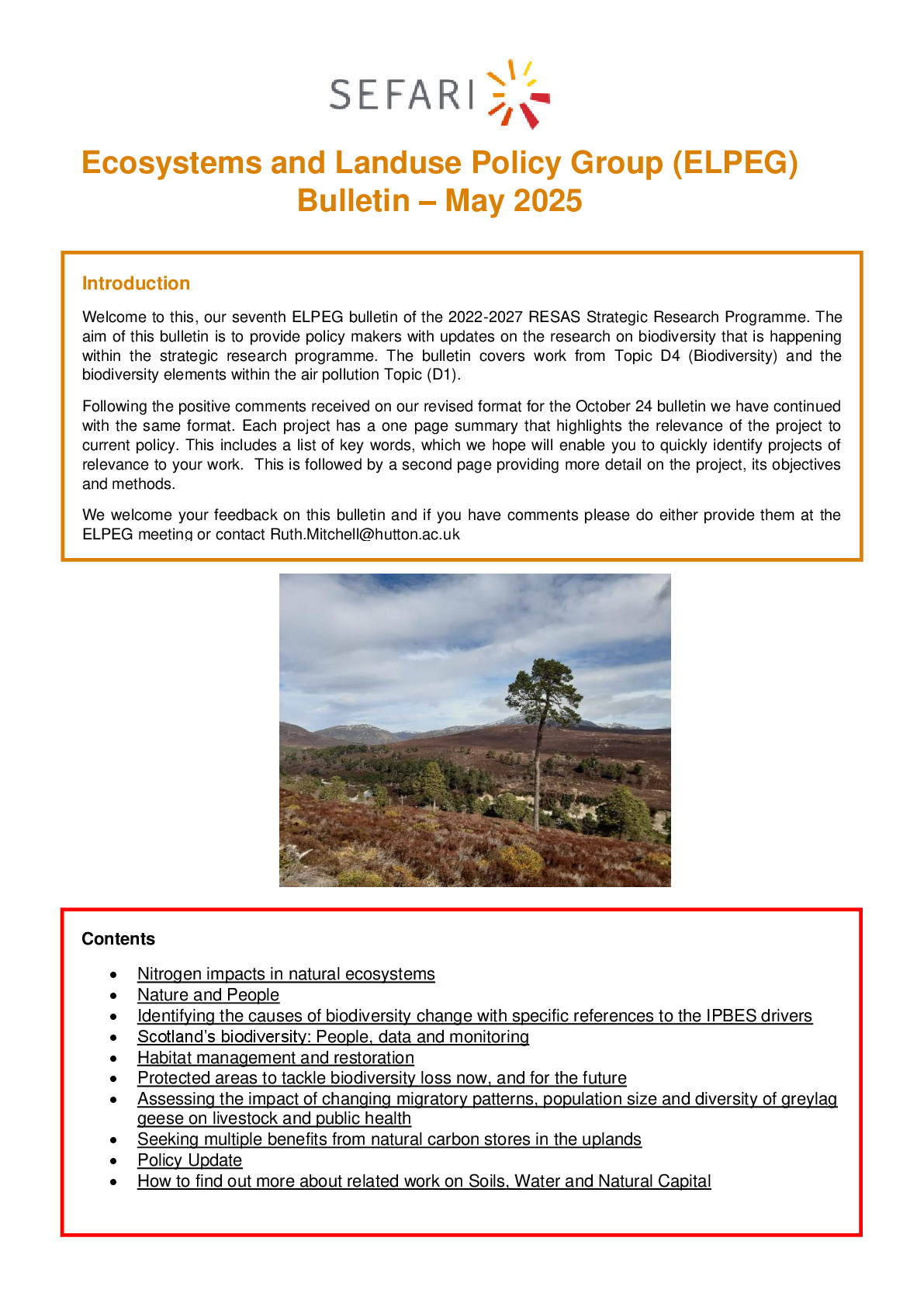
Welcome to this, our seventh ELPEG bulletin of the 2022-2027 RESAS Strategic Research Programme. The aim of this bulletin is to provide policy makers with updates on the research on biodiversity that is happening within the strategic research programme. The bulletin covers work from Topic D4 (Biodiversity) and the biodiversity elements within the air pollution Topic (D1).
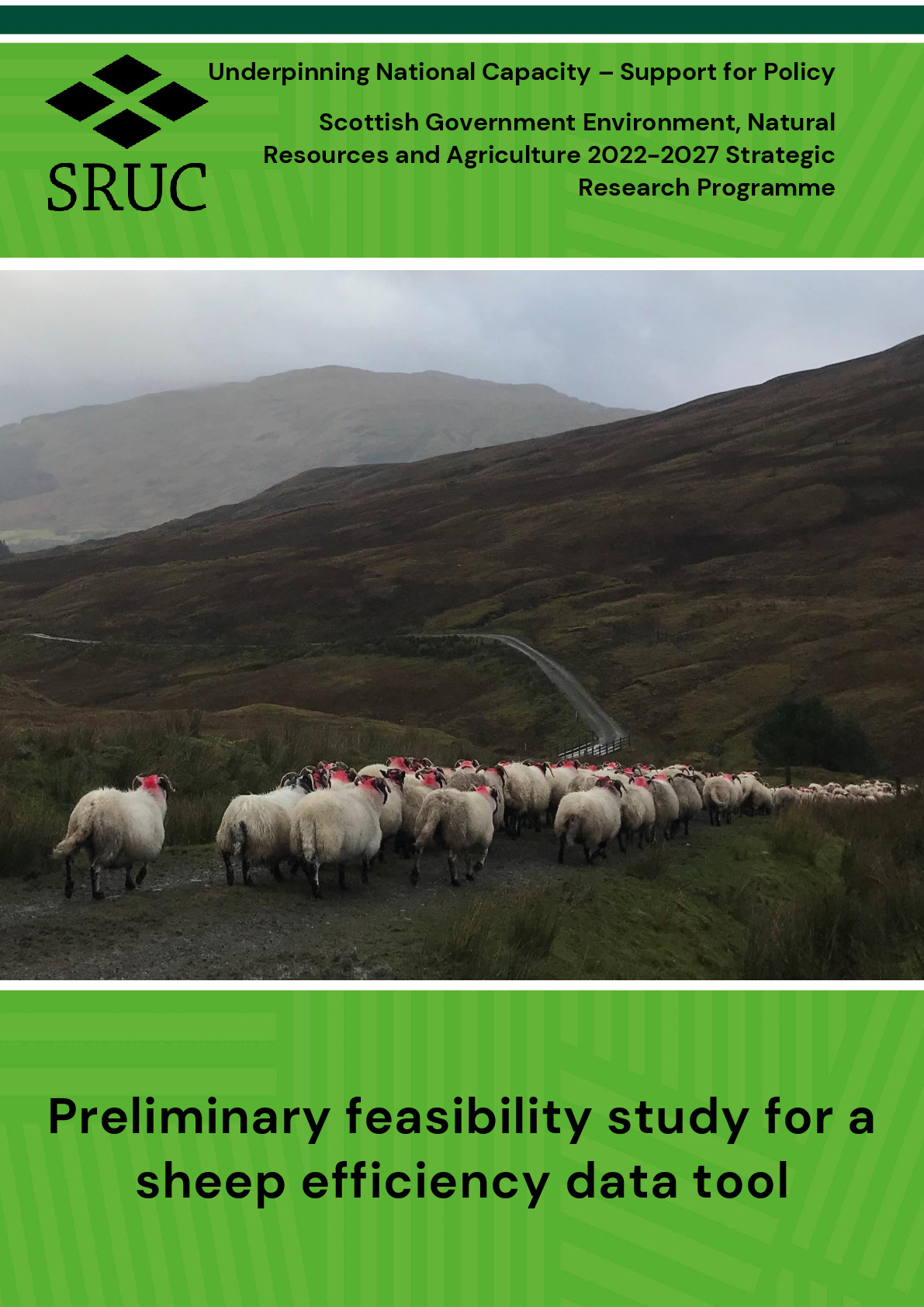
Ann McLaren & Nicola Lambe
The objective of this work is to determine what additional data would be beneficial, alongside the existing statutory data currently recorded through ScotEID, to incorporate into a “MyFlockStats” decision-making tool to help drive efficiency in the sheep sector. This report is intended to be a preliminary feasibility study to inform any future development, commissioning and operation of a “MyFlockStats” system to assist in the improvement of efficient sheep production in Scotland as part of the aims of the Vision for Agriculture.
Powerpoint presentation providing an overview on UNC, UNC Seedcorn, UNC Platform Funding and UNC Services
Document
Scotland faces pressing environmental challenges, from biodiversity loss to climate change, requiring cross-sector colla
Document
The aim was to produce an updated Scottish genetic diversity scorecard for ongoing monitoring of biodiversity within terrestrial species and to expand its relevance to marine species to support strategies to prevent and reverse biodiversity decline.
This report investigates the state of knowledge on the relationship between NbS and the productive land use sectors of agriculture and forestry in Scotland.
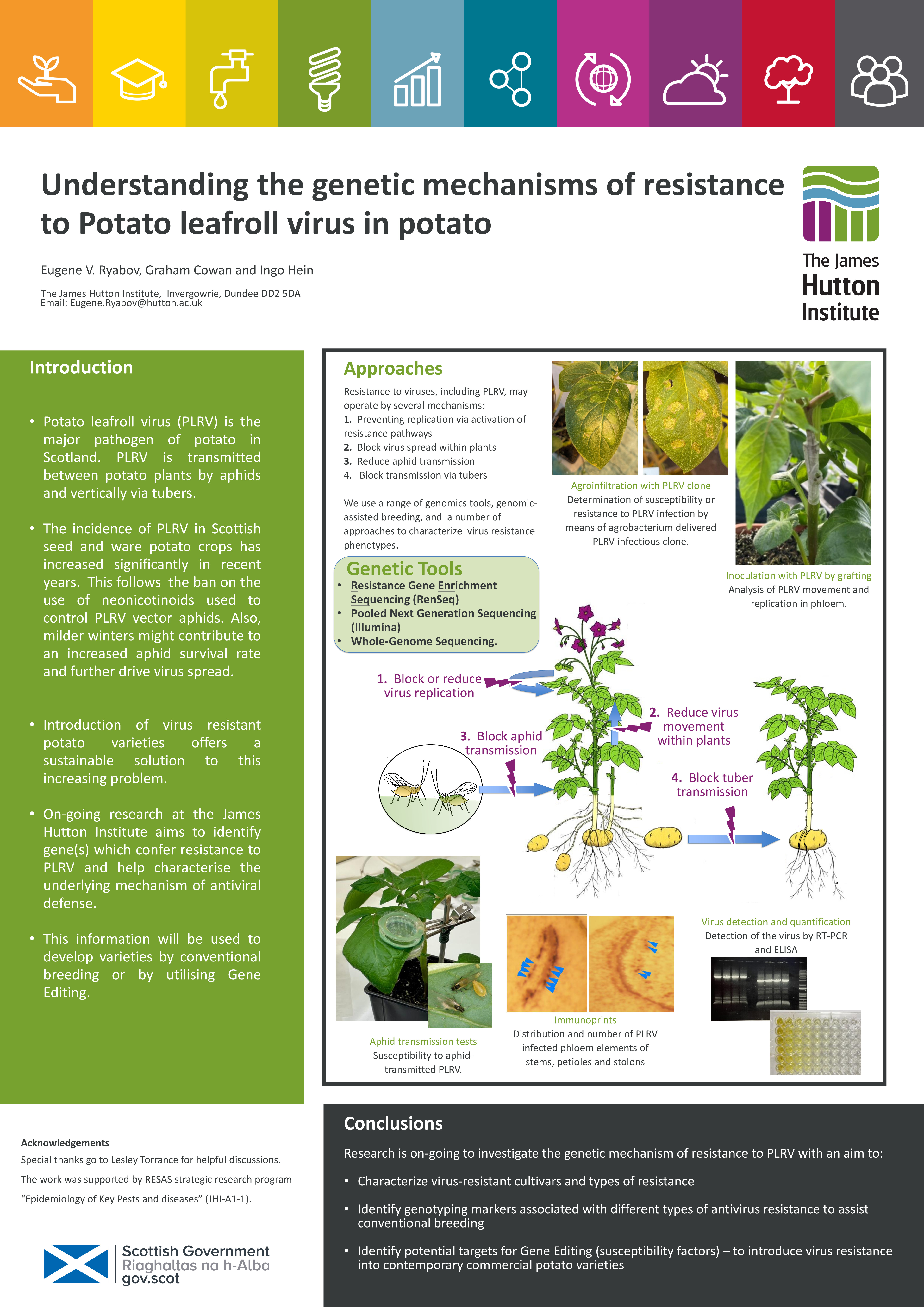
Poster by Eugene Ryabov, Graham Cowan and Ingo Hein about 'Understanding the genetic mechanisms of resistance to Potato leafroll virus in potato'
Document
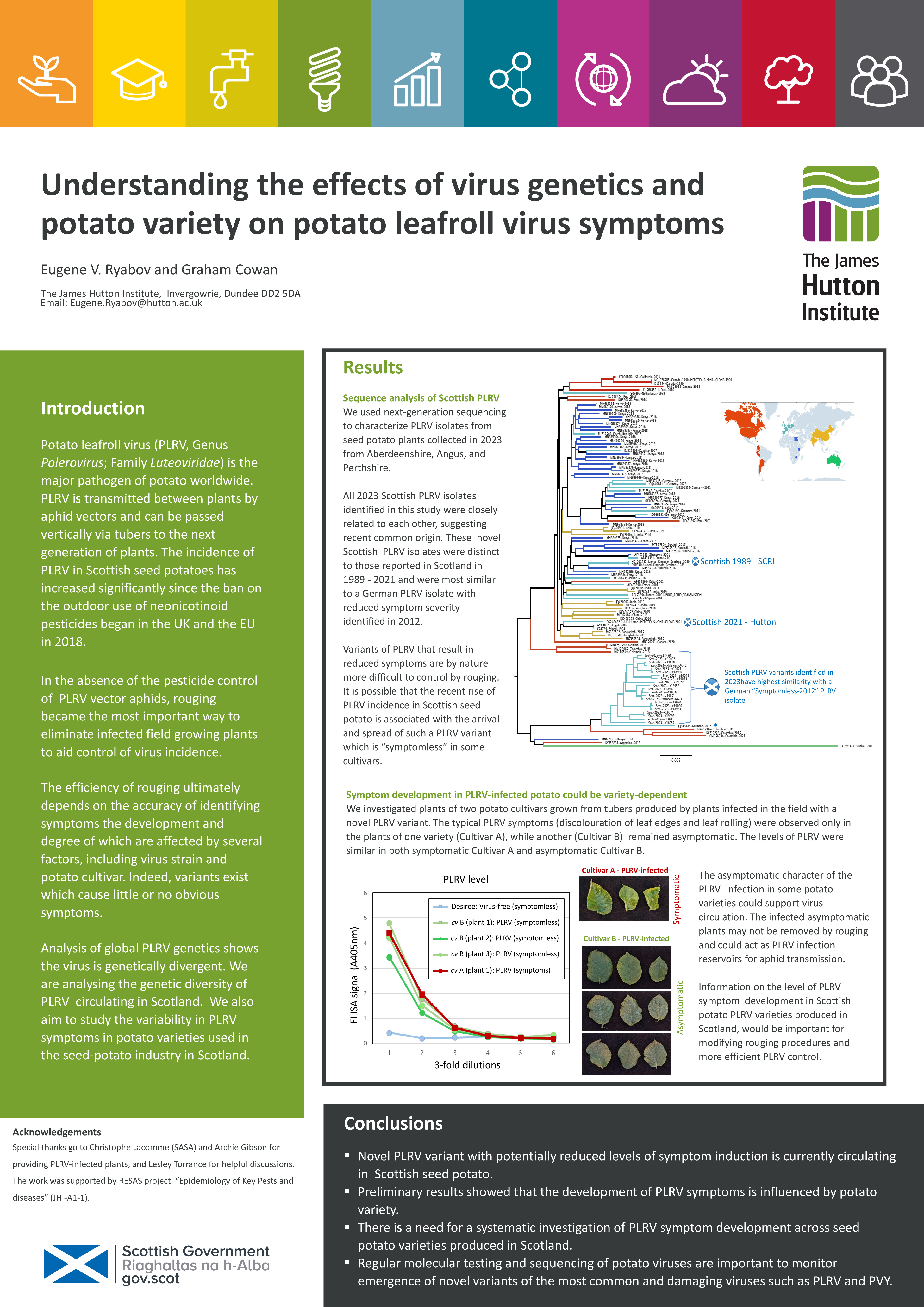
Poster by Eugene Ryabov and Graham Cowan on 'understanding the effects of virus genetics and potato variety on potato leafroll virus symptoms'
Document
SACAPP presentation by Alison Karley on 'aphids: the secrets of their success'