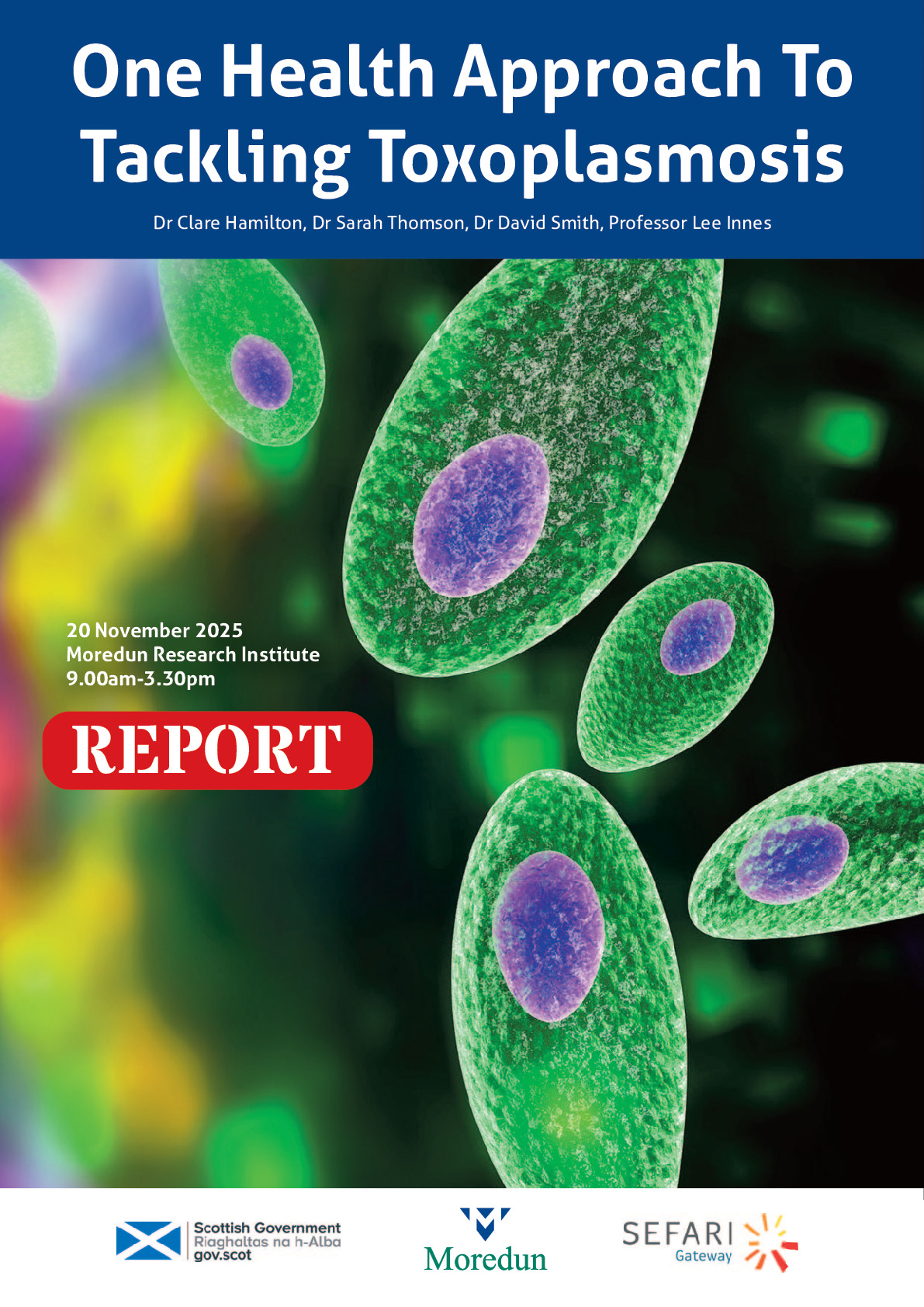
Toxoplasma gondii is widely regarded as a classic One Health parasite because its impact spans human health, animal health, and the environment. The most recent data from Public Health Scotland shows 47 laboratory-confirmed human cases of toxoplasmosis in 2023, continuing a steady rise over the past decade. Cats (domestic and wild) are the only known definitive hosts of the parasite, capable of shedding millions of oocysts in their faeces that can persist in soil and water for long periods of time, leading to widespread environmental contamination and exposing livestock, wildlife, and humans to infection.
SEFARIGateway and NatureScot, have commissioned research to study how Scotland’s Agricultural Knowledge and Innovation System (AKIS) could support a just transition to sustainable and regenerative agriculture.

Wild & Flo is a vertical farming enterprise based in rural North Yorkshire. The business combines organic principles with self-built technology to create a scalable, energy-independent model tailored to underutilised rural spaces.

Vertegrow began as a commercial vertical farming operator located at Waterside Farm in Aberdeenshire. In partnership with Intelligent Growth Solutions (IGS), the farm launched Scotland’s early vertical farm— deploying a single-tower, 300 m² controlled-environment system in 2020–21 to grow leafy greens, microgreens and herbs year-round with minimal energy use and rainwater harvesting. However, the venture has since shifted from food production to medicinal cannabis cultivation under the company Waterside Pharmaceuticals, founded by Martin Dickie, co-founder of BrewDog.


LettUs Grow is a Bristol-based B-Corp established in 2015 specialising in aeroponics technology.

The purpose of this guide is to outline options and considerations for businesses and organisations interested in developing controlled environment growing enterprises in the Highlands and Islands. It is intended for both existing growers looking to diversify their production systems and for businesses, community groups, SMEs, and enterprises with little or no background in horticulture.

Authors: Cait MacPhee -The University of Edinburgh, Aiduan Borridon - University College London, Lorna Dawson - The James Hutton Institute, Stijn Van Ewijk - University College London, Rupert Hough - The James Hutton Institute, Gavin Melaugh - The University of Edinburgh, Frances Sandison - The James Hutton Institute, Camilla Thomson - The University of Edinburgh

Report by the James Hutton Institute and SEFARI Gateway
Author: Rupert Hough

Mandatory End of Project report for RI-B7-01. Approved by RESAS on 09 March 2026
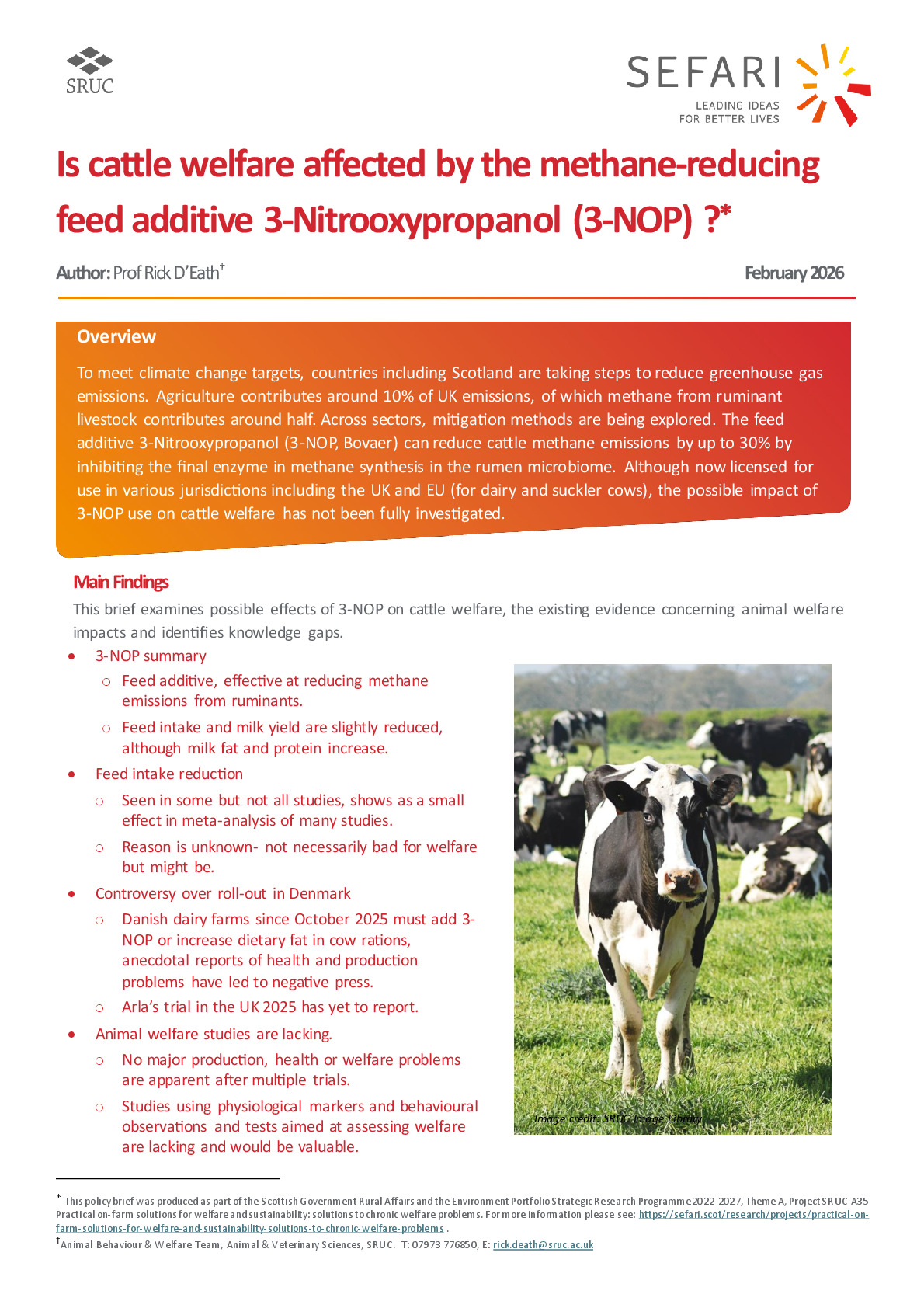
To meet climate change targets, countries including Scotland are taking steps to reduce greenhouse gas emissions. Agriculture contributes around 10% of UK emissions, of which methane from ruminant livestock contributes around half. Across sectors, mitigation methods are being explored. The feed additive 3-Nitrooxypropanol (3-NOP, Bovaer) can reduce cattle methane emissions by up to 30% by inhibiting the final enzyme in methane synthesis in the rumen microbiome.
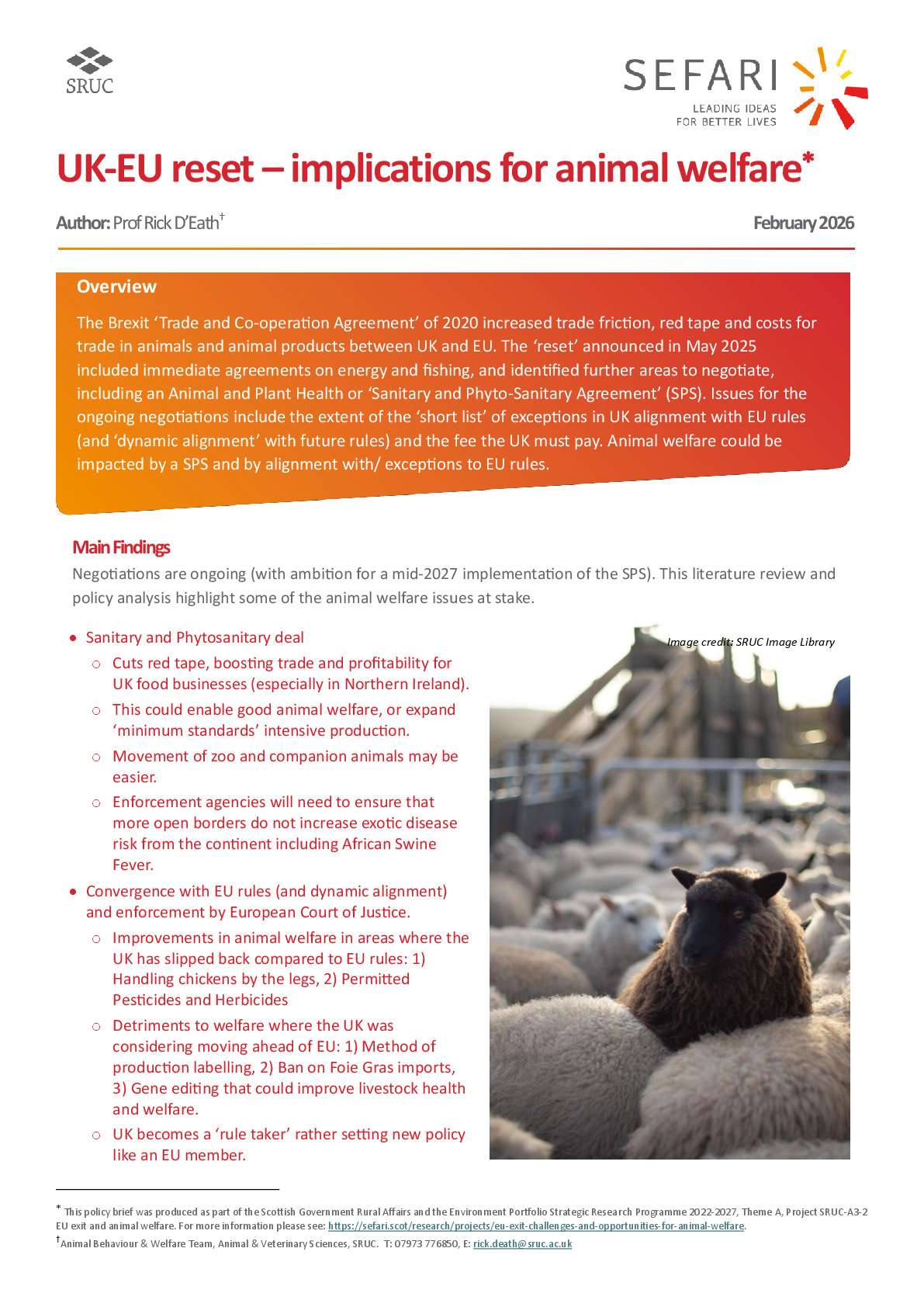
The Brexit ‘Trade and Co-operation Agreement’ of 2020 increased trade friction, red tape and costs for trade in animals and animal products between UK and EU. The ‘reset’ announced in May 2025 included immediate agreements on energy and fishing, and identified further areas to negotiate, including an Animal and Plant Health or ‘Sanitary and Phyto-Sanitary Agreement’ (SPS). Issues for the ongoing negotiations include the extent of the ‘short list’ of exceptions in UK alignment with EU rules (and ‘dynamic alignment’ with future rules) and the fee the UK must pay.
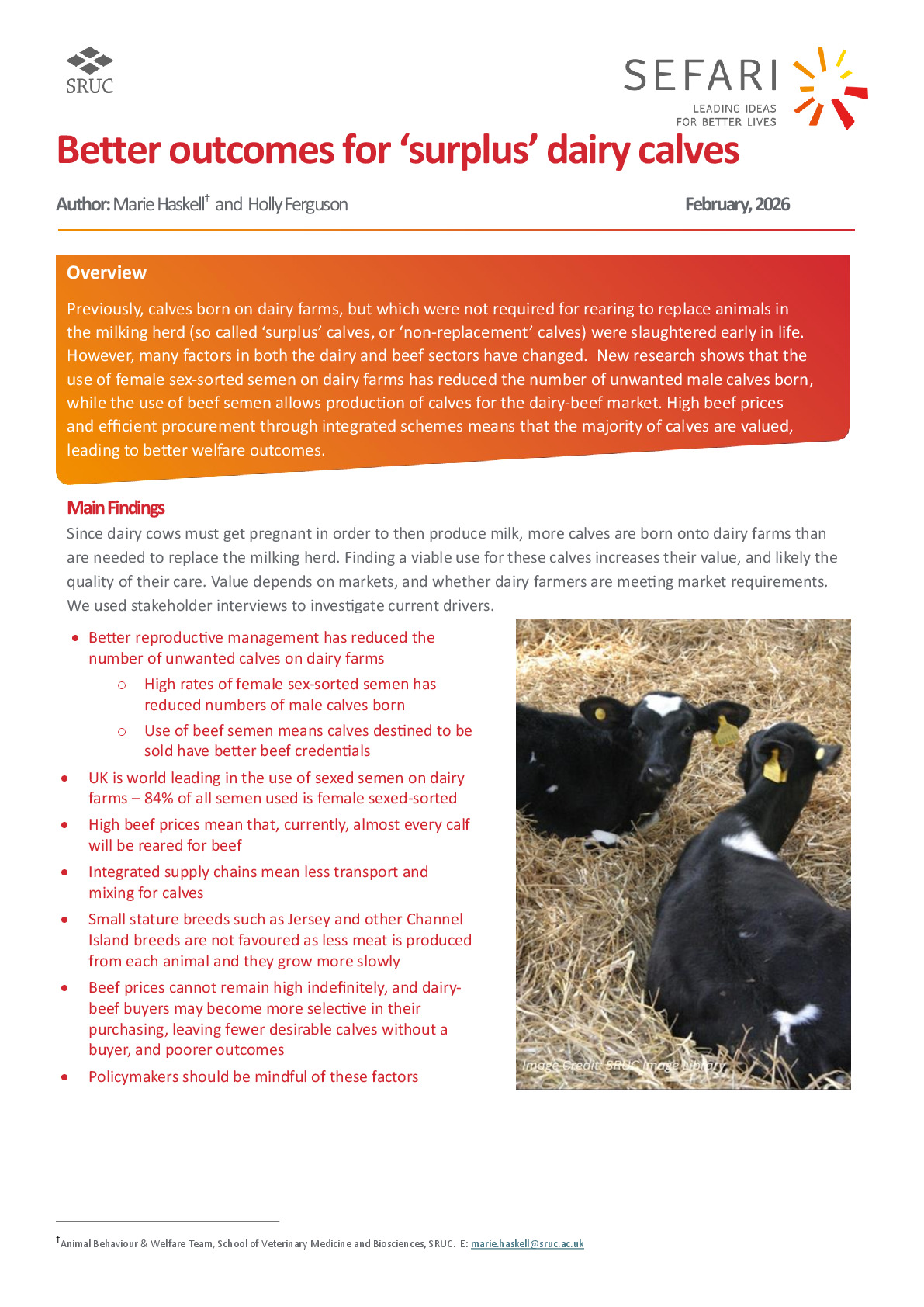
Previously, calves born on dairy farms, but which were not required for rearing to replace animals in the milking herd (so called ‘surplus’ calves, or ‘non-replacement’ calves) were slaughtered early in life. However, many factors in both the dairy and beef sectors have changed. New research shows that the use of female sex-sorted semen on dairy farms has reduced the number of unwanted male calves born, while the use of beef semen allows production of calves for the dairy-beef market.

Author: Dr Emma Baxter
This document was produced as part of the Scottish Government Rural Affairs and the Environment Portfolio Strategic Research Programme 2022-2027, Theme A, Project SRUC-A3-2 EU exit and animal welfare. For more information: https://sefari.scot/research/projects/eu-exit-challenges-and-opportunities-for-animal-welfare.