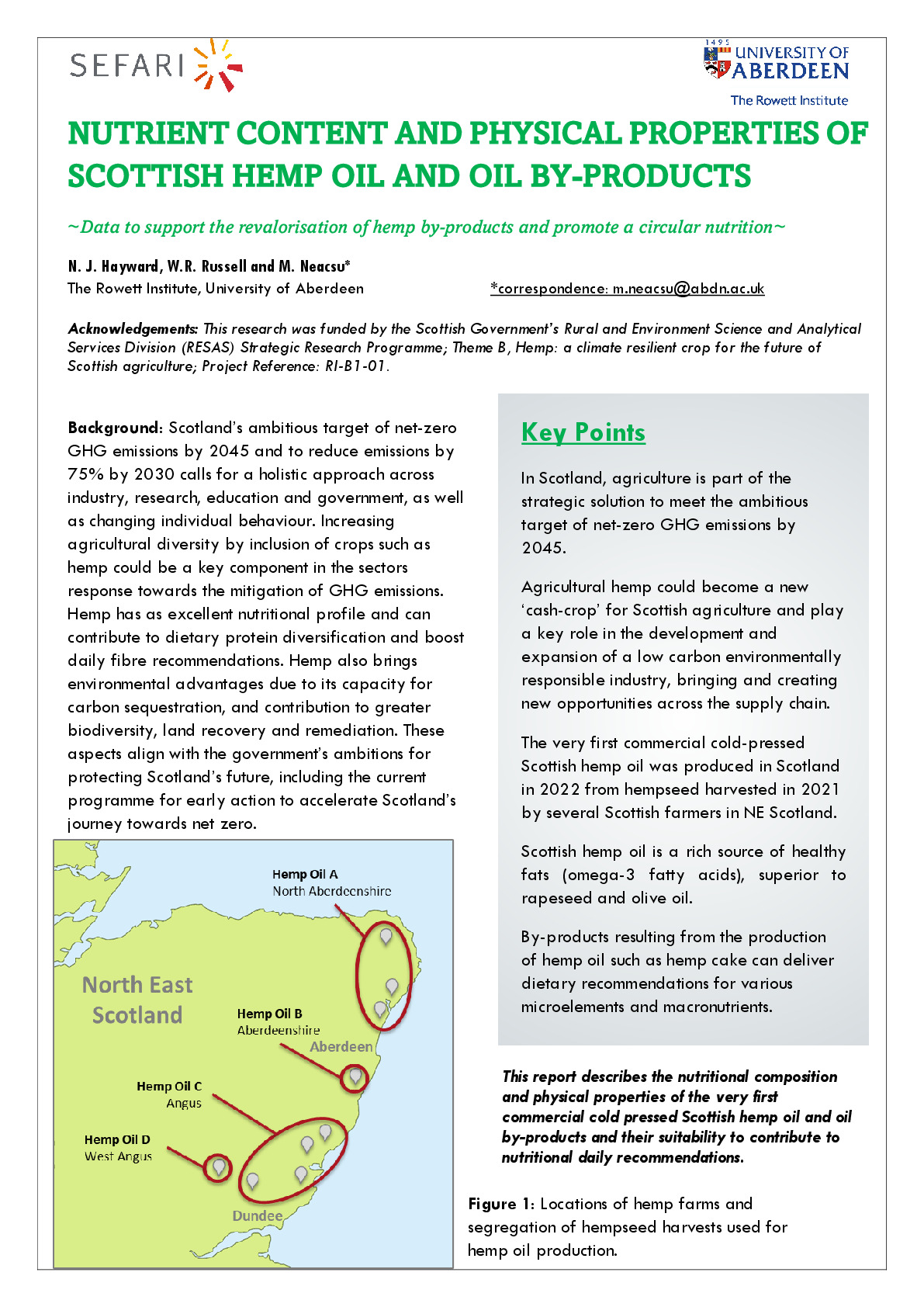
Executive summary detailing the properties of Scottish Hemp Oil for project RI-B1-01
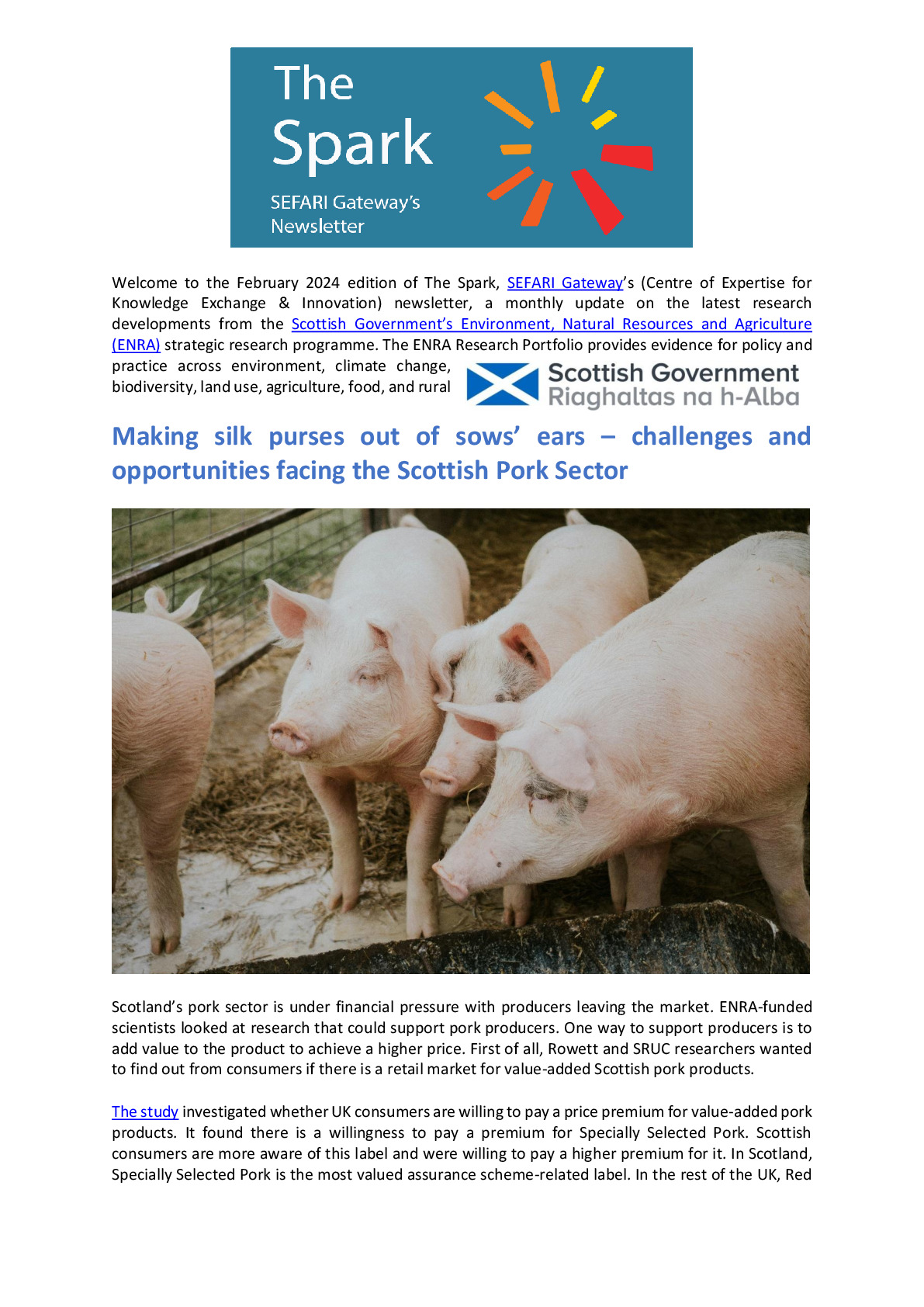
The 4th edition of The Spark, SEFARI Gateway’s newsletter, a monthly update on the latest research developments from the Scottish Government’s Environment, Natural Resources and Agriculture (ENRA) strategic research programme.
This booklet provides insights into some of the soils research undertaken and the positive benefits it delivers to Scotland, UK and Global soil health, biodiversity productivity and climate resilience.
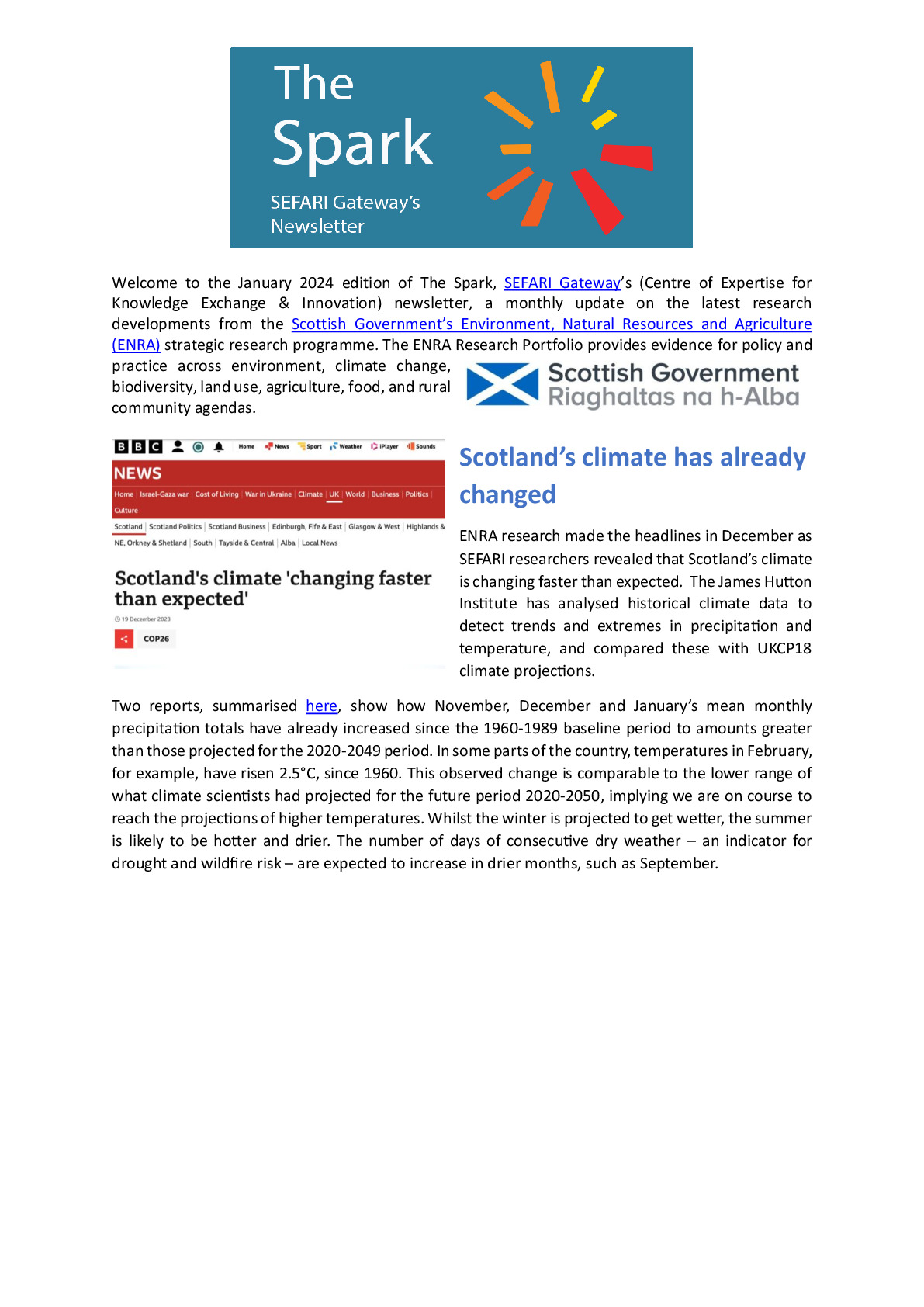
The 3rd edition of The Spark, SEFARI Gateway’s newsletter, a monthly update on the latest research developments from the Scottish Government’s Environment, Natural Resources and Agriculture (ENRA) strategic research programme.
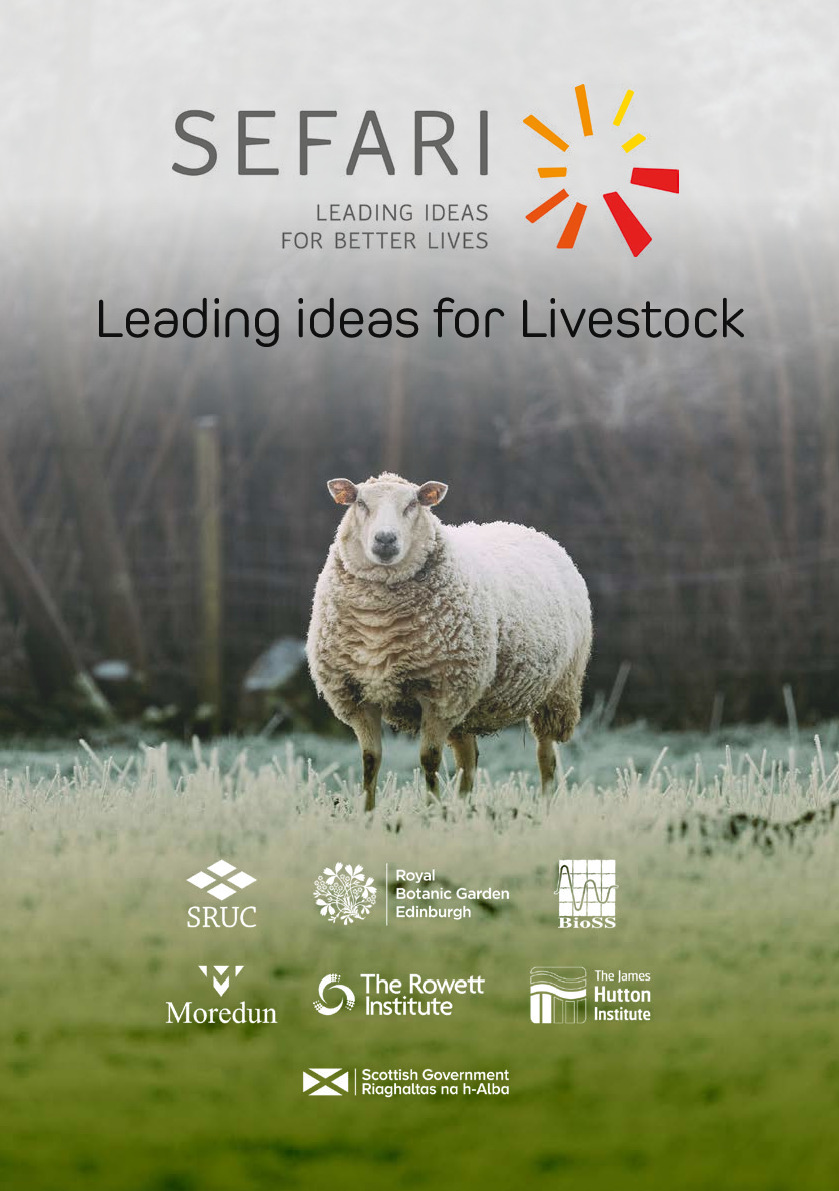
This booklet provides insights into the programme’s livestock research and its delivery of significant benefits to Scotland, UK and Global livestock health, welfare, productivity and climate impact. The research is helping policy agendas and delivering innovation and new practices contributing to Scotland’s National Outcomes and the United Nations Sustainable Development Goals (SDGs).
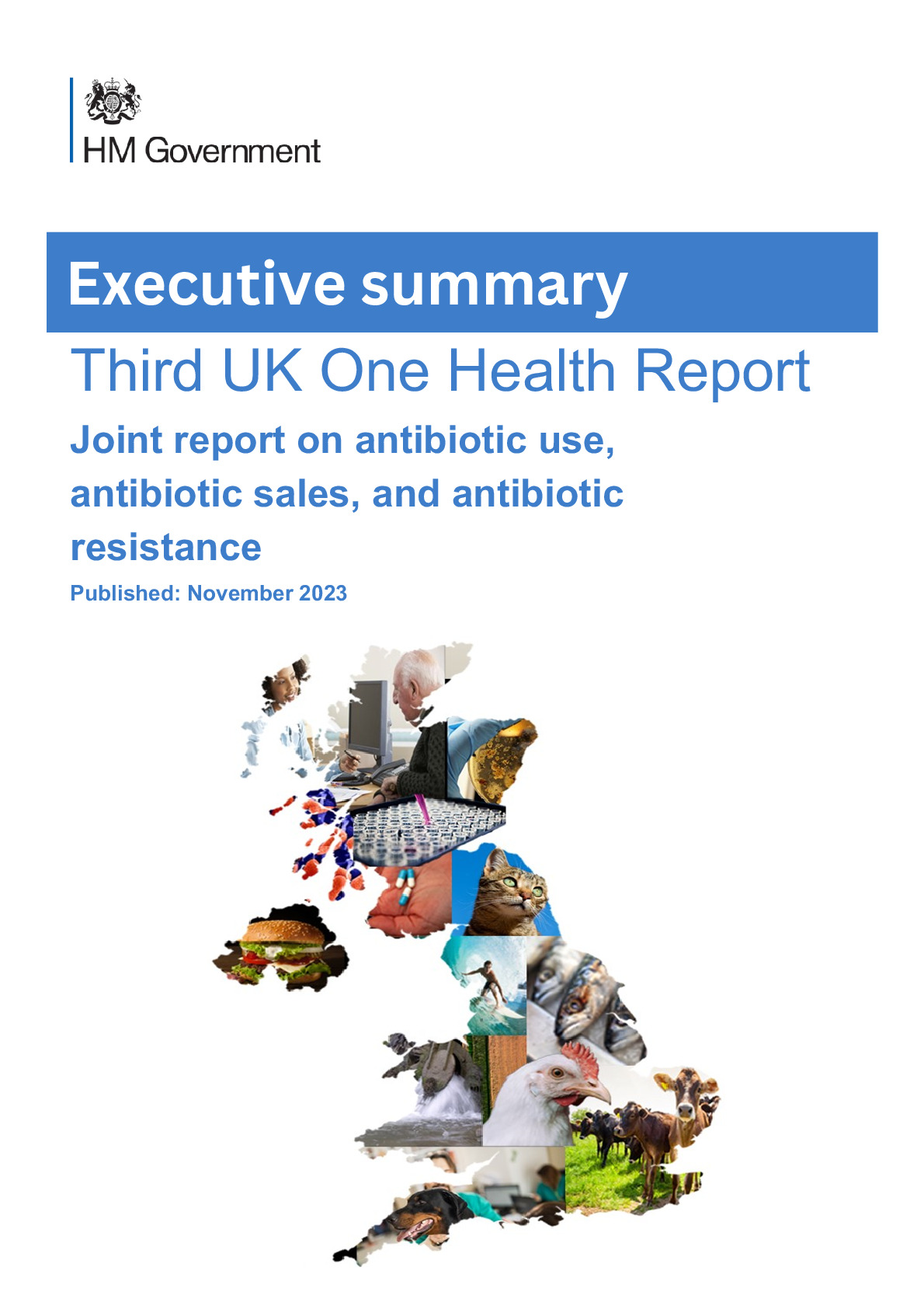
Third UK One Health Report - Joint report on antibiotic use, antibiotic sales, and antibiotic resistance. Published: November 2023
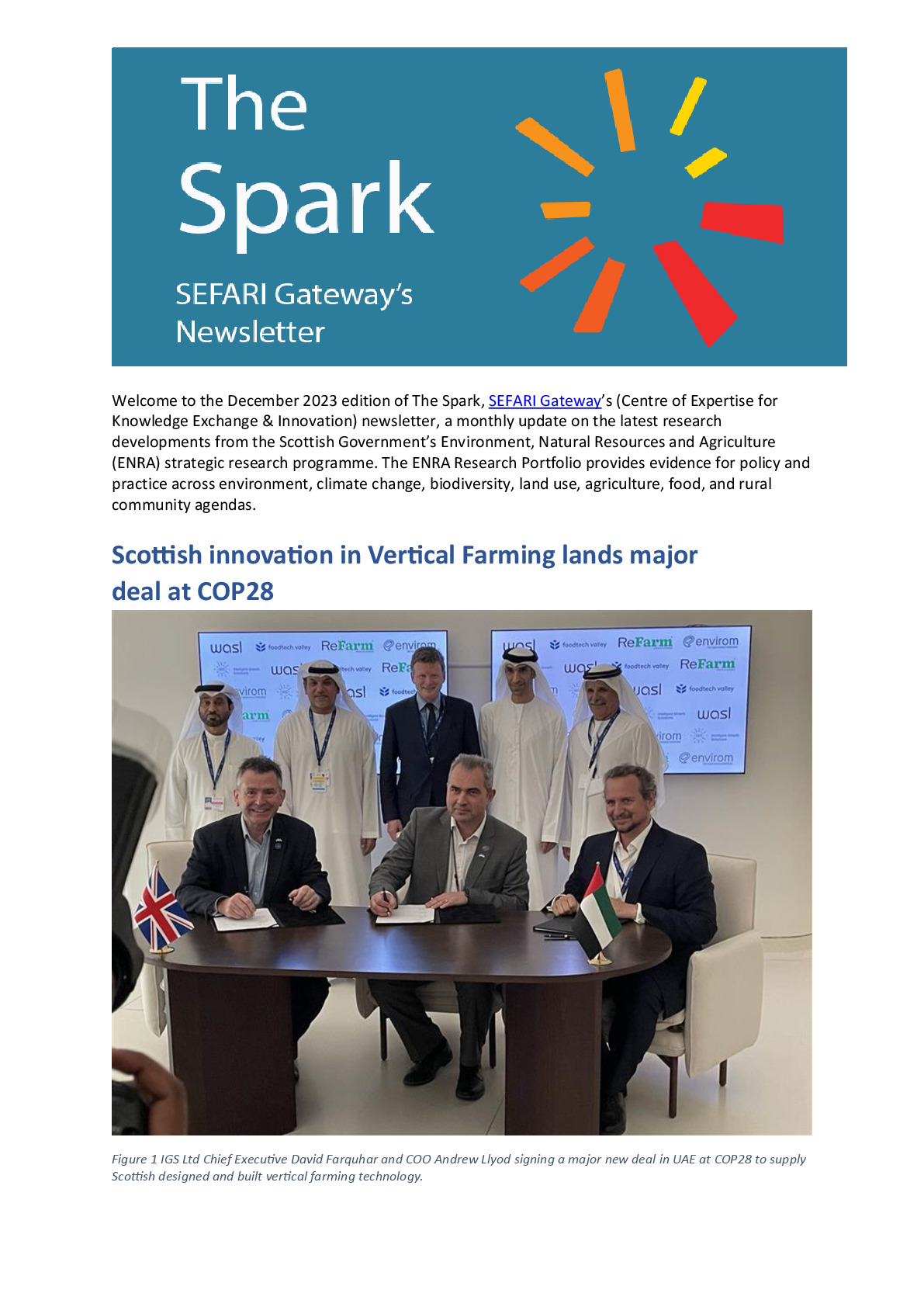
The 2nd edition of The Spark, SEFARI Gateway’s newsletter, a monthly update on the latest research developments from the Scottish Government’s Environment, Natural Resources and Agriculture (ENRA) strategic research programme.
Document
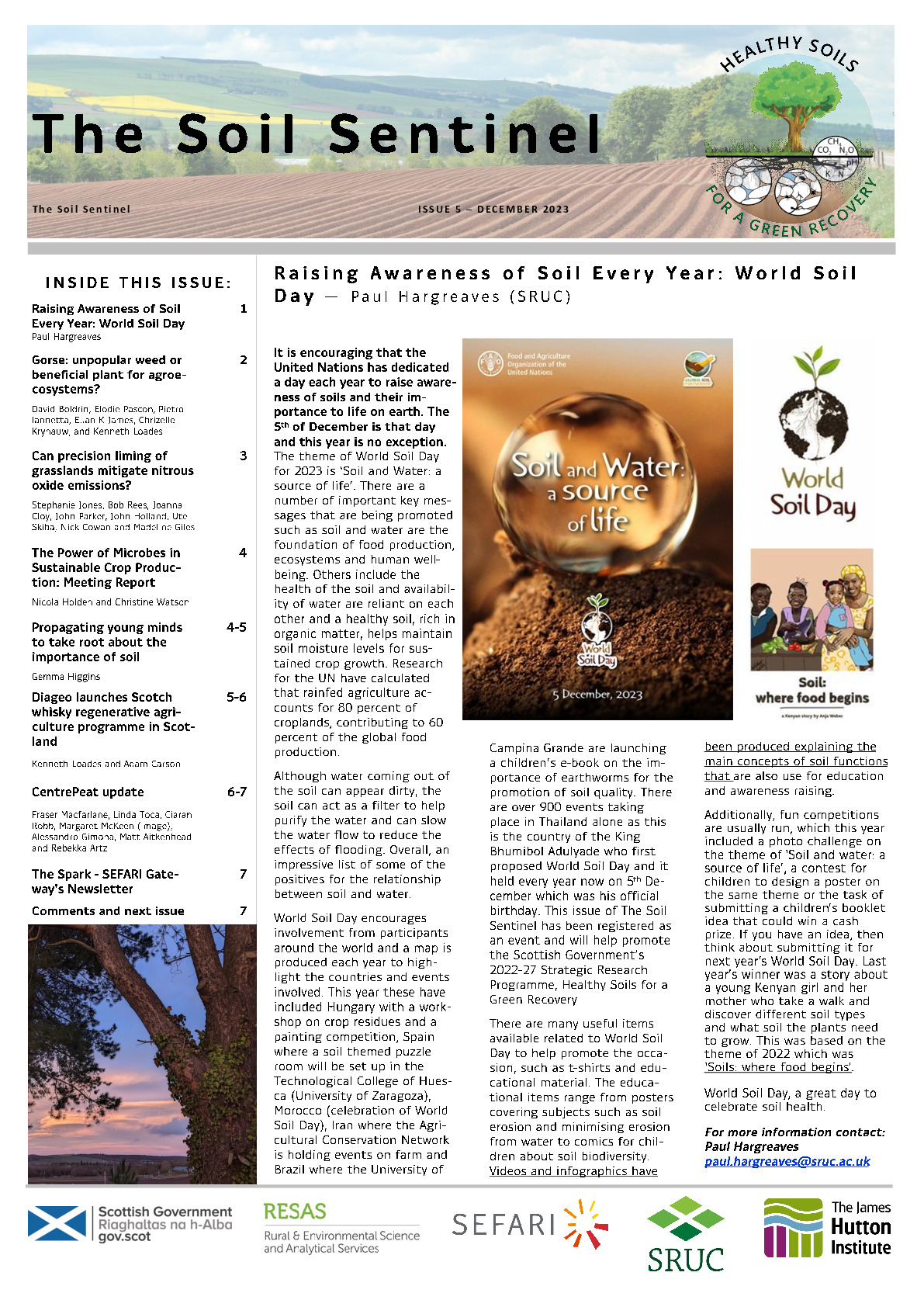
The Soil Sentinel newsletter provides information about soil work being carried out in the Scottish Government's Strategic Research Programme.
Document
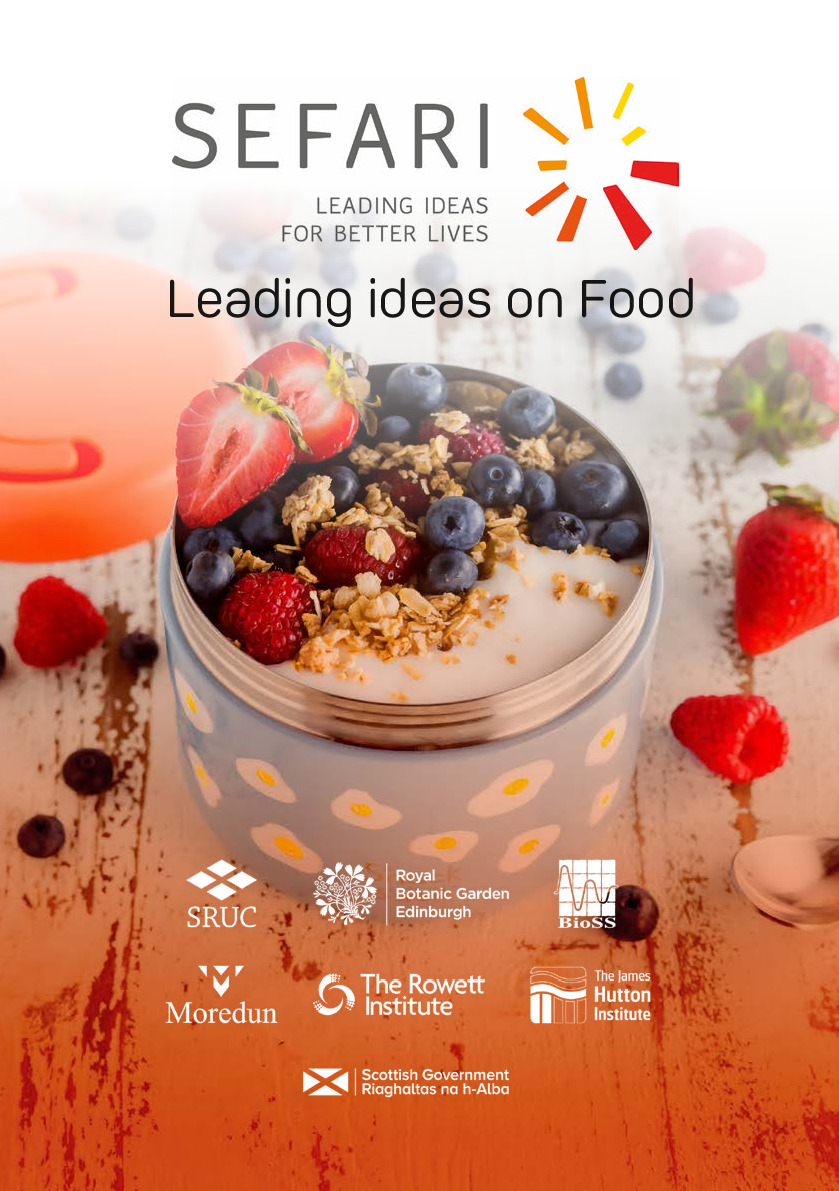
This booklet highlights SEFARI research in food which is designed to help us have healthy diets that are safe, nutritious as well as being environmentally and economically sustainable.
Document
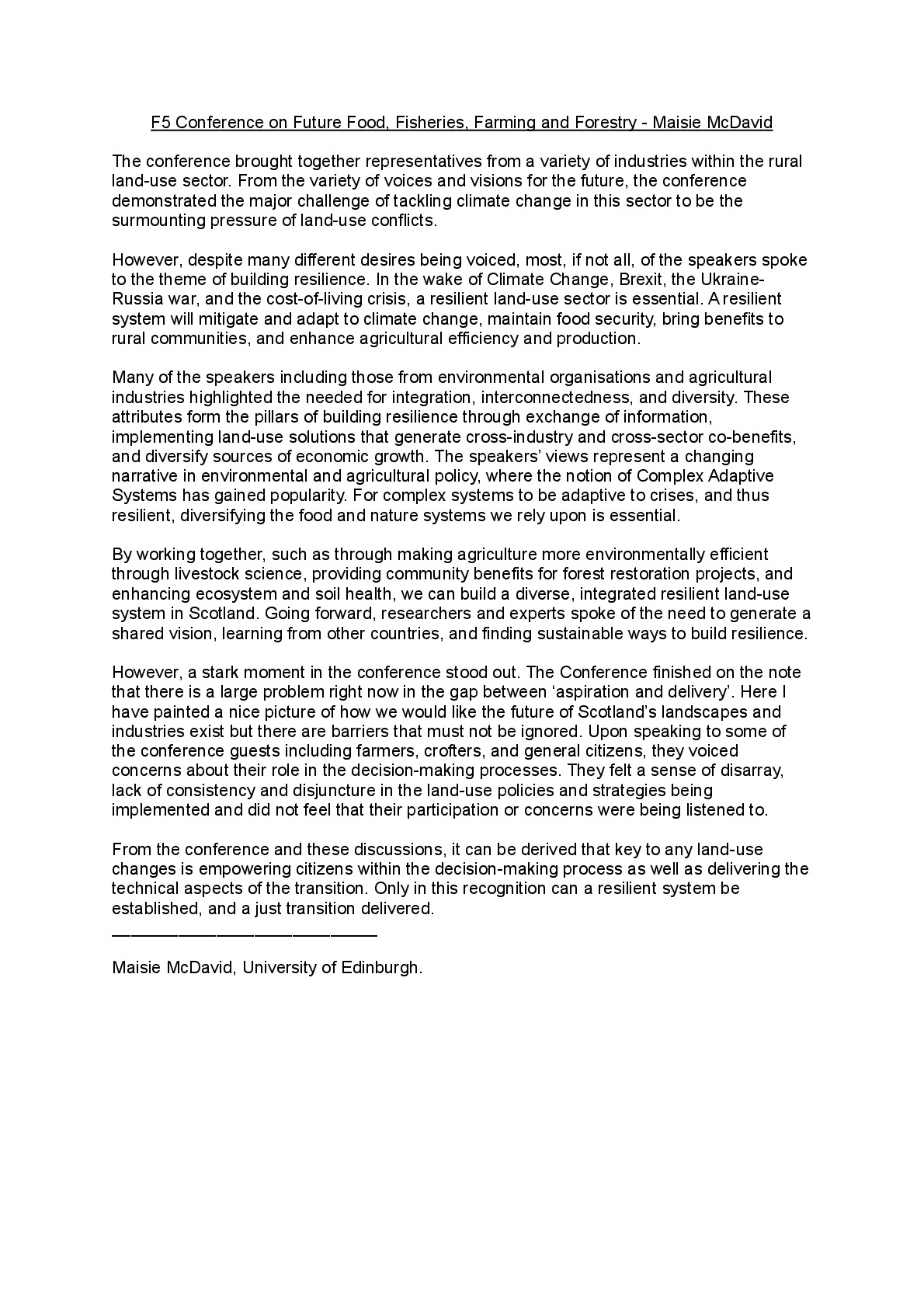
Read Maisie McDavid’s perspective on the F5 Conference on Future Food, Fisheries, Farming and Forestry.
Document
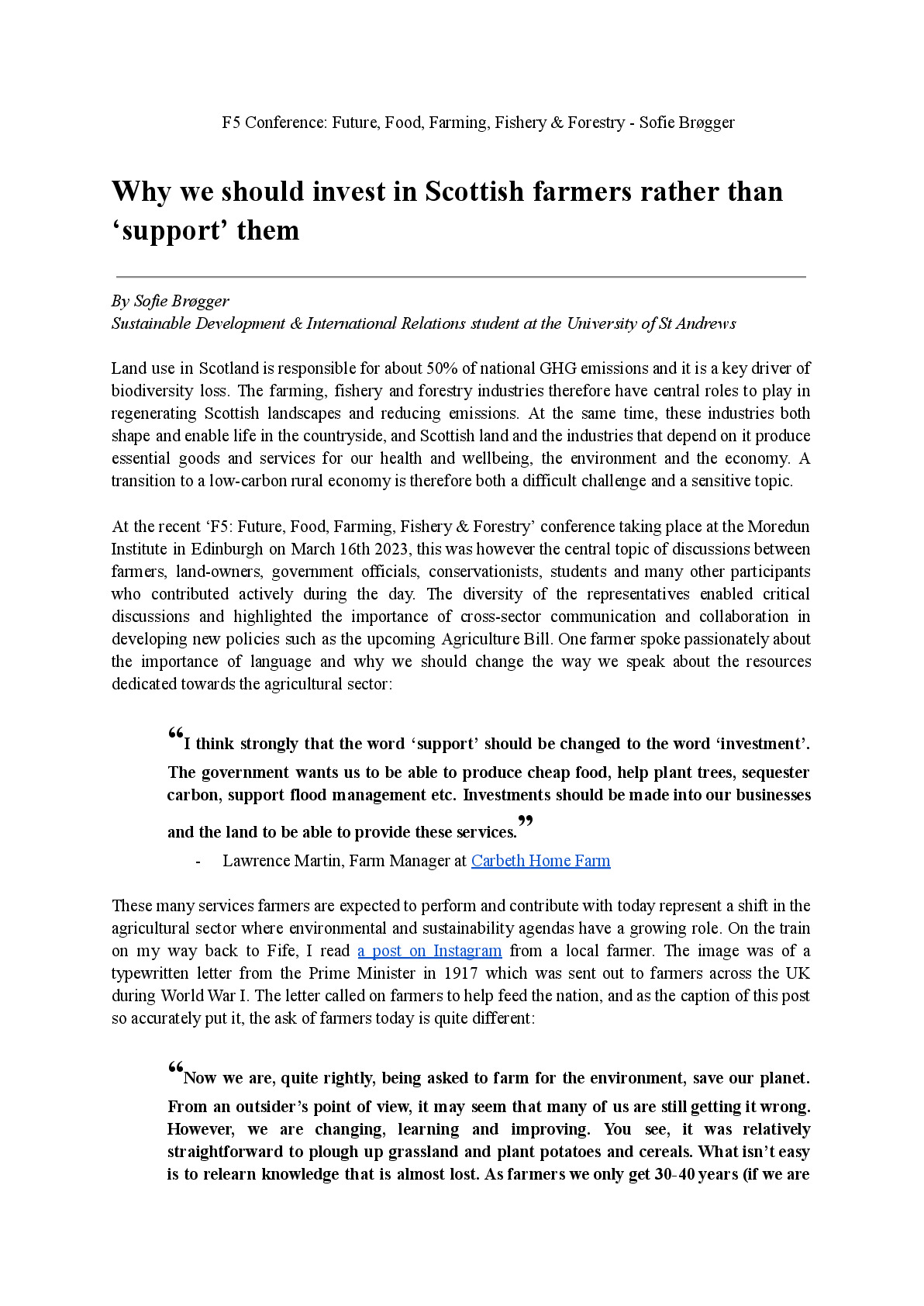
Read Sofie Brøgger’s perspective on the F5 Conference on Future Food, Fisheries, Farming and Forestry.
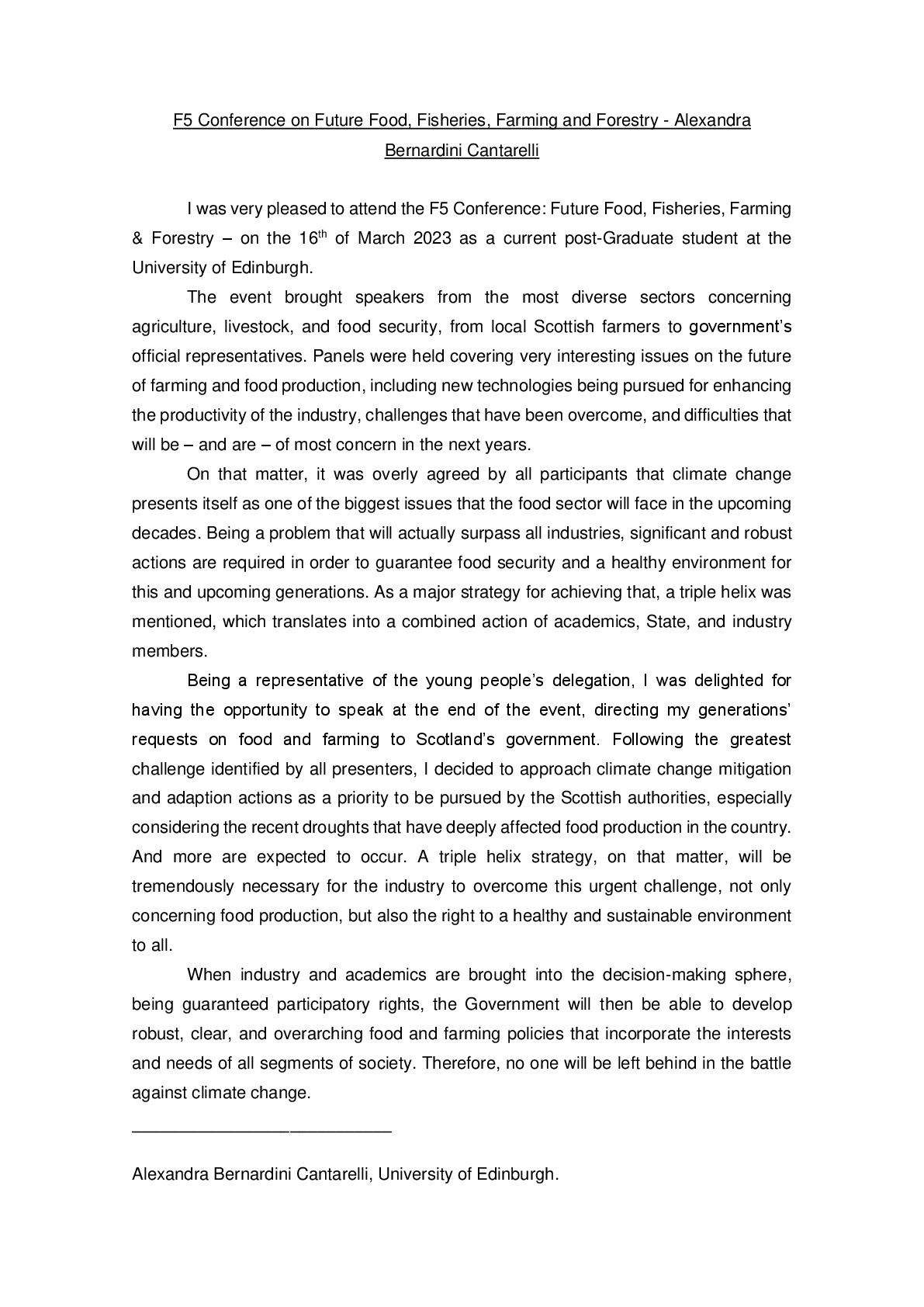
Read Alexandra Bernardini Cantarelli’s perspective on the F5 Conference on Future Food, Fisheries, Farming and Forestry.
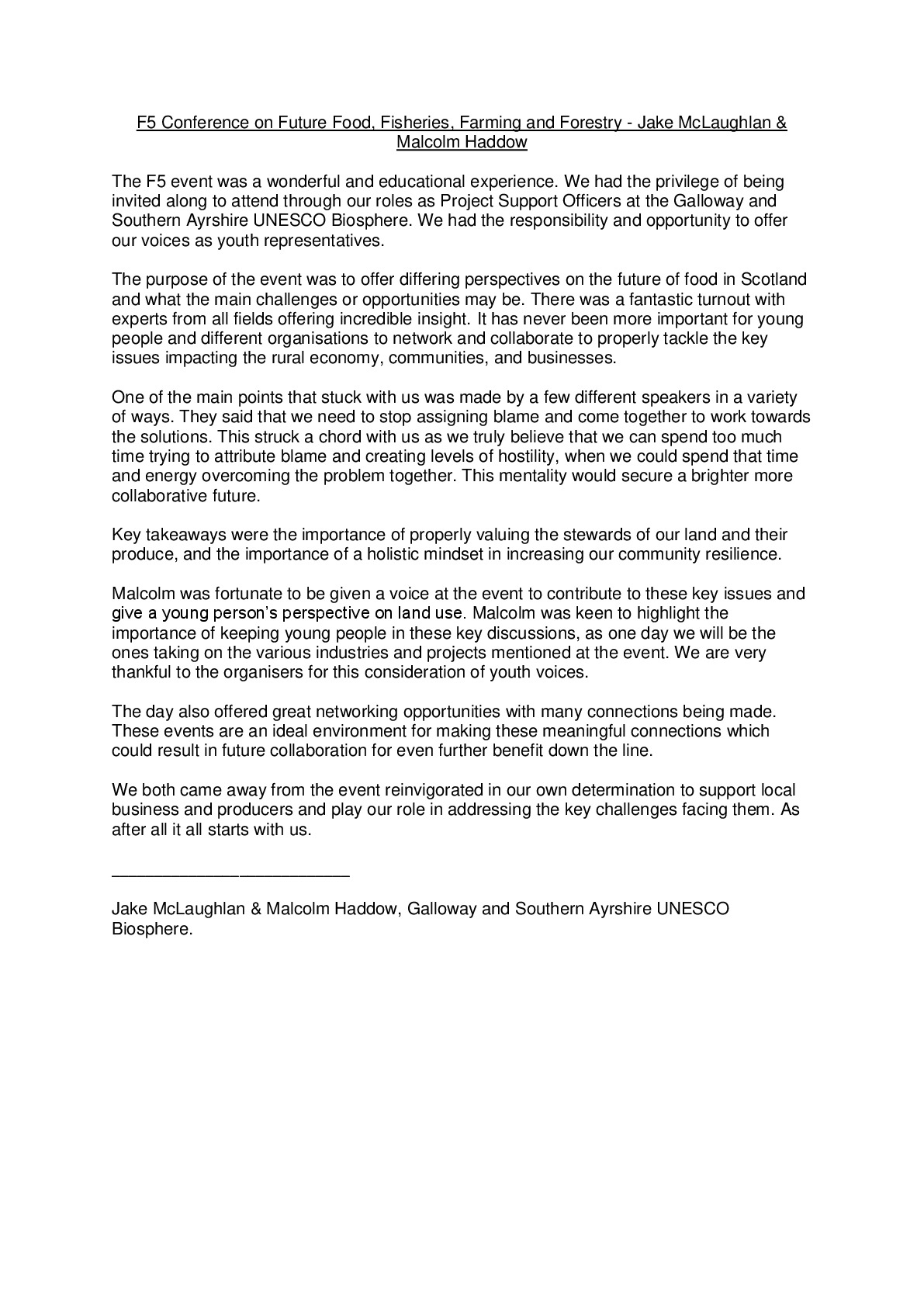
Read Jake McLaughlan & Malcolm Haddow’s perspective on the F5 Conference on Future Food, Fisheries, Farming and Forestry.
Document
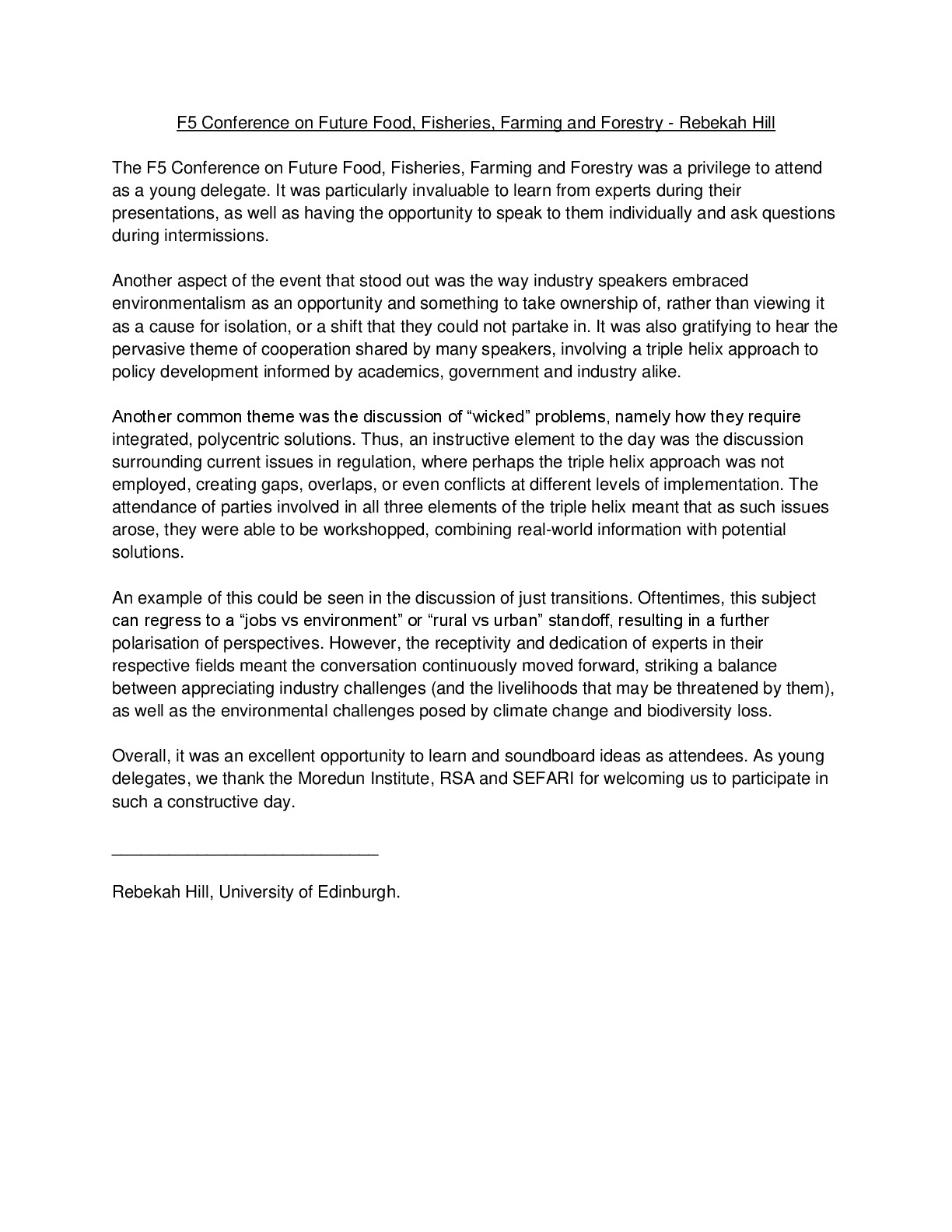
Read Rebekah Hill’s perspective on the F5 Conference on Future Food, Fisheries, Farming and Forestry.
This evidence review was commissioned by the Scottish Government to inform the development of mechanisms for integrated land use (i.e. bringing together different land uses in a region). This report outlines the findings of a literature review of social and economic impacts that can arise in relation to land use change. In this report we consider land use change to include both land cover and land management change and recognise that land use change is driven by multiple factors.
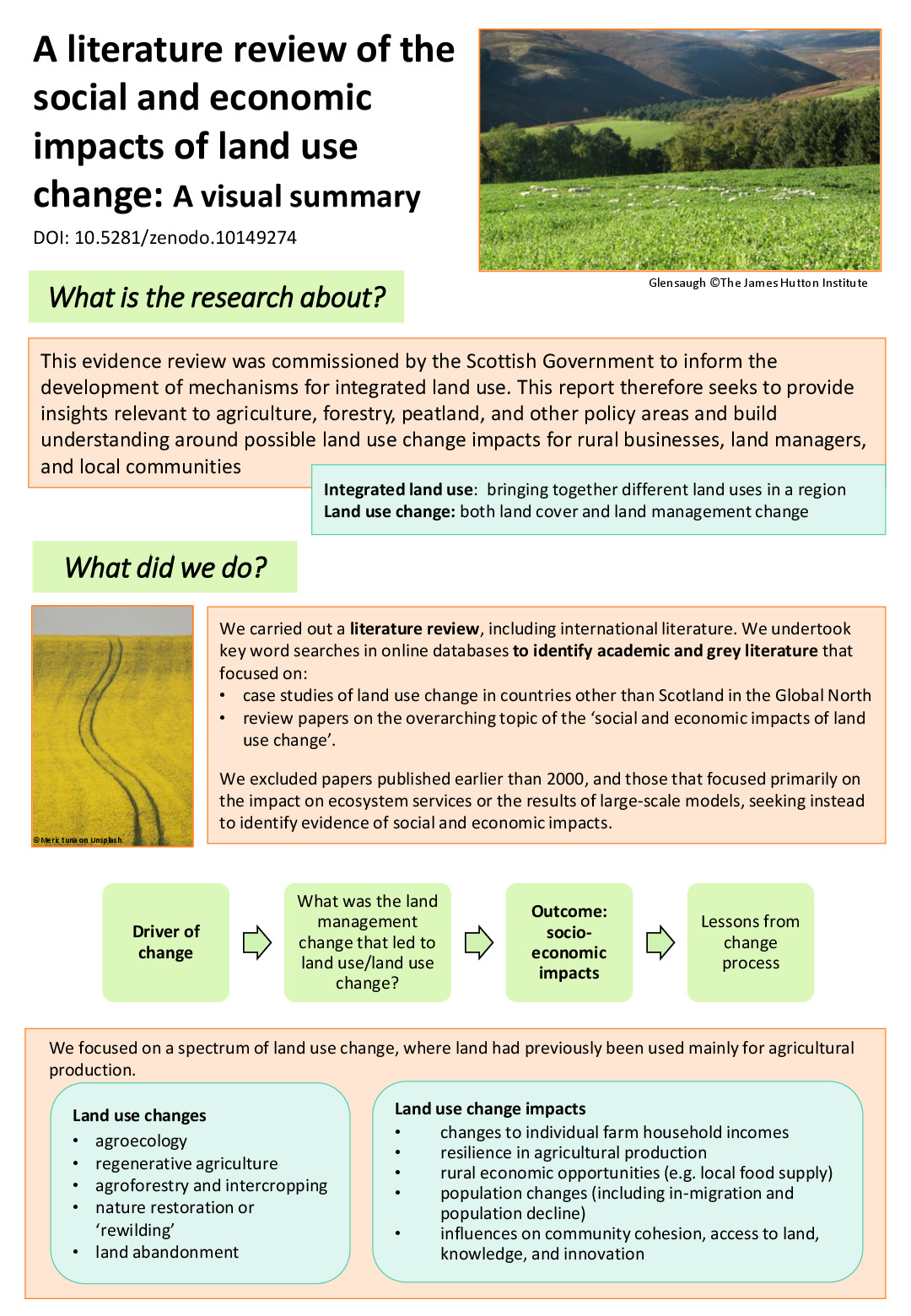
This is a visual summary of the following report: ‘A literature review of the social and economic impacts of land use change’ by A. McKee and N. Beingessner, James Hutton Institute, November 2023. DOI: 10.5281/zenodo.10143949.
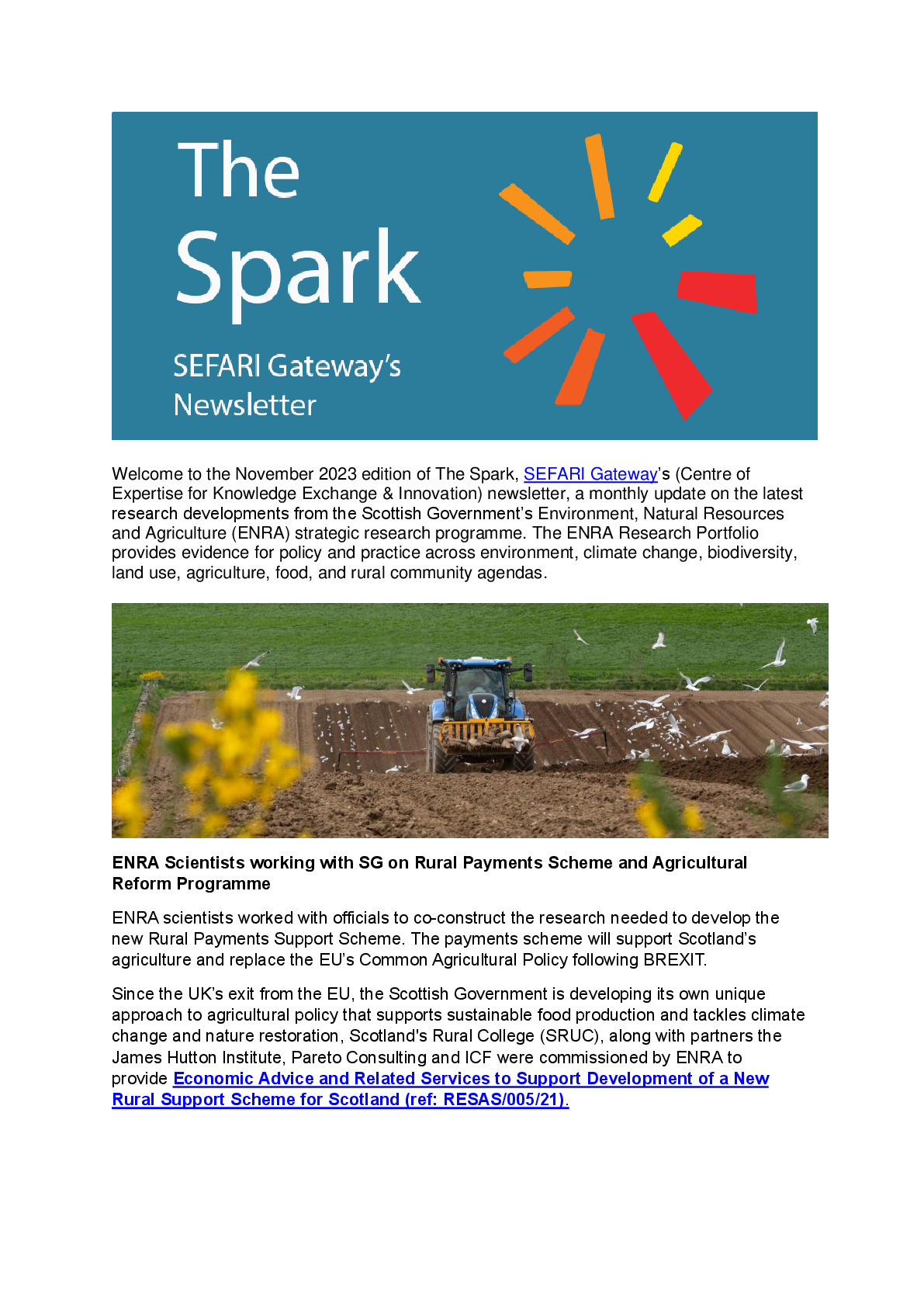
The 1st edition of The Spark, SEFARI Gateway’s newsletter, a monthly update on the latest research developments from the Scottish Government’s Environment, Natural Resources and Agriculture (ENRA) strategic research programme.
A SEFARI Gateway funded Specialist Advisory Group report, detailing evidence based actions that could be undertaken by potato supply chains to reduce GHG emissions.
A SEFARI Gateway Fellowship Report.
This report details research and technical developments made to enable forecasting of harvest time crop yield as the growing season develops using satellite imagery, data integration and modelling. The aim was to develop crop yield prediction capabilities to enhance the RESAS Scottish Crop Map, and to contribute to improvement and the future direction of this product. The objective was to develop an annual yield prediction model for high profile crops in Scotland.
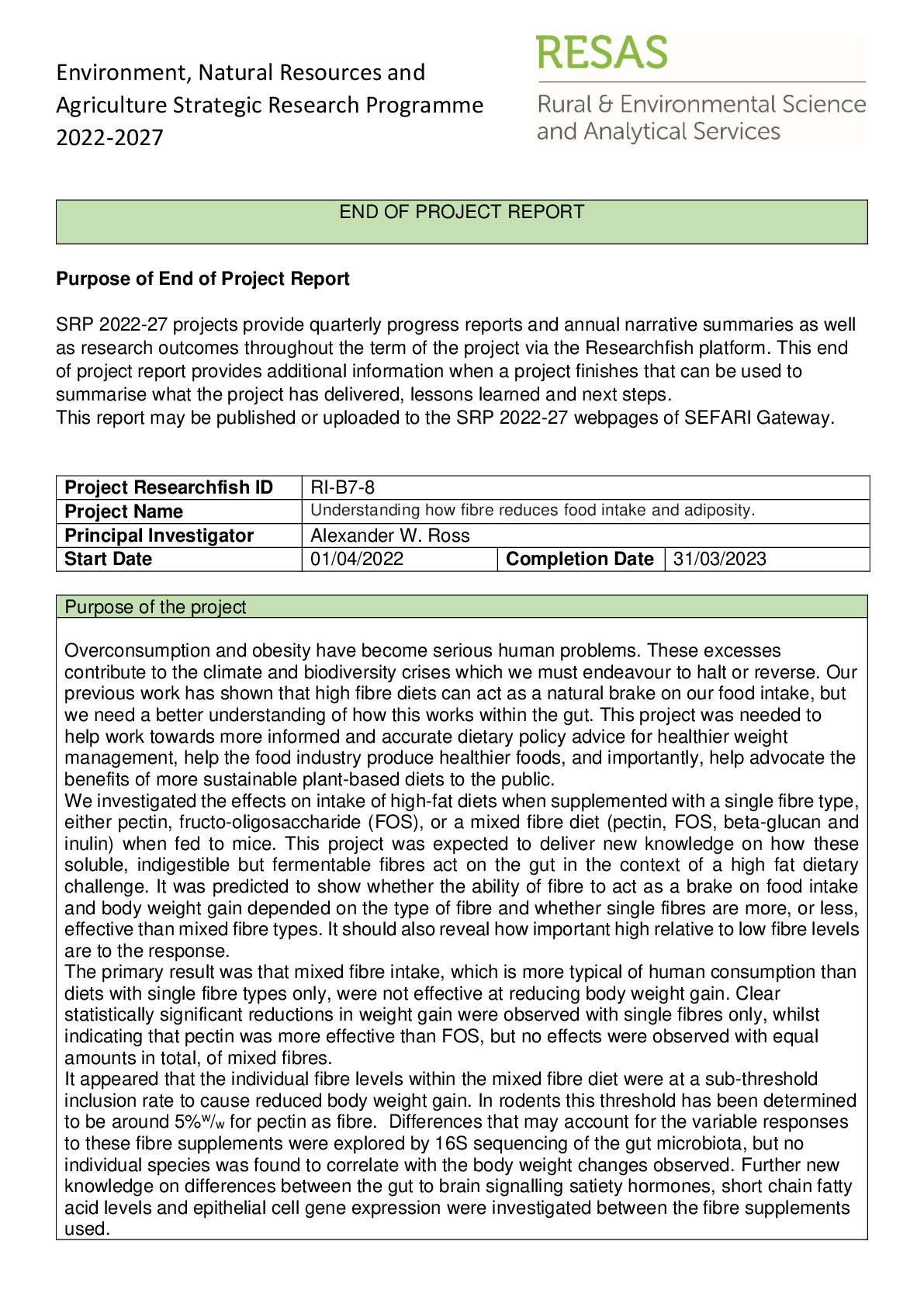
Environment, Natural Resources and Agriculture Strategic Research Programme 2022-2027 – End of Project Report - Understanding How Fibre Reduces Food Intake and Adiposity (RI-B7-08).