Environment, Natural Resources and Agriculture Strategic Research Programme 2022-2027 – End of Project Report - Climate Change, Biodiversity Loss and Changing Diets (RI-B7-07).
Environment, Natural Resources and Agriculture Strategic Research Programme 2022-2027 – End of Project Report - Risk-Benefit Analysis of Scottish Seaweeds as a Sustainable Food Source (RI-B7-05).
Environment, Natural Resources and Agriculture Strategic Research Programme 2022-2027 – End of Project Report - Investigation of the Covid 19 Pandemic on Dietary Behaviour in Scotland and Accompanying Health and Well-Being Impacts (RI-B7-04).
Environment, Natural Resources and Agriculture Strategic Research Programme 2022-2027 – End of Project Report - Barley to Support Food and Drink Innovation (RI-B7-03).
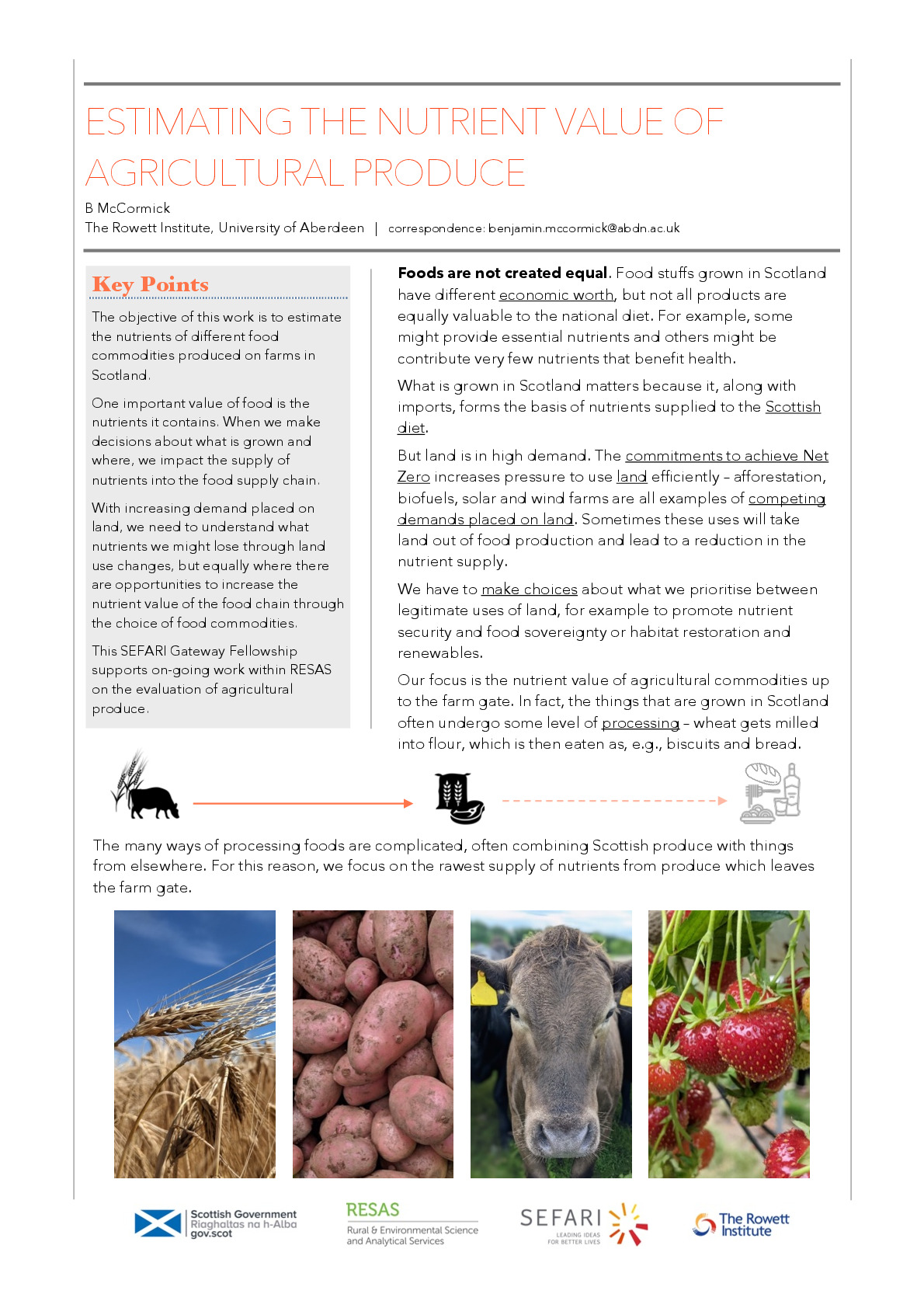
A briefing, by Benjamin JJ McCormick (a SEFARI Gateway Fellow), outlining his project on 'estimating the nutrient value of agricultural products'.
This report aims to present strategic plans and provide recommendations for utilising edible insects as animal feed to enhance sustainable agri-food systems in Scotland.
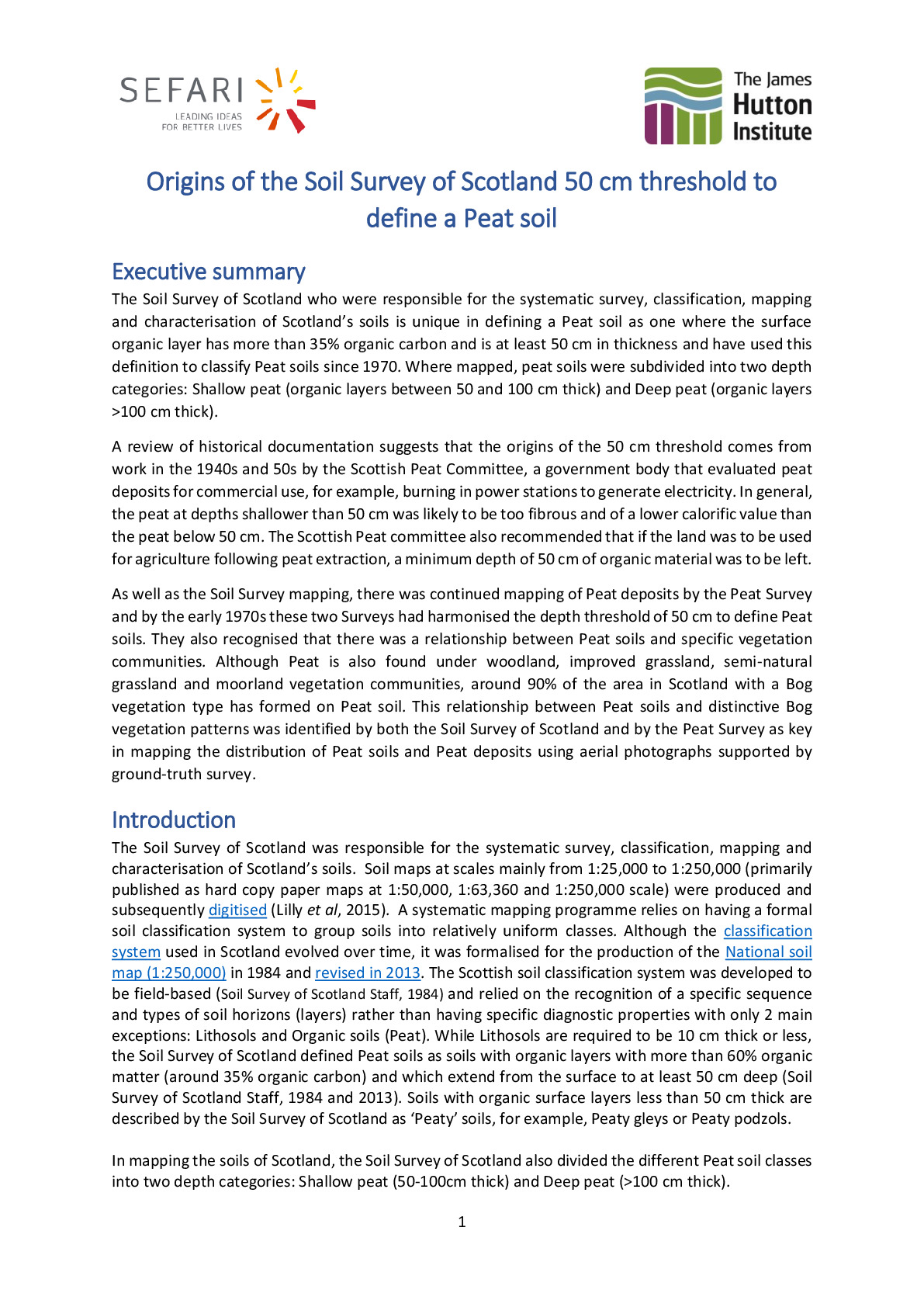
The following report was undertaken between January and March 2023 as part of a SEFARI Research Fellowship funded via Food and Drink Federation Scotland on behalf of the Scotland Food & Drink Net Zero Task Force to support their understanding of the opportunities and barriers for the Scottish Food and Drink sector moving towards net zero.
'Bridging the gap between science and policy to achieve our climate and nature goals' - Lorna Dawson
Keynote presentation, RESAS Conference 2023.
This report highlights the outcomes from engagement activities with a range of Scottish Government stakeholders to ensure that the indicators and metrics developed in a new experimental publication meet the needs of end users. The report covering the environmental indicators can be found on the Scottish Government website.
This report highlights the results of a systematic literature review of environmental indicators and metrics that are currently used in farm level surveys. This review informed the production of environmental indicators for farms in the Scottish Farm Business Survey (FBS). The report covering the environmental indicators can be found on the Scottish Government website. Environmental data estimated for the Scottish FBS currently includes greenhouse gas (GHG) emissions and nitrogen (N) use.
This report comprises the findings of an evidence review to inform the further development of the Scottish Land Matching Service (SLMS). The Scottish Land Matching Service was established in 2019 as an initiative of Scottish Government’s Farming Opportunity for New Entrants (FONE) Group. The SLMS mandate is to enable joint ventures in farming.
Questions addressed in the review include:
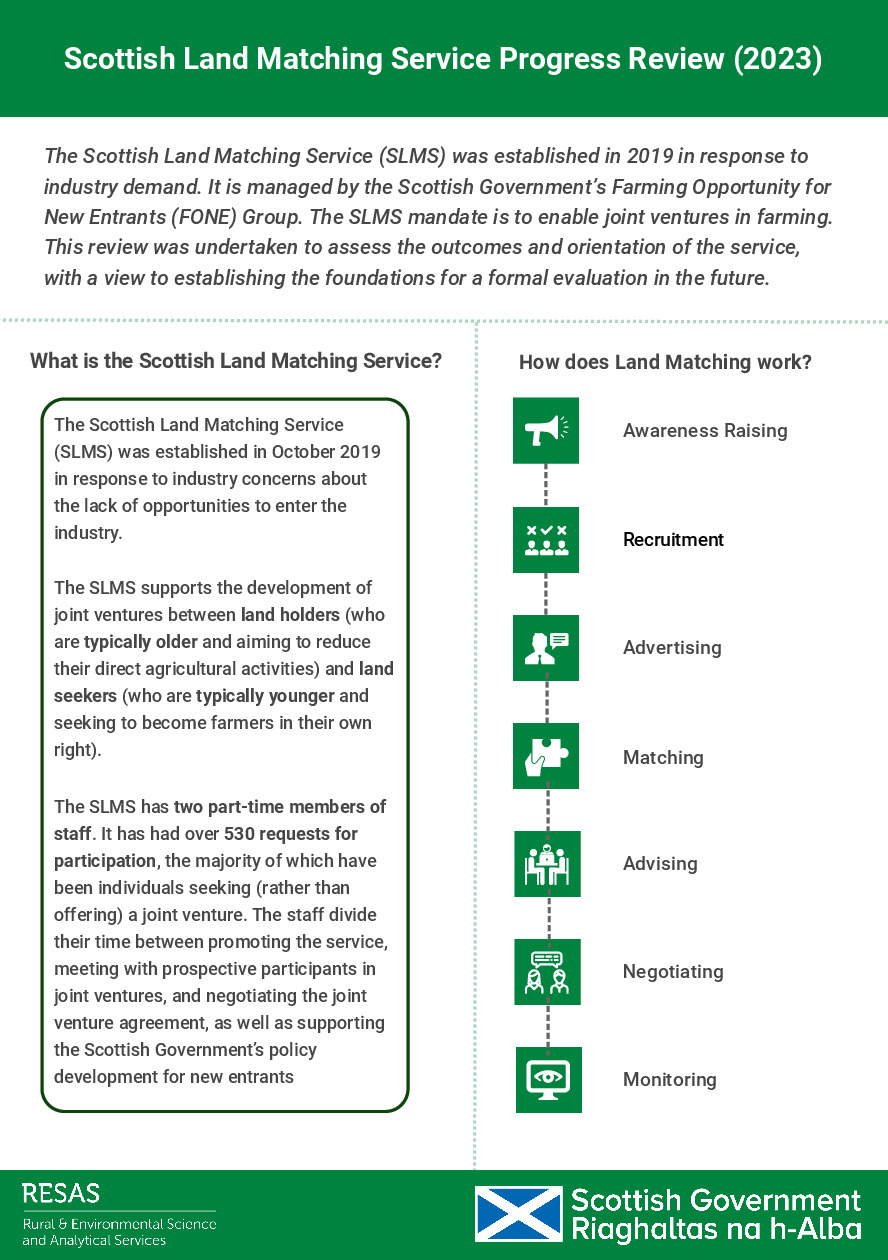
The visual summary accompanies a report led by SEFARI researchers (James Hutton Insitute) and commissioned by the Scottish Government which comprises the findings of an evidence review to inform the further development of the Scottish Land Matching Service. This visual summary has been produced by the Scottish Government based on the findings of the main report. The SLMS was established in 2019 as an initiative of Scottish Government’s Farming Opportunity for New Entrants Group. The SLMS mandate is to enable joint ventures in farming.

This presentation presents highlights from a review of the Scottish Land Matching Service, contextualising progress to date against land matching services elsewhere in the United Kingdom and Republic of Ireland and providing feedback from participants
This report was requested to better understand the implications of not controlling bracken on biodiversity, rural productivity and public health, where asulam is traditionally used for its control in Scotland.
Asulam, sold under the trade name Asulox, is a relatively narrow-spectrum herbicide that has been the predominant chemical method of bracken control, particularly on rough or steep ground since the 1980s. Authorisation for Asulox was removed in 2012 with all recent use subject to emergency authorisation which has been given on an annual basis.
This presentation discusses the current and potential future impacts of innovations in ruminant improvements, highlighting their role in achieving a cost-effective and sustainable reduction in livestock greenhouse gas emissions (GHGs) from Scotland in the short, medium, and longer term. By focusing on traits that underpin sustainability, providing farmers with effective tools, and leveraging advancements in genetic selection and breeding technologies, we can achieve cost-effective and sustainable reductions in livestock GHG emissions.
SEFARI researchers (James Hutton Institute and SRUC) provide analytical support and expert advice to inform future agricultural policy decisions in Scotland. They provided expert and analytical support for the Agriculture Champions, the Farmer Led Groups and the Agriculture Reform Implementation Oversight Board (ARIOB).
Scotland’s eradication programme for Bovine viral diarrhoea (BVD) is based on animal health, economic and environmental benefits. Typing of BVD-positive samples allows analysis of virus spread and detection of reportable BVD type 2. Presented at the RESAS Science, Evidence and Policy Conference 18 May 2023 by George Russell, Moredun Research Institute; Andrew Barnes, SRUC and Nathan Liddle, BVD Policy Team.
Environment, Natural Resources and Agriculture Science, Evidence and Policy Conference – Prof. Mathew Williams
Keynote presentation, RESAS Conference 2023.