This research drew up a route map to show how Scotland can reach its potential of becoming leaders in the use of environmental DNA (eDNA) and other biomolecules for environmental monitoring and assessment. Biodiversity and environmental condition can be more efficiently and comprehensively assessed using eDNA than by using many traditional methods. They offer a powerful new approach, but there is currently no fully coordinated national strategy in Scotland. The clear strategic route map outlined in this research will guide investment, coordination, and the wider use of DNA-based monitoring over the next two to 10 years, providing an opportunity for Scotland to take a leading role in the UK in this field. Realising this potential will require alignment with international developments and sustained investment in standards, infrastructure and workforce.
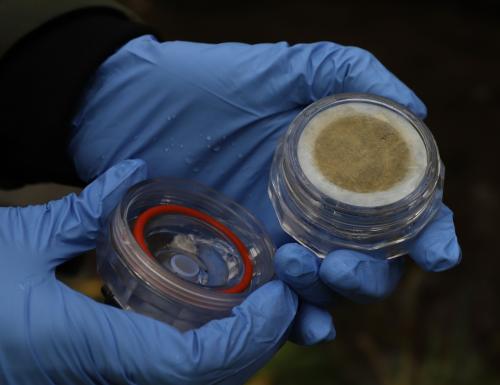
Main image: Sampling DNA from the environment (eDNA), such as on this freshwater filter, enables downstream detection and identification of a broad range of organisms from mammals, fish, insects or microbial pests and pathogens all on the basis of their DNA barcodes. Photo credit: David Cooke, The James Hutton Institute.
Stage
Directory of Expertise
Purpose
Maintaining and enhancing the health of Scotland’s ecosystems is essential, as they support many of the benefits people rely on, such as clean water, food production, climate regulation, and cultural value. However, biodiversity loss and environmental damage are significant threats driven by factors including pollution, invasive species, changes in land and sea use, overuse of natural resources, and climate change. These pressures are also shaped by wider economic, social, and technological factors.
Scotland is tackling these challenges through many policies, including a long-term plan to become “nature positive” by 2030 and to restore biodiversity across land and seas by 2045. Achieving such goals relies on understanding whether actions are working and reliable methods are thus needed to track changes in the environment. Better monitoring can provide clear, ongoing information about environmental pressures and how ecosystems are changing. It also helps meet legal requirements, establish baselines, and build the evidence needed to support cases for conservation, restoration, and the resilience of communities.
New tools based on environmental DNA (eDNA) offer a powerful means to improve monitoring. For example, through analysis of DNA signatures (barcodes) in water, soil, or air, these methods can detect and document changes in multiple key species more rapidly, efficiently and at lower cost than many traditional approaches. Scotland already has strong scientific expertise and collaboration in this area. However, there is no fully coordinated national approach, which limits progress. A clear strategic route map is needed to guide investment, coordination, and the wider use of DNA-based monitoring.
Results
We reviewed existing research, ran stakeholder workshops, and worked closely with project and steering groups to refine ideas. The two workshops engaged around 70 representatives from 29 organisations, bringing together a wide range of expertise. Participants engaged actively, sharing insights, evidence, and access to both published and unpublished studies and reports.
Feedback highlighted that Scotland is well placed to lead within the UK and align with international efforts. However, this will only be possible with a clear strategy, shared vision, and coordinated investment in standards, data systems, and long-term capability. Scotland is not alone in adopting DNA-based approaches, and there are strong opportunities to learn from and collaborate with others. Existing working groups, projects, and strategies are already addressing common challenges.
The consultation identified seven key objectives needed to make the most of DNA-based monitoring:
- Set clear goals and governance to ensure monitoring supports policy and decision-making.
- Invest in skills and capacity to ensure long-term capability and reduce reliance on limited suppliers.
- Strengthen cooperation across Scotland, the UK, and Europe, with open data sharing and collaboration.
- Standardise processes from sampling through to analysis to ensure reliable results.
- Align data systems and sample archives to maximise value and follow FAIR data principles.
- Improve engagement so stakeholders understand both the strengths and limits of these methods.
- Better integrate future sampling efforts, following a “sample once, use many times” approach to maximise value.
Benefits
DNA-based tools are advancing quickly and offer clear advantages over traditional monitoring methods. They create a strong opportunity to improve how Scotland understands and protects its environment and biodiversity. By making monitoring more rapid and efficient and across a wider range of species, these tools can support better decisions and more responsive policies. However, to fully realise these benefits, several challenges need to be addressed. These include agreeing on consistent methods, improving shared data systems, building stronger DNA reference databases, and reaching agreement on how best to interpret results. Scotland is not alone in this transition. Many UK and international groups are also developing and applying DNA-based monitoring, creating valuable opportunities to learn from and collaborate with others. Through this work, seven key priorities have been identified to help unlock the full value of these methods. Achieving these goals will require clear commitments to long-term, coordinated investment in standards, infrastructure, and workforce skills. With the right approach, DNA-based tools can play a vital role in supporting Scotland’s environmental goals and delivering better outcomes for nature and society.
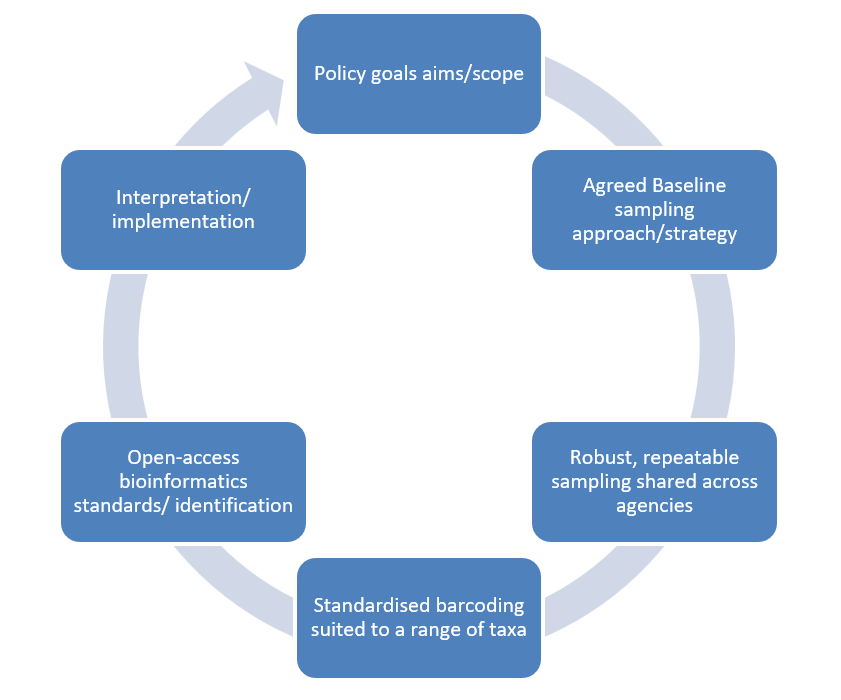
Figure 1. Optimal cycle of feedback from policies to harmonisation of standardised environmental monitoring across agencies followed by data processing and interpretation to complete the cycle and shape future policies.
Project Partners
Organisations on Fellowship Steering and Management groups