Peatland restoration is vital to Scotland’s efforts to tackle climate change and biodiversity loss, but understanding its costs is essential for effective investment and policy decisions. Drawing on a decade of research and data from Scotland’s Peatland Action Programme, researchers have developed one of the most comprehensive databases of peatland restoration costs. The latest analysis (2026) estimates a median restoration cost of £1,253 per hectare, with costs varying according to restoration activities and the initial condition of the peatland. These findings provide valuable evidence to support restoration planning, project appraisal and future policy development.
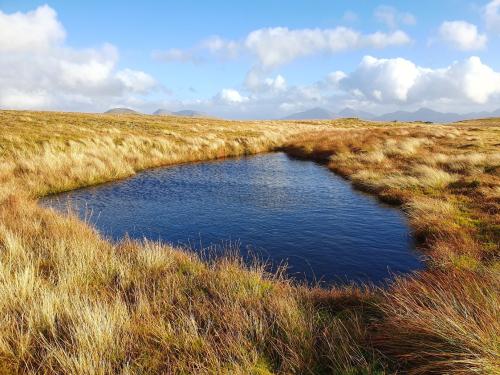
Image: Peat loch. Photo credit: James Glendinning
Stage
Purpose
Peatland restoration is increasingly perceived by policy and decision makers in the UK, across Europe and the world as a relatively cost-effective way to mitigate greenhouse gas emissions while delivering substantial co-benefits. Evidence and knowledge of the economic costs and benefits of restoration is therefore crucial to inform policy decisions. Our research aims to improve our knowledge of peatland restoration costs and factors affecting it, through the systematic collation of a database of restoration sites.
Information on the cost of peatland restoration has to date been patchy and fragmented, and is often based on data from a small number of sites. Our work has resulted in the creation of a database in 2018 that has been continuously updated as new information on costs related to delivery of restoration became available. The latest (2026) update of the database includes information from 199 unique restoration projects covering 458 restoration sites in Scotland. To the best of our knowledge, there is currently no comparable database available for the UK, and for peatlands - at least across regions with temperate climates.
The database used information collected as part of the delivery of peatland restoration by NatureScot in its capacity as a delivery partner of the Peatland Action (PA) programme, funded by Scottish Government, between 2016 and 2024. Data collection was organised in collaboration with the NatureScot PA data team, and analysis was performed with the support of Julia Martin-Ortega (University of Leeds)
Results
Peatland restoration is undertaken using a range of techniques. Restoration costs were estimated by area of peatland restored. We find that peatland restoration costs vary depending on the type of restoration activities implemented, as well as on the initial peatland condition. 2026 results indicate that restoration costs per hectare (based on the completed, “final” reporting of undertaken restoration work) average £1,506. This is similar in magnitude compared to previous estimates, after taking inflation into account.
The calculated average costs are distorted by a small number of sites with a relatively high cost per hectare; therefore, it is more informative to refer to the median cost, which is lower at £1,253 (2026).
Restoration costs primarily related to on-site implementation. As well as onsite implementation costs (such as ditch blocking and hag- reprofiling), the database contains information on project management costs, and, where provided, in-kind contributions made by landowners. These were both relatively modest in comparison to onsite implementation costs. Project management costs (excluding support offered through Peatland Action and its officers) and in-kind contributions are estimated to account on for 11% and 7% of total restoration costs, respectively (mean estimate for 2026).
Restoration costs are found to be higher in the presence of forest-to-bog restoration activities. The restoration cost per hectare on sites that are actively eroding and involve removal of scrub and forestry were also found to be higher than for sites without these characteristics.
Aside from costs, the database also includes information on the site’s characteristics (such as site use prior to restoration and potential site designations) and restoration activities proposed or undertaken. A descriptive analysis of the sites included in the database indicates that more than half of the restoration sites are either a Site of Special Scientific Interest (SSSI) or National Nature Reserve (NNR). In addition, in the updated 2026 database, in terms of their current use, deer management (54%) and rough grazing (41%) are the most frequently mentioned uses, followed by biodiversity conservation (36% of sites) and field sports (30%).
In line with previous work on restoration costs, we have found that restoration costs vary depending on restoration activity and initial condition of the peatland. In the 2026 update, we offer cost estimates depending on peatland condition categories within the UK GHG Inventory for LULUCF (Land Use Land Use Change and Forestry).
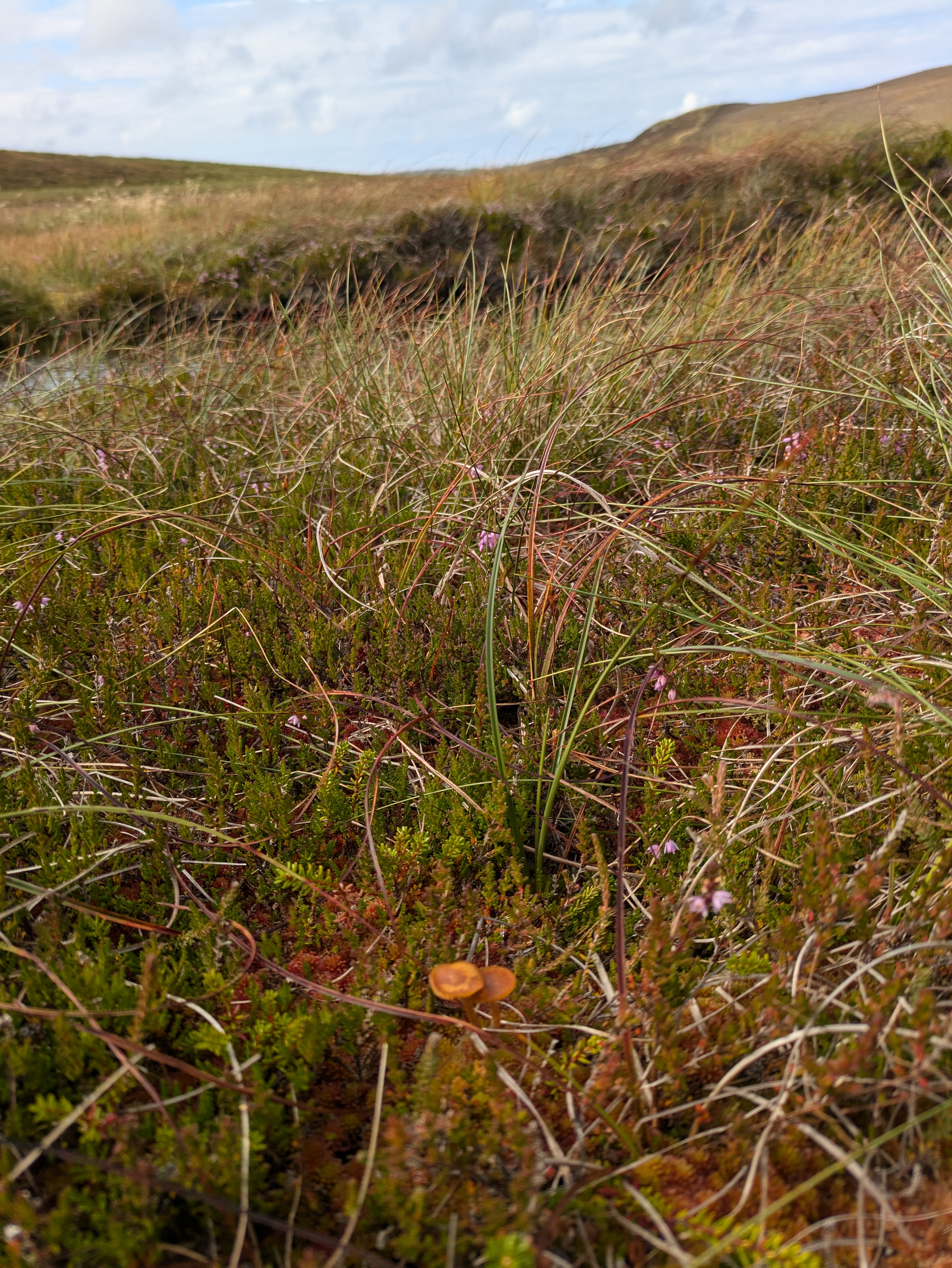
Image: Peatland. Photo credit: Klaus Glenk.
Benefits
Our research provides analysis of what represents, to the best of our knowledge, the largest existing database on peatland restoration costs in the UK (and possibly internationally). The database can be used to inform planning and policy regarding the management of upland peatlands and thus assist with policy development for climate change mitigation.
Our analysis of restoration costs support conclusions from an earlier study. Overall, peatland restoration in Scotland will provide a range of benefits to society through storing carbon, regulating water flows and enhancing people’s connection to nature. The great degree of variation in restoration costs reinforces the need for a case-by-case evaluation of restoration in practice, and, in terms of research, offers opportunities for refined analysis based on a growing database and integration into cost-benefit and cost-effectiveness analysis of peatland restoration.
This unique database was built thanks to the collaboration between Scotland’s Rural College (SRUC), the University of Leeds, the James Hutton Institute, and NatureScot’s (formerly Scottish Natural Heritage (SNH)) Peatland Action coordination and data management team. Through this collaboration with NatureScot, forms to be filled by applicants and grantees were developed to allow meaningful data collection on restoration costs.
To our knowledge, systematic efforts to collect data on the costs of land-based environmental schemes in formats suitable for analysis are relatively scarce. Such data is, however, of interest to decision makers, organisations and researchers alike, and accompanies additional information on experiences of scheme participants. This project therefore also represents an opportunity for mutual learning about the process of building an evidence base related to government investment into nature-based solutions, and highlights the benefits of collaboration to establish such evidence, given the differing needs and constraints faced by all parties.