Toxoplasmosis is a globally important disease caused by Toxoplasma gondii affecting both human and animal health and spreading through environmental pathways such as soil, water, and food. As transmission of the parasite crosses species, sectors and ecosystems, effective control cannot be achieved by any single discipline and instead requires co-ordinated collaboration between multiple sectors.
A One Health symposium held at the Moredun Research Institute in November 2025 brought together cross‑sector experts to discuss epidemiology, identify key knowledge gaps and explore control strategies for T. gondii. Discussions highlighted the underestimation of disease burden, limited public awareness, and the need for sustained interdisciplinary collaboration, guiding future research, policy and co-ordinated action.
Stage
Directory of Expertise
Purpose
Toxoplasma gondii is widely regarded as a classic One Health parasite because it impacts human health, animal health, and the environment. In Scotland, Public Health surveillance reported 47 laboratory‑confirmed human cases of toxoplasmosis in 2023, continuing a decade‑long upward trend. Cats, both domestic and wild, are the only definitive hosts and can shed millions of environmentally resilient oocysts (eggs) in their faeces. These oocysts persist in soil and water, causing widespread environmental contamination and exposing humans, livestock and wildlife to infection. The parasite causes significant veterinary disease, particularly abortion in sheep and goats, and is a substantial public health concern due to foodborne, environmental, and congenital transmission.
Because transmission pathways cross species, sectors, and ecosystems, effective control cannot be achieved by any single discipline. Co-ordinated collaboration between public health, veterinary medicine, agriculture, food production, environmental science, and policy makers is essential to reduce infection risk, improve surveillance, and develop sustainable control strategies.
To support this integrated approach, a symposium was held at the Moredun Research Institute on 20 November 2025, bringing together 32 invited participants from a wide range of disciplines. The aim was to provide a platform to discuss and assess the current epidemiological landscape of toxoplasmosis and to share ideas and innovations for detection and control, whilst also identifying critical knowledge gaps. Promoting these discussions will help shape future research priorities and inform effective policy and intervention strategies to reduce the burden of Toxoplasma across sectors.
Results
The symposium consisted of a morning session of talks from experts on epidemiology, clinical disease, veterinary impacts, vaccination, environmental and foodborne transmission, and emerging research tools, alongside international perspectives from Europe and South America. The afternoon session comprised facilitated breakout discussion groups focused on three key themes:
Tools and control measures
Transmission routes and knowledge gaps
Public awareness and communication
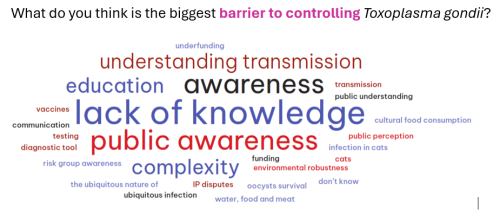
We also conducted a participant survey at the start and end of the day to gather opinions on priority areas for research, barriers to control, and cross-sector engagement.
Overall, the symposium confirmed that T. gondii remains a neglected pathogen and that its true burden is likely underestimated. Participants emphasised that meaningful progress in controlling toxoplasmosis will depend on stronger cross‑sector collaboration, integrating expertise across human health, animal health, environmental science, and public health policy. A clearer understanding of transmission pathways, together with improved diagnostic tools and targeted education for at‑risk groups, emerged as central research priorities. This was particularly important given that limited awareness and persistent knowledge gaps around transmission routes were identified as major barriers to effective control.
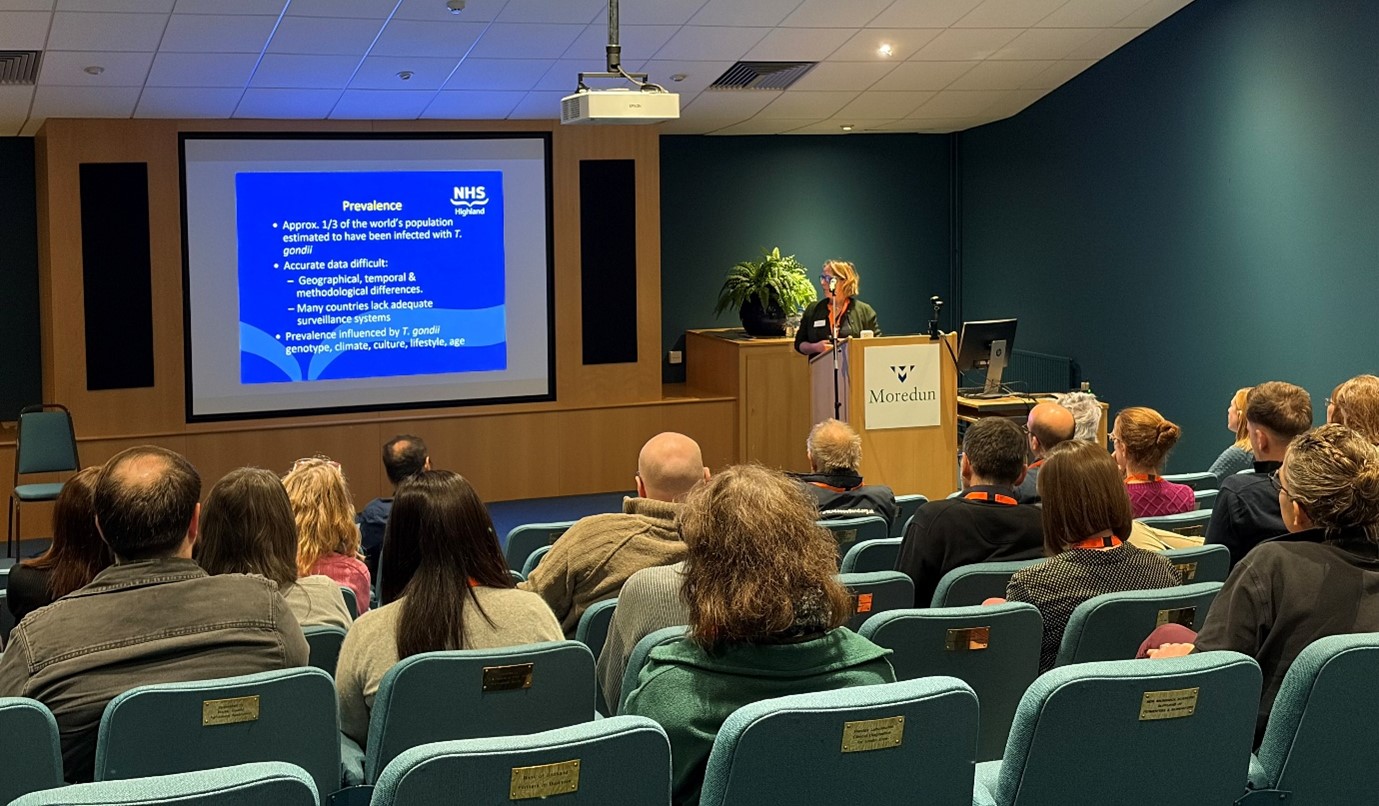
Image credit: Sarah Thomson
Benefits
The symposium provided a valuable forum for bringing together expertise from human health, veterinary medicine, environmental science, and public health policy, enabling participants to develop a shared understanding of the scale and complexity of T. gondii infection. It also created space to form new connections and identify where action is most needed.
Discussions highlighted key knowledge gaps - such as transmission routes, new and improved therapeutic treatments, and public awareness - enabling future research and policy efforts to be more targeted, co-ordinated, and impactful. By clarifying where evidence is weak or missing, researchers and funders can prioritise studies that address the most significant barriers to control.
The priorities identified will help shape future research, inform policy discussions and support more co-ordinated approaches to tackling toxoplasmosis. The strong level of engagement also established a platform for ongoing collaboration, including interest in developing a Scottish Toxoplasma Network.
Overall, the symposium showed that sustained, interdisciplinary collaboration is essential for tackling the complex challenges posed by toxoplasmosis and for translating knowledge into enhanced public and animal health outcomes.
For more information visit the research page for "Addressing knowledge gaps in the sources, epidemiology and genetic diversity of important foodborne pathogens".