Authors: Catriona Mallows and Bobby Macaulay
Document
Authors: Nicola Lambe & Claire Morgan-Davies (SRUC)
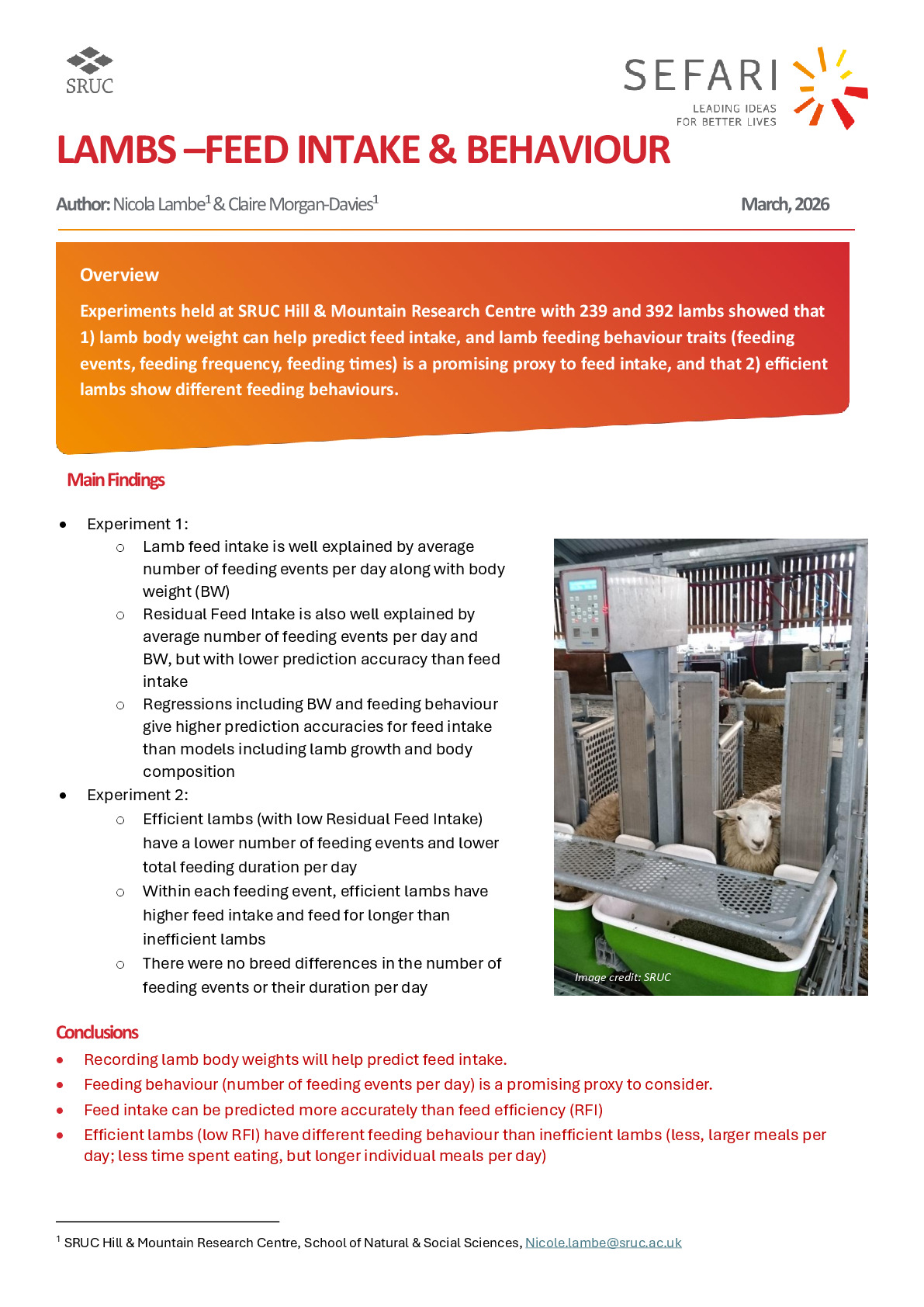
Experiments held at SRUC Hill & Mountain Research Centre with 239 and 392 lambs showed that 1) lamb body weight can help predict feed intake, and lamb feeding behaviour traits (feeding events, feeding frequency, feeding times) is a promising proxy to feed intake, and that 2) efficient lambs show different feeding behaviours.
Document
Author: Claire Morgan-Davies (SRUC)
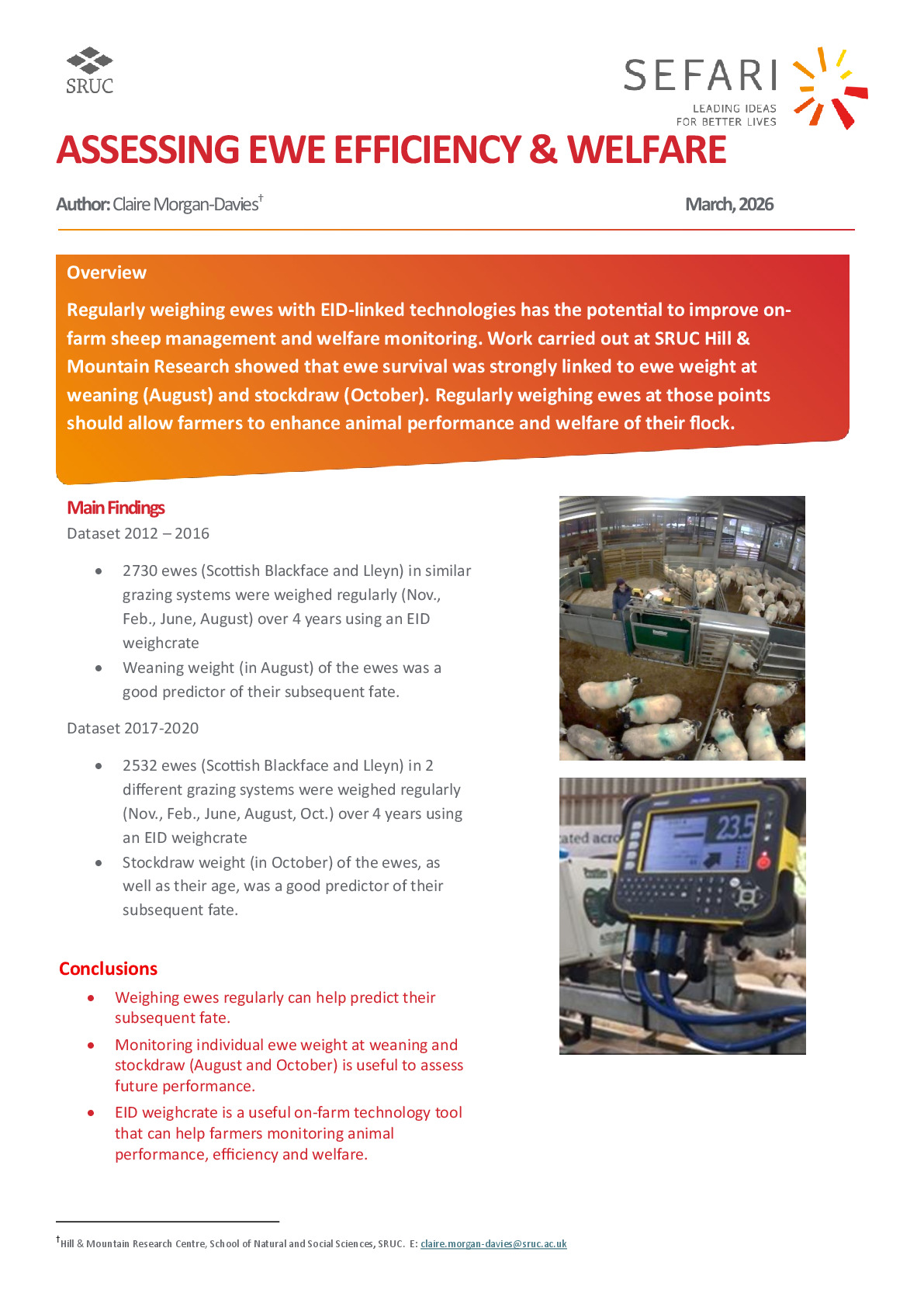
Regularly weighing ewes with EID-linked technologies has the potential to improve on farm sheep management and welfare monitoring. Work carried out at SRUC Hill & Mountain Research showed that ewe survival was strongly linked to ewe weight at weaning (August) and stockdraw (October). Regularly weighing ewes at those points should allow farmers to enhance animal performance and welfare of their flock.
Document
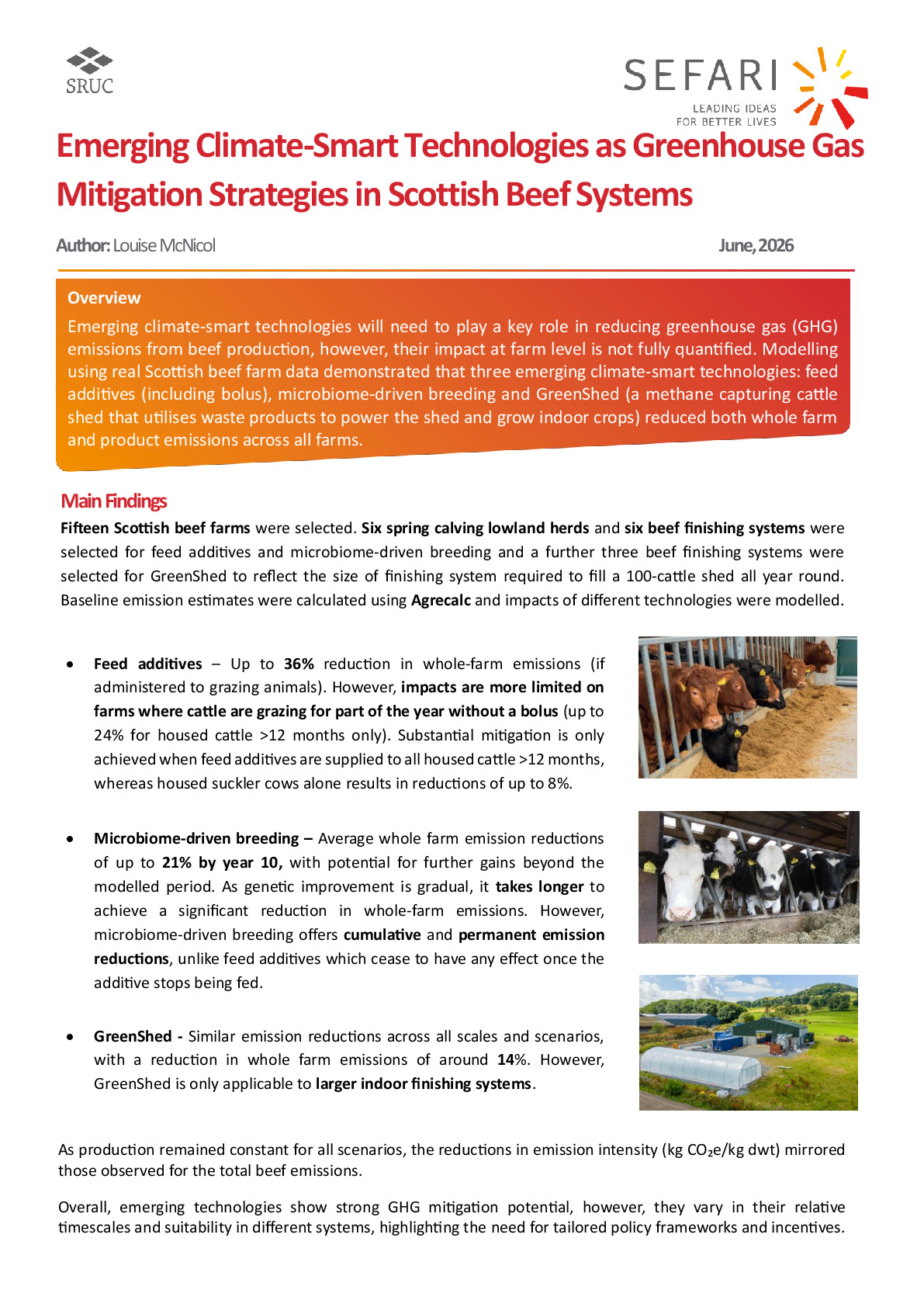
Emerging climate-smart technologies will need to play a key role in reducing greenhouse gas (GHG) emissions from beef production, however, their impact at farm level is not fully quantified. Modelling using real Scottish beef farm data demonstrated that three emerging climate-smart technologies: feed additives (including bolus), microbiome-driven breeding and GreenShed (a methane capturing cattle shed that utilises waste products to power the shed and grow indoor crops) reduced both whole farm and product emissions across all farms.
Document
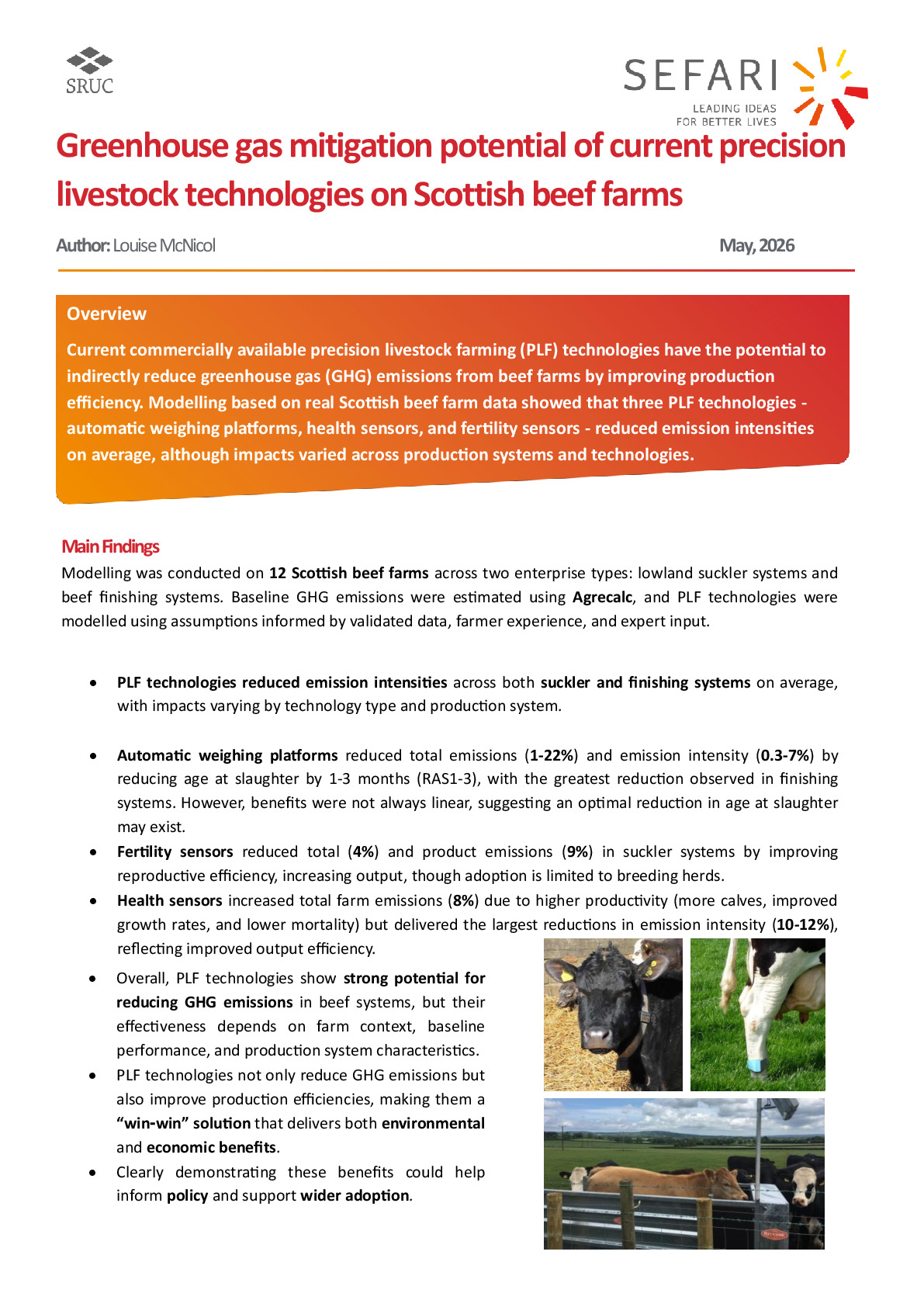
Current commercially available precision livestock farming (PLF) technologies have the potential to indirectly reduce greenhouse gas (GHG) emissions from beef farms by improving production efficiency. Modelling based on real Scottish beef farm data showed that three PLF technologies - automatic weighing platforms, health sensors, and fertility sensors - reduced emission intensities on average, although impacts varied across production systems and technologies.
Document
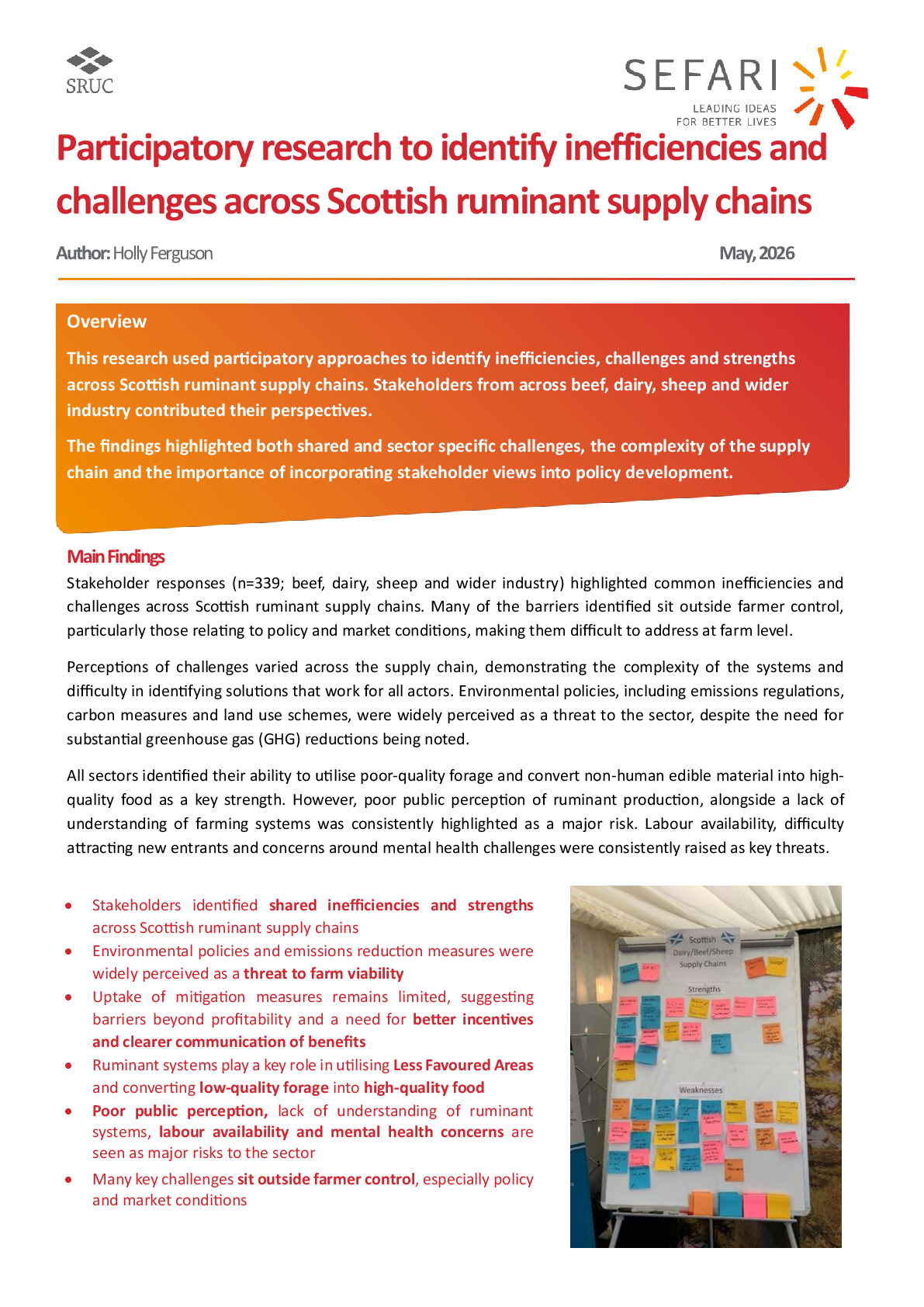
This research used participatory approaches to identify inefficiencies, challenges and strengths across Scottish ruminant supply chains. Stakeholders from across beef, dairy, sheep and wider industry contributed their perspectives. The findings highlighted both shared and sector specific challenges, the complexity of the supply chain and the importance of incorporating stakeholder views into policy development.#
To meet climate change targets, countries including Scotland are taking steps to reduce greenhouse gas emissions. Agriculture contributes around 10% of UK emissions, of which methane from ruminant livestock contributes around half. Across sectors, mitigation methods are being explored. The feed additive 3-Nitrooxypropanol (3-NOP, Bovaer) can reduce cattle methane emissions by up to 30% by inhibiting the final enzyme in methane synthesis in the rumen microbiome.
The Brexit ‘Trade and Co-operation Agreement’ of 2020 increased trade friction, red tape and costs for trade in animals and animal products between UK and EU. The ‘reset’ announced in May 2025 included immediate agreements on energy and fishing, and identified further areas to negotiate, including an Animal and Plant Health or ‘Sanitary and Phyto-Sanitary Agreement’ (SPS). Issues for the ongoing negotiations include the extent of the ‘short list’ of exceptions in UK alignment with EU rules (and ‘dynamic alignment’ with future rules) and the fee the UK must pay.
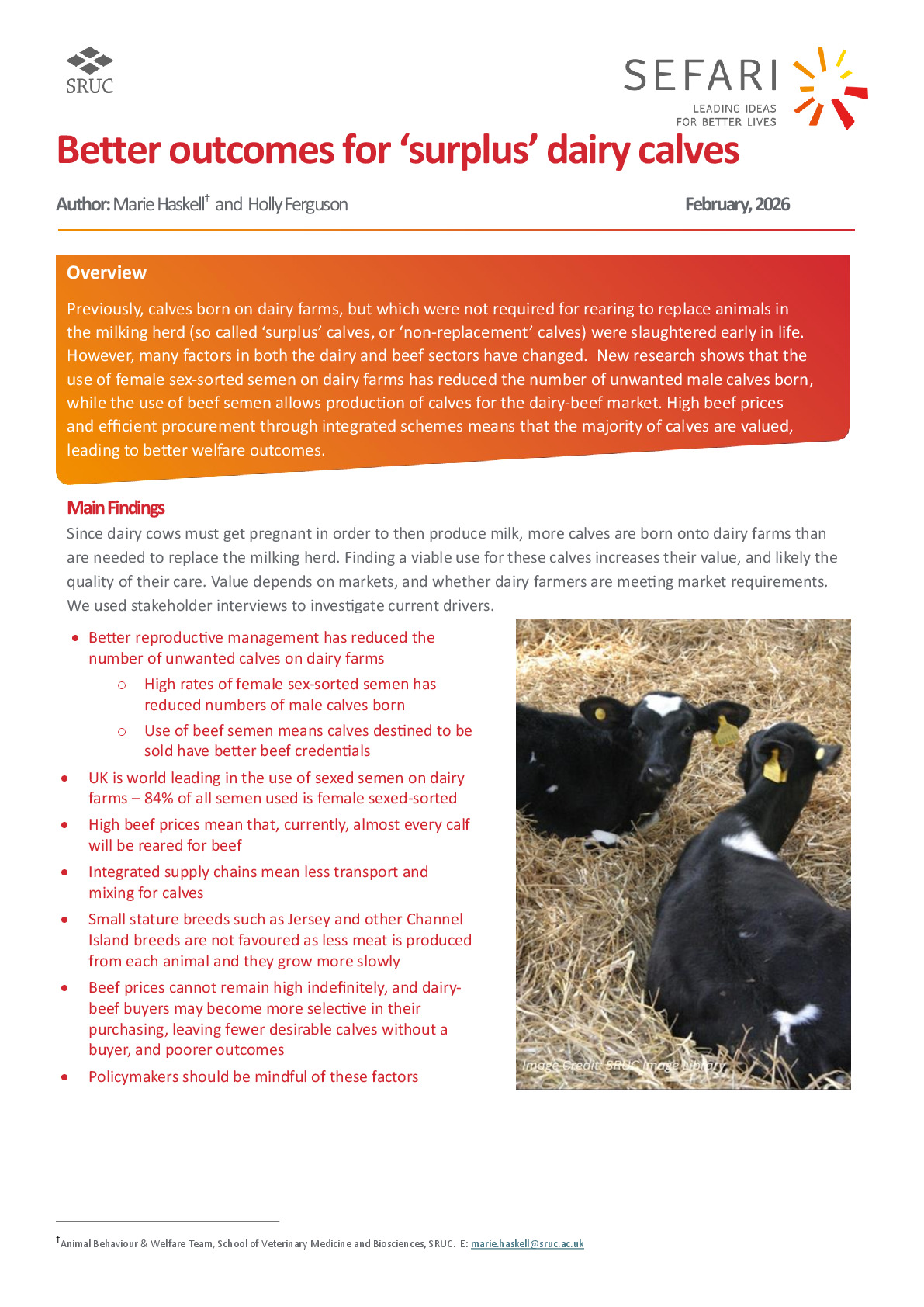
Previously, calves born on dairy farms, but which were not required for rearing to replace animals in the milking herd (so called ‘surplus’ calves, or ‘non-replacement’ calves) were slaughtered early in life. However, many factors in both the dairy and beef sectors have changed. New research shows that the use of female sex-sorted semen on dairy farms has reduced the number of unwanted male calves born, while the use of beef semen allows production of calves for the dairy-beef market.

Author: Dr Emma Baxter
This document was produced as part of the Scottish Government Rural Affairs and the Environment Portfolio Strategic Research Programme 2022-2027, Theme A, Project SRUC-A3-2 EU exit and animal welfare. For more information: https://sefari.scot/research/projects/eu-exit-challenges-and-opportunities-for-animal-welfare.
Environmental enrichment is about adding features to simple/unfurnished environments used to
house intensively managed farm animals. To be effective, enrichments should have positive effects
on animal welfare. This briefing provides a summary of current legal and farm assurance standards
for enrichment in the UK and an analysis of these standards in terms of delivering effective
enrichment.
Animal welfare relies on both the prevention of suffering and the facilitation of positive experiences. A growing body of academic literature considers the concept of ‘animal agency’ to be a key organising principle of positive welfare - over and above having good things, positive welfare is about doing them.
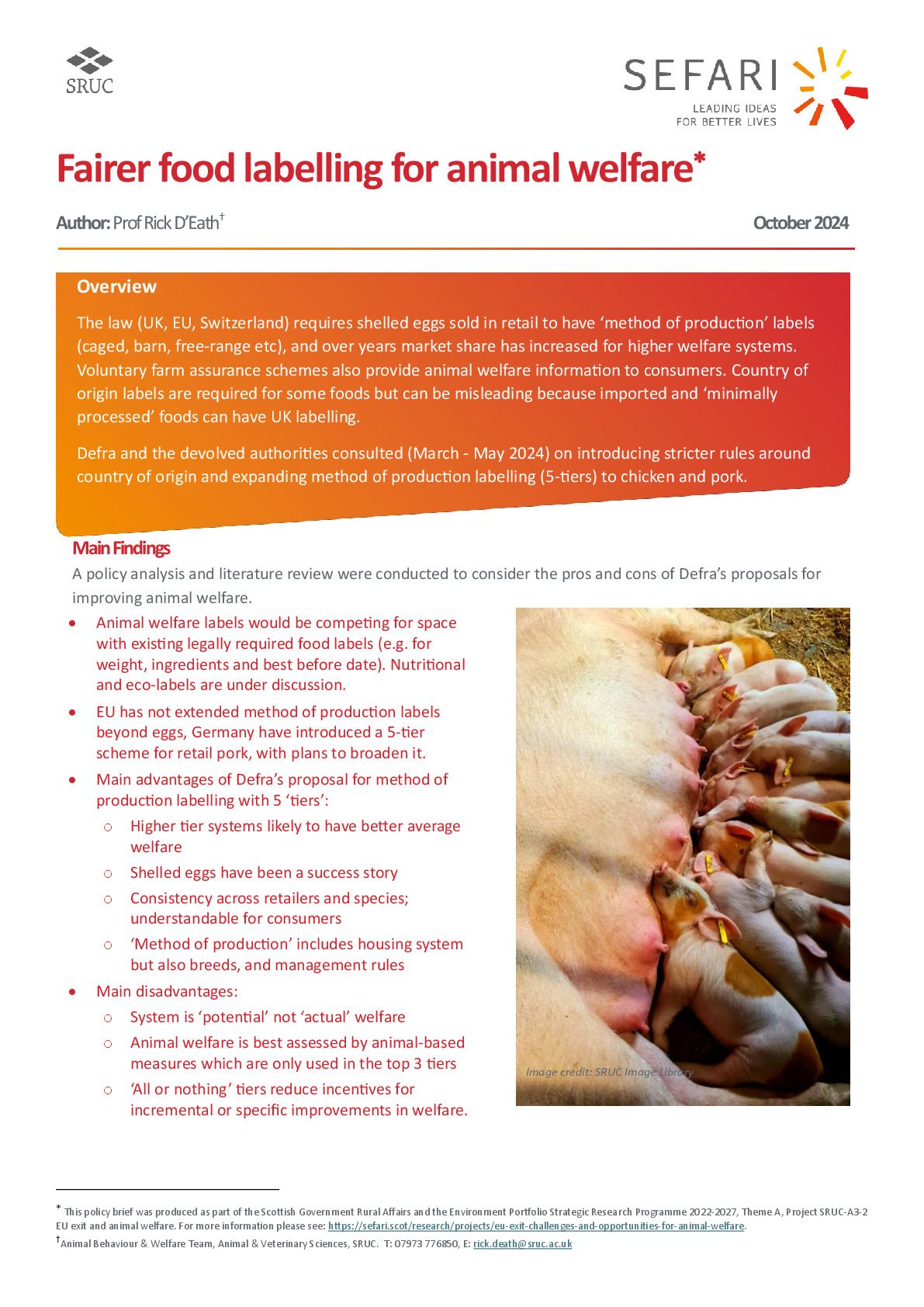
This brief outlines a policy analysis and literature review that were conducted to consider the pros and cons of Defra’s proposals for improving animal welfare. Defra and the devolved authorities consulted (March - May 2024) on introducing stricter rules around country of origin and expanding method of production labelling (5-tiers) to chicken and pork.
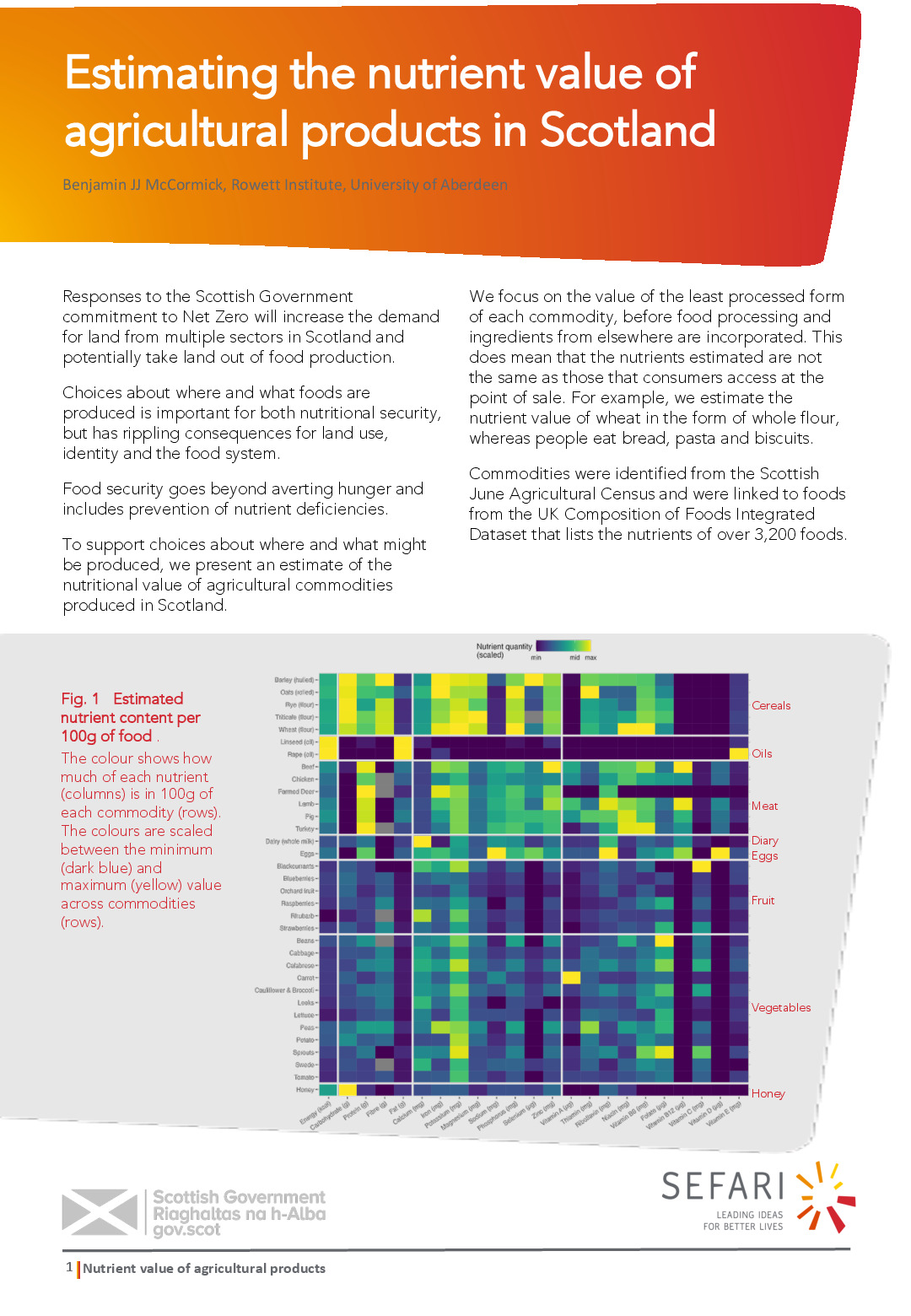
A final briefing, by Benjamin JJ McCormick (a SEFARI Gateway Fellow), on he's work on ‘estimating the nutrient value of agricultural products’