Compiled by Dr Ioanna Akoumianaki, Policy and Impact Officer, SEFARI Gateway.
An impact assessment on a fellowship that has shifted thinking but not yet reshaped policy.
Compiled by Dr Ioanna Akoumianaki, Policy and Impact Officer, SEFARI Gateway.
An impact assessment on a fellowship that has shifted thinking but not yet reshaped policy.
Centre: Scotland's Centre of Expertise for Knowledge Exchange and Innovation (CKEI, known as SEFARI Gateway)
Lead: Professor Charles Bestwick
Compiled by Ioanna Akoumianaki
Title of Impact Case Study: Using SEFARI Gateway research in natural capital, agriculture, food systems, biodiversity and the rural economy during 2022–2027: Impact from two flagship projects
Flagship project 1: Estimating the health and welling value of the natural capital of the NHS estates
Flagship project 2: Genetic Diversity Scorecard update
An Interview with Dr Alison Karley
This interview was held on 11 March 2025
Dr Alison (‘Ali’) Karley (AK) is a researcher in the Agroecology Group at the James Hutton Institute, now Head of the Ecological Sciences department. She contributed to the SEFARI Gateway-funded project Roadmap for Reducing Greenhouse Gas Emissions from the Scottish Potato Crop, working alongside colleagues from Scottish Rural College (SRUC). The project produced a phased roadmap for reducing emissions from one of Scotland’s most economically important crops.
An Interview with Dr David Boldrin
This interview was held on 12 March 2025
Report by the James Hutton Institute and SEFARI Gateway
Author: Rupert Hough
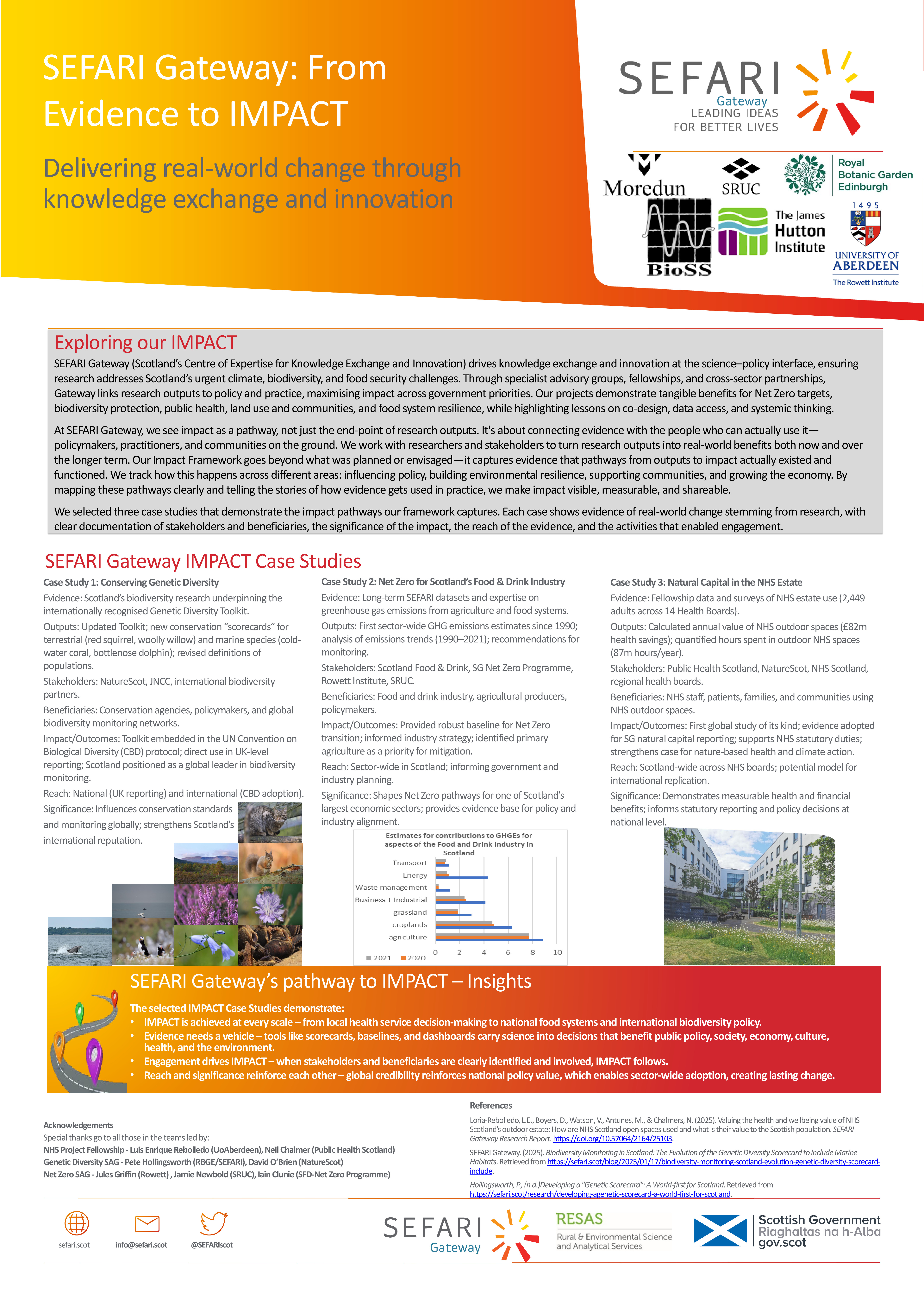
SEFARI Gateway (Scotland’s Centre of Expertise for Knowledge Exchange and Innovation) drives knowledge exchange and innovation at the science–policy interface, ensuring research addresses Scotland’s urgent climate, biodiversity, and food security challenges. Through specialist advisory groups, fellowships, and cross-sector partnerships, Gateway links research outputs to policy and practice, maximising impact across government priorities.
The Human Impacts on the Environment theme brings together research on activities that have a direct environmental impact including on the climate, land use and resource use. The individual projects within the theme are summarised in this document.
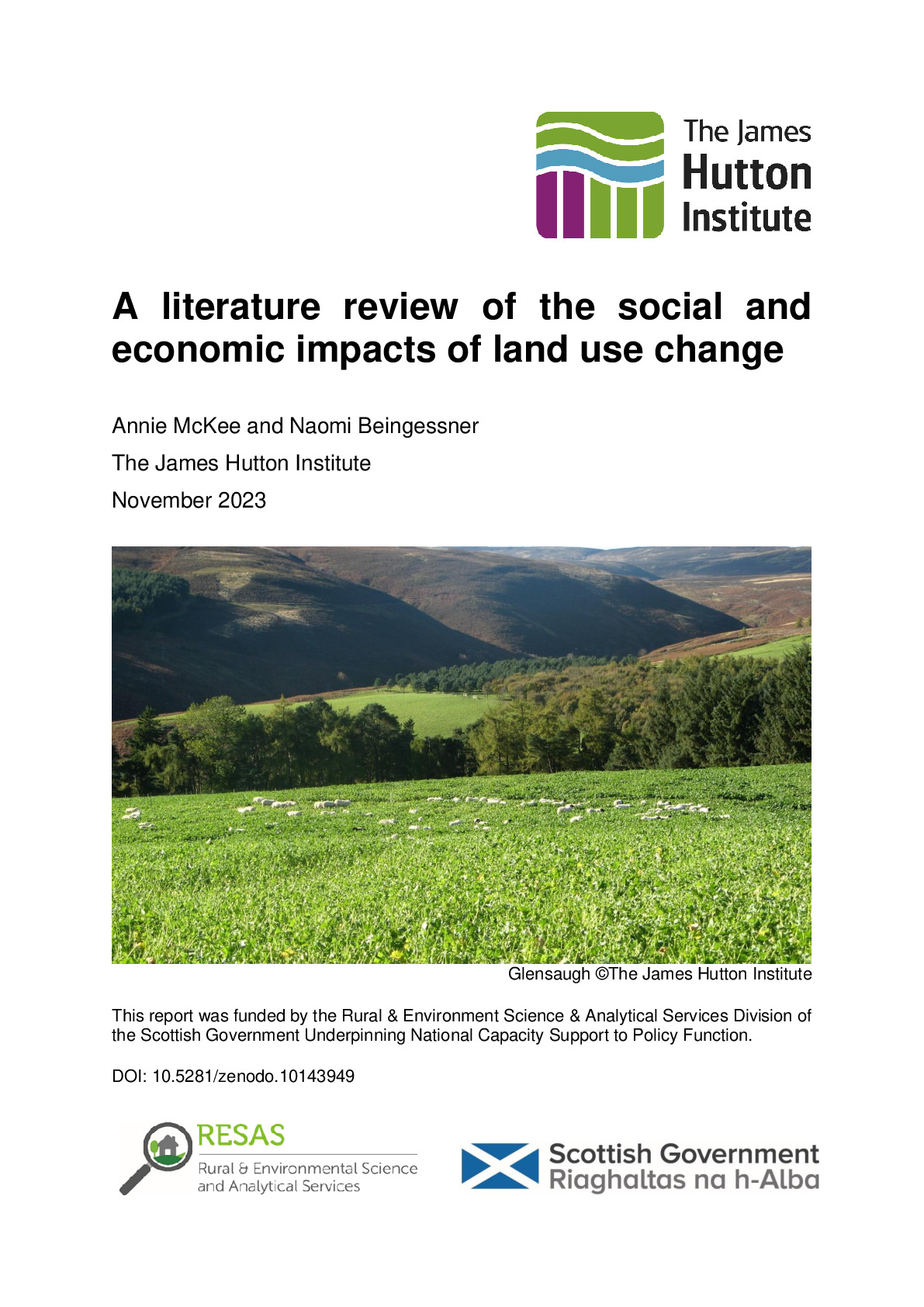
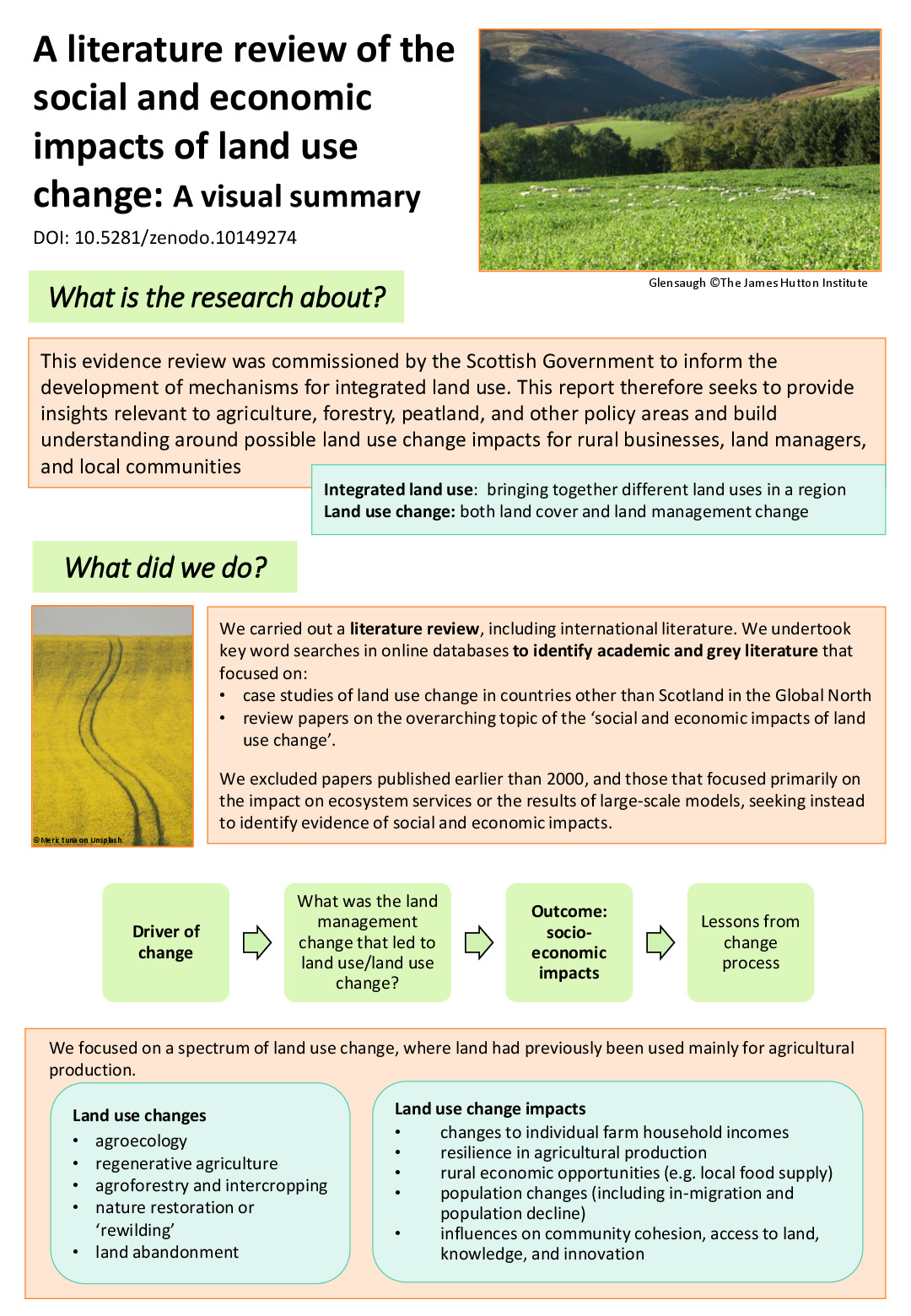
This evidence review was commissioned by the Scottish Government to inform the development of mechanisms for integrated land use (i.e. bringing together different land uses in a region). This report outlines the findings of a literature review of social and economic impacts that can arise in relation to land use change. In this report we consider land use change to include both land cover and land management change and recognise that land use change is driven by multiple factors.
This is a visual summary of the following report: ‘A literature review of the social and economic impacts of land use change’ by A. McKee and N. Beingessner, James Hutton Institute, November 2023. DOI: 10.5281/zenodo.10143949.
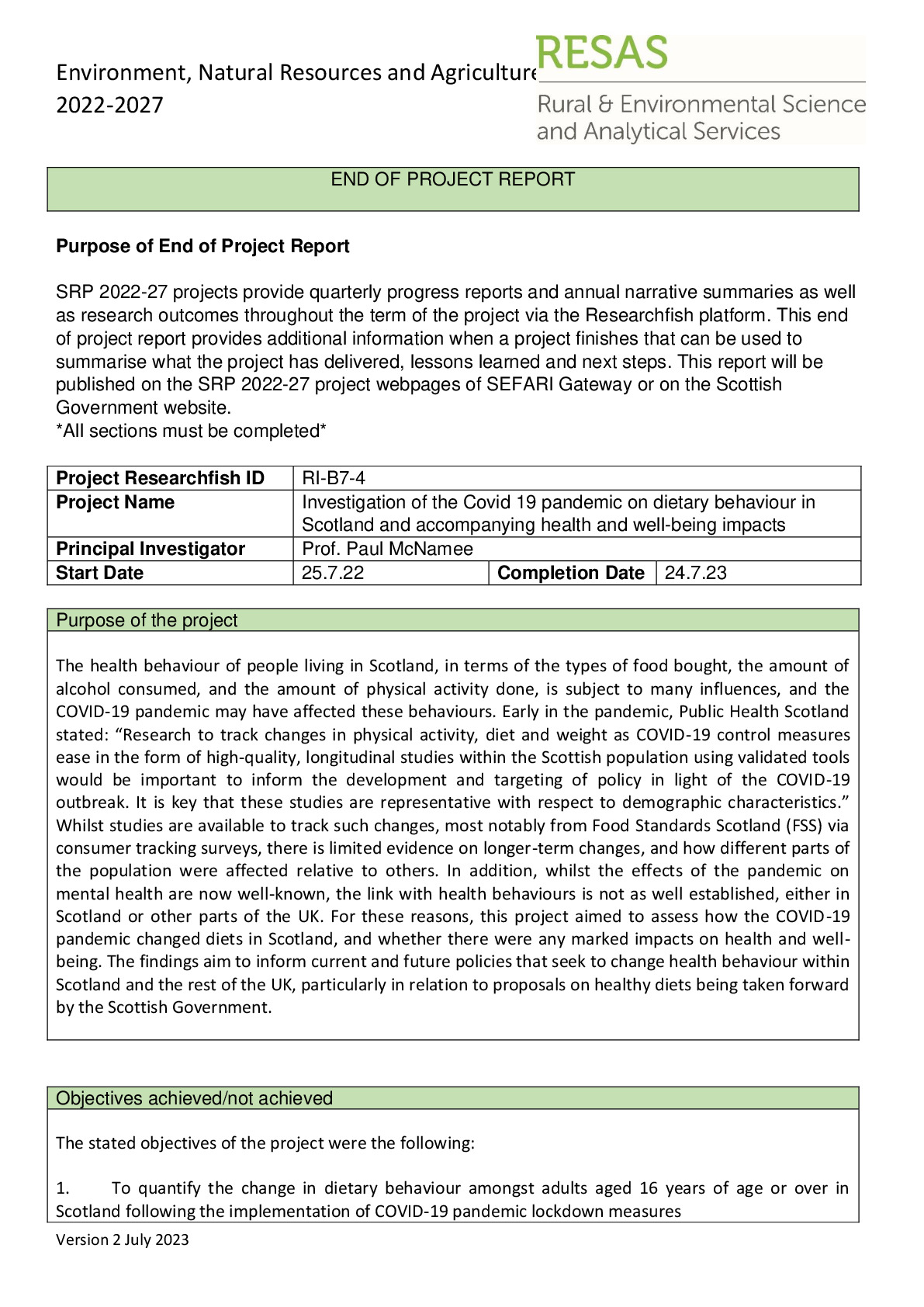
Environment, Natural Resources and Agriculture Strategic Research Programme 2022-2027 – End of Project Report - Investigation of the Covid 19 Pandemic on Dietary Behaviour in Scotland and Accompanying Health and Well-Being Impacts (RI-B7-04).
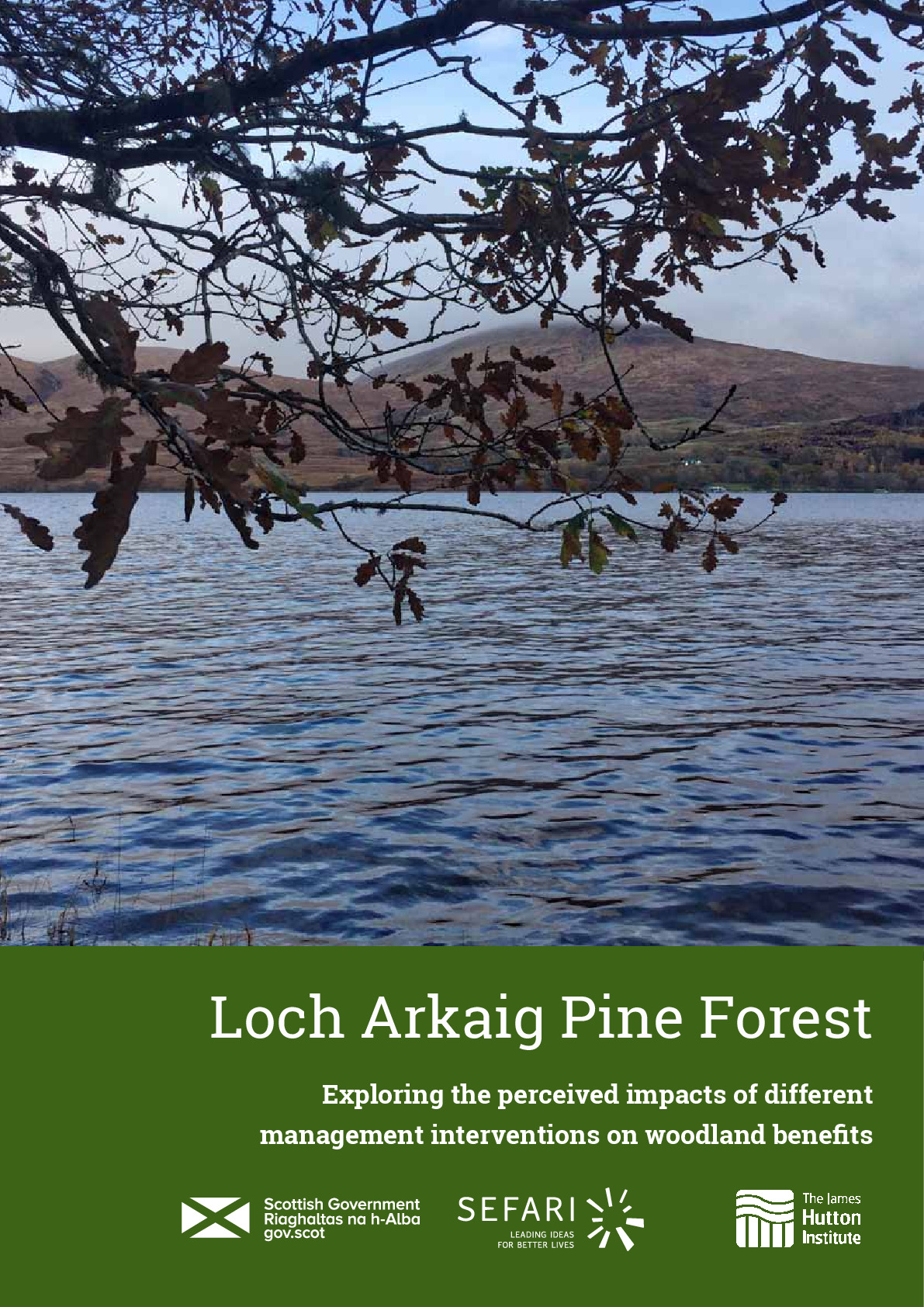
People will have different understandings about the range of benefits a woodland can offer, and some people might prefer one type of benefit over another. To understand how these factors are interconnected, researchers from The James Hutton Institute are researching woodlands in different parts of Scotland: in the Central Belt (North Lanarkshire), on the west coast (Argyll), and in the Highlands.
This report presents the results of a research workshop that was undertaken in relation to the Loch Arkaig Pine Forest.
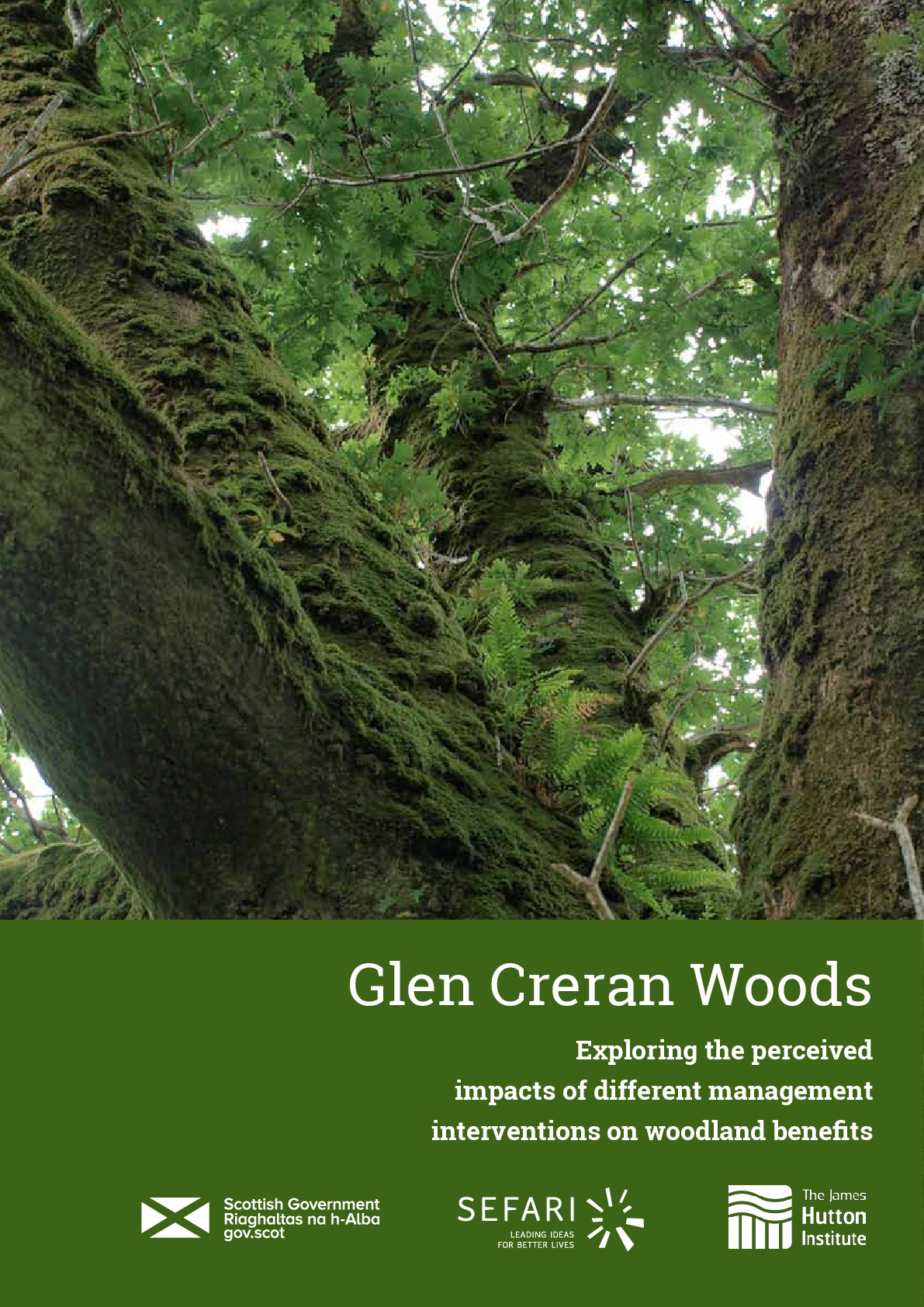
People will have different understandings about the range of benefits a woodland can offer, and some people might prefer one type of benefit over another. To understand how these factors are interconnected, researchers from The James Hutton Institute are researching woodlands in different parts of Scotland: in the Central Belt (North Lanarkshire), on the west coast (Argyll), and in the Highlands.
This report presents the results of a research workshop that was undertaken in relation to the Glen Creran Woods.
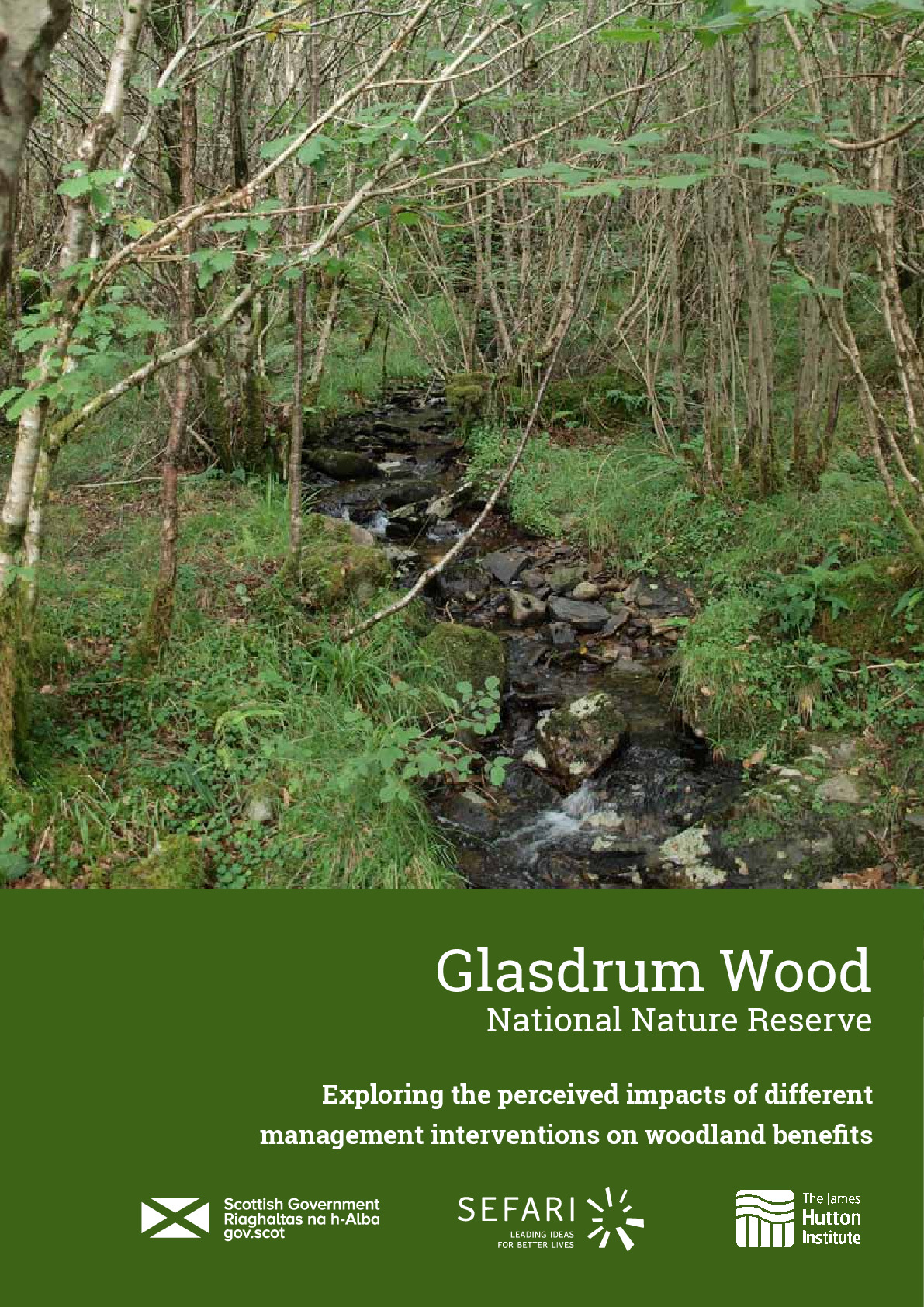
People will have different understandings about the range of benefits a woodland can offer, and some people might prefer one type of benefit over another. To understand how these factors are interconnected, researchers from The James Hutton Institute are researching woodlands in different parts of Scotland: in the Central Belt (North Lanarkshire), on the west coast (Argyll), and in the Highlands.
This report presents the results of a research workshop that was undertaken in relation to the Glasdrum Wood National Nature Reserve.
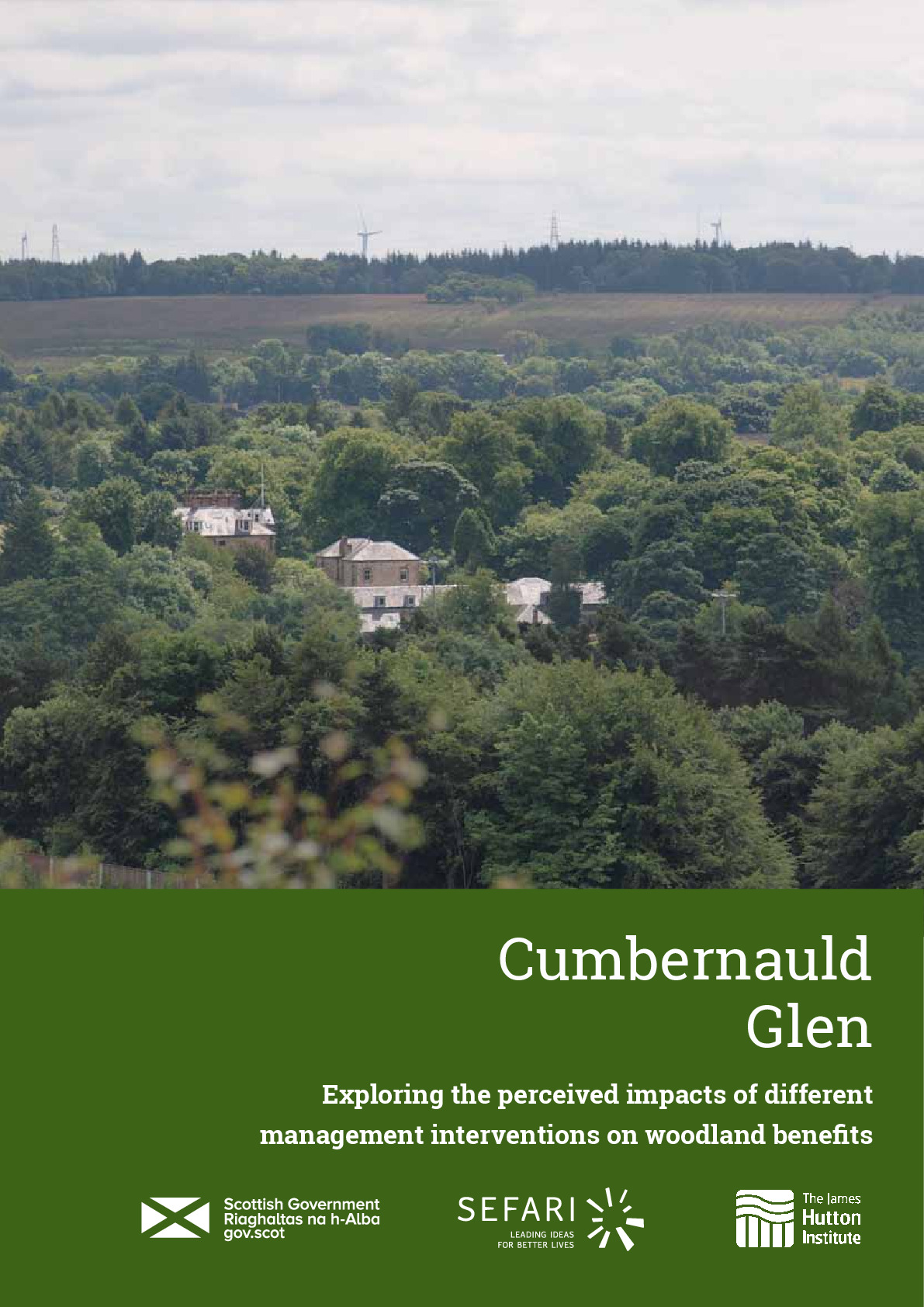
People will have different understandings about the range of benefits a woodland can offer, and some people might prefer one type of benefit over another. To understand how these factors are interconnected, researchers from The James Hutton Institute are researching woodlands in different parts of Scotland: in the Central Belt (North Lanarkshire), on the west coast (Argyll), and in the Highlands.
This report presents the results of a research workshop that was undertaken in relation to the Cumbernauld Glen.
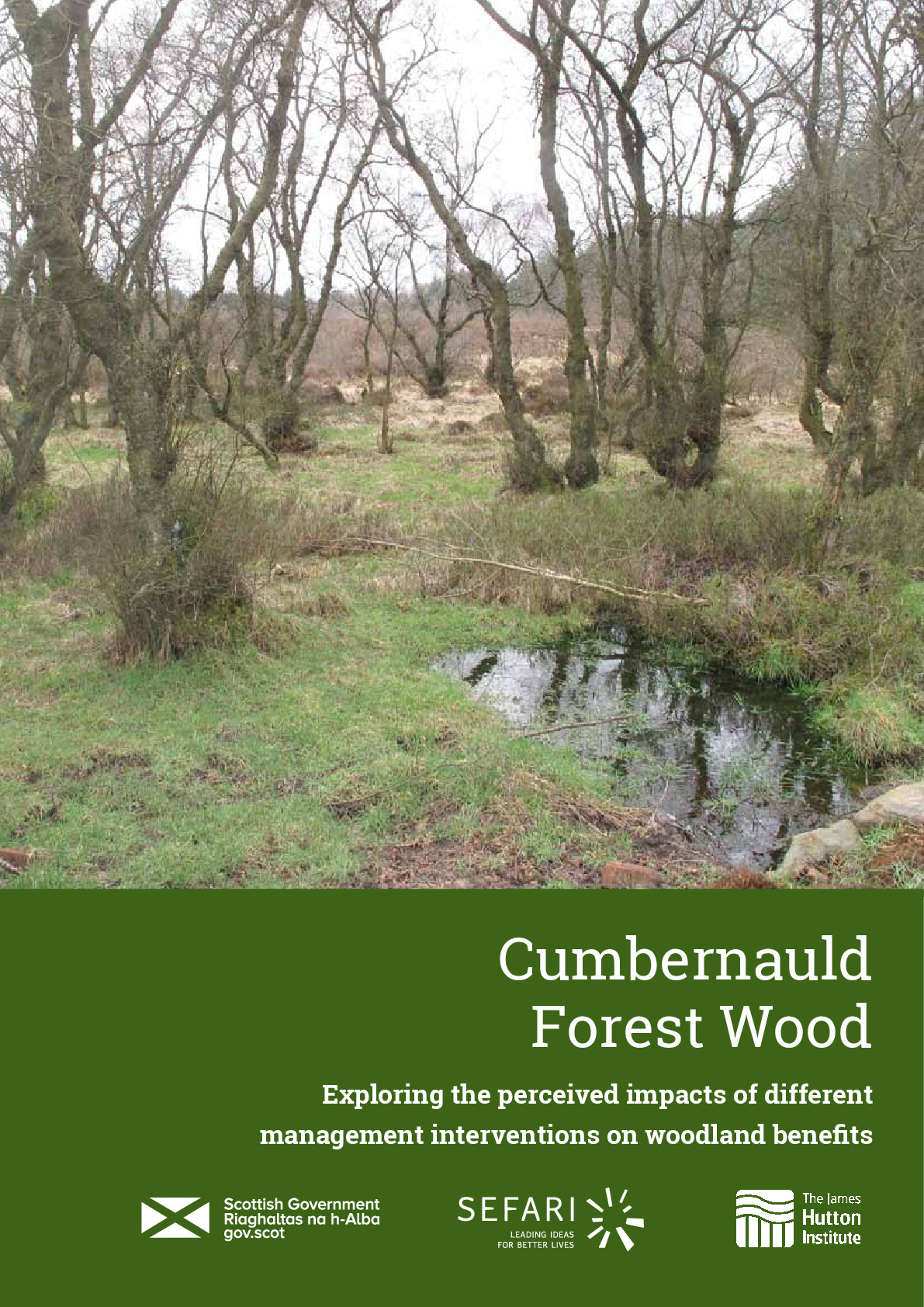
People will have different understandings about the range of benefits a woodland can offer, and some people might prefer one type of benefit over another. To understand how these factors are interconnected, researchers from The James Hutton Institute are researching woodlands in different parts of Scotland: in the Central Belt (North Lanarkshire), on the west coast (Argyll), and in the Highlands.
This report presents the results of a research workshop that was undertaken in relation to the Cumbernauld Forest Wood.
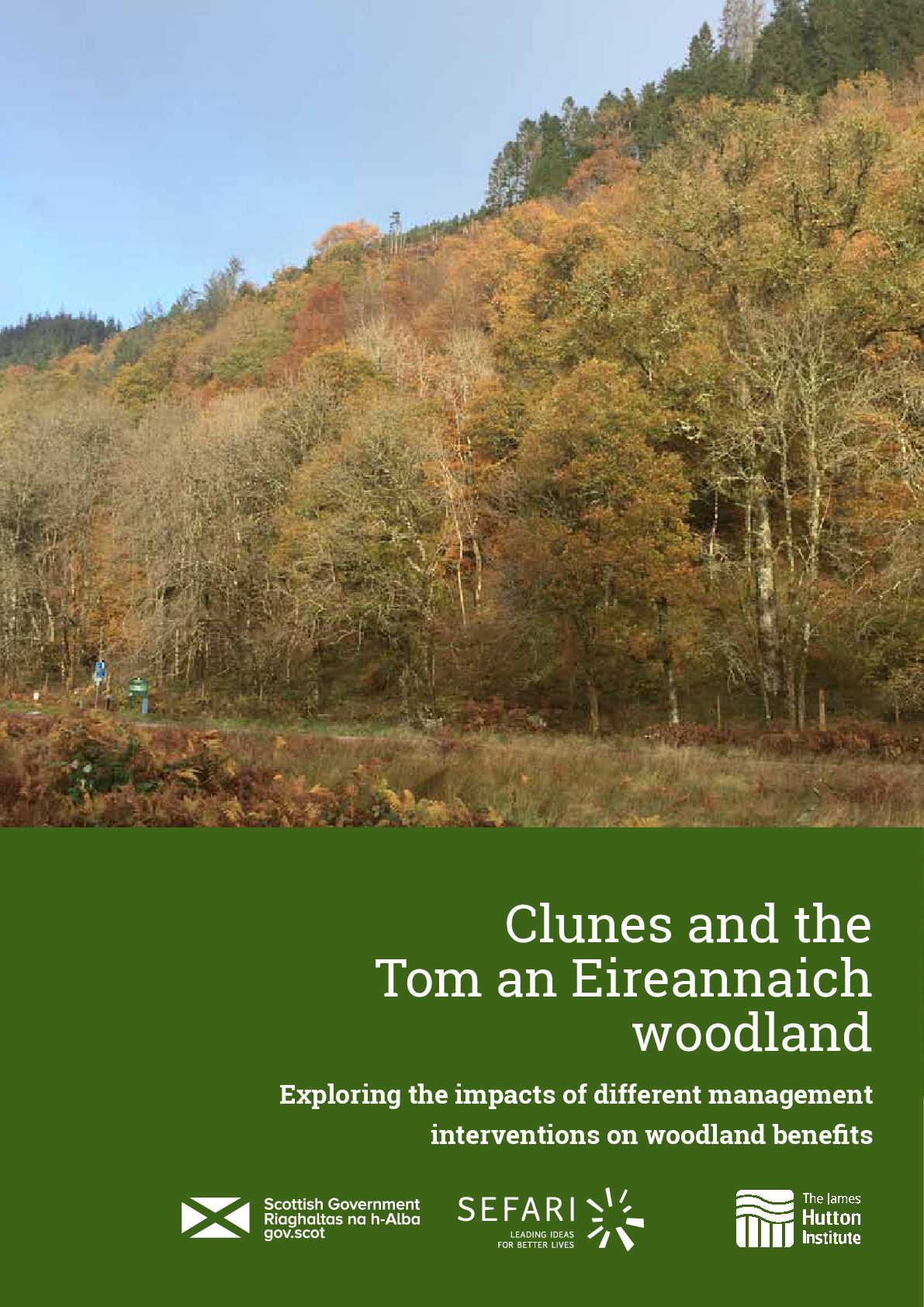
People will have different understandings about the range of benefits a woodland can offer, and some people might prefer one type of benefit over another. To understand how these factors are interconnected, researchers from The James Hutton Institute are researching woodlands in different parts of Scotland: in the Central Belt (North Lanarkshire), on the west coast (Argyll), and in the Highlands.
This report presents the results of a research workshop that was undertaken in relation to the Tom an Eirannaich woodland near the community of Clunes.