Displaying 11 - 20 of 193
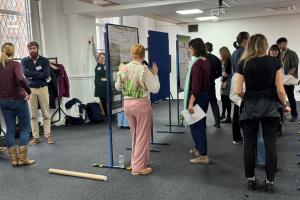
What drives impactful science? This year’s SEFARI PhD Showcase and Science for Life Lecture hosted by BioSS (Biomathematics and Statistics Scotland), brought together researchers from across the SEFARI collective (The Rowett Institute, The Moredun Research Institute, Royal Botanic Gardens Edinburgh, BioSS, Scotland’s Rural College and The James Hutton Institute). From soil health to food insecurity, the event celebrated open discussion, collaboration, and daring ideas, and showcased the work of Scotland’s early career researchers.
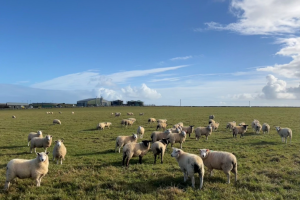
In October 2025, Professor Lorna Dawson visited Orkney to explore the islands’ rich history, agricultural heritage, and cutting-edge research supported through the ENRA Strategic Research Programme, funded by the Scottish Governmen
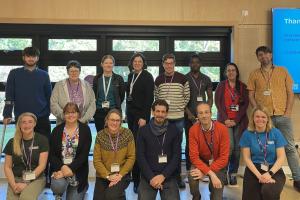
Ever found yourself literally tied in knots trying to learn communication skills? Earlier this month, I was roped together with a colleague during a science communication training day delivered by Edinburgh Science and funded by SEFARI Gateway.

Can changing where crisps and chocolate sit on a supermarket shelf really make us healthier? That was one of the questions at the heart of a recent Westminster reception on High Fat, Salt and Sugar (HFSS) foods, where research and policy came together to tackle diet-related health inequalities.
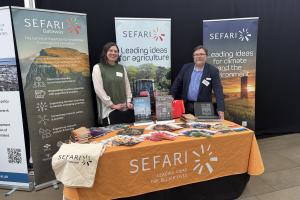
Researchers, policymakers, and stakeholders gathered at Our Dynamic Earth in Edinburgh for the ENRA Science, Evidence and Policy Conference 2025, hosted by Professor Mat Williams, Chief Scientific Adviser for Environment, Natural Resources and Agriculture. The event focused on Scotland’s upcoming ENRA Research Strategy 2027–2032, which aims to enhance collaboration and impact across the research community.

Consumer attitudes towards sustainable diets, The Rowett Institute, University of Aberdeen.Are you a supporter, a convenience seeker or even a hedonist? Dr Patricia Norwood, health economist, explores the results of a new study that reveals the fragmented nature of public opinion towards the idea of a sustainable diet.
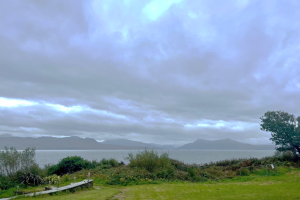
In this blog Professor Lorna Dawson, Gateway knowledge broker for Environment and Soil, shares some insights after visiting Skye as part of a community workshop IN August 2025.
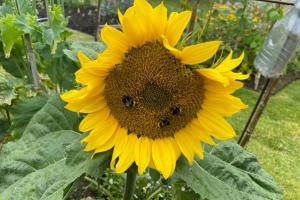
In this blog Professor Lorna Dawson, Gateway knowledge broker for Environment and Soil, shares some insights after visiting RBGE in August 2025. SEFARI Gateway worked with Scotia Agricultural Club to orchestrate this interesting and inspiring visit to the garden.
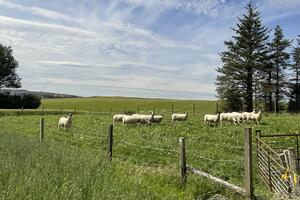
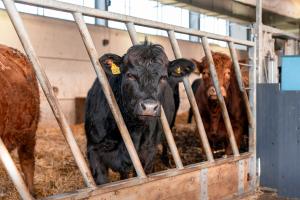
Infectious diseases of farmed animals are important threats to agriculture in Scotland, causing significant animal suffering, and economic losses to farmers. Typically, these infections are treated with antibiotics, but the rise of antibiotic-resistant germs means additional strategies are needed to reduce diseases on farms.